

The Einkorn Diaries: Attempt #3
Mar 2 | Written By: Sabrina Huizar
I had to laugh at myself this morning.
I’ve owned Einkorn: Recipes for Nature’s Original Wheat for years. Years. It’s been sitting right here in my kitchen like a quiet, patient friend while I’ve been over here running what can only be described as a full-blown einkorn science experiment.
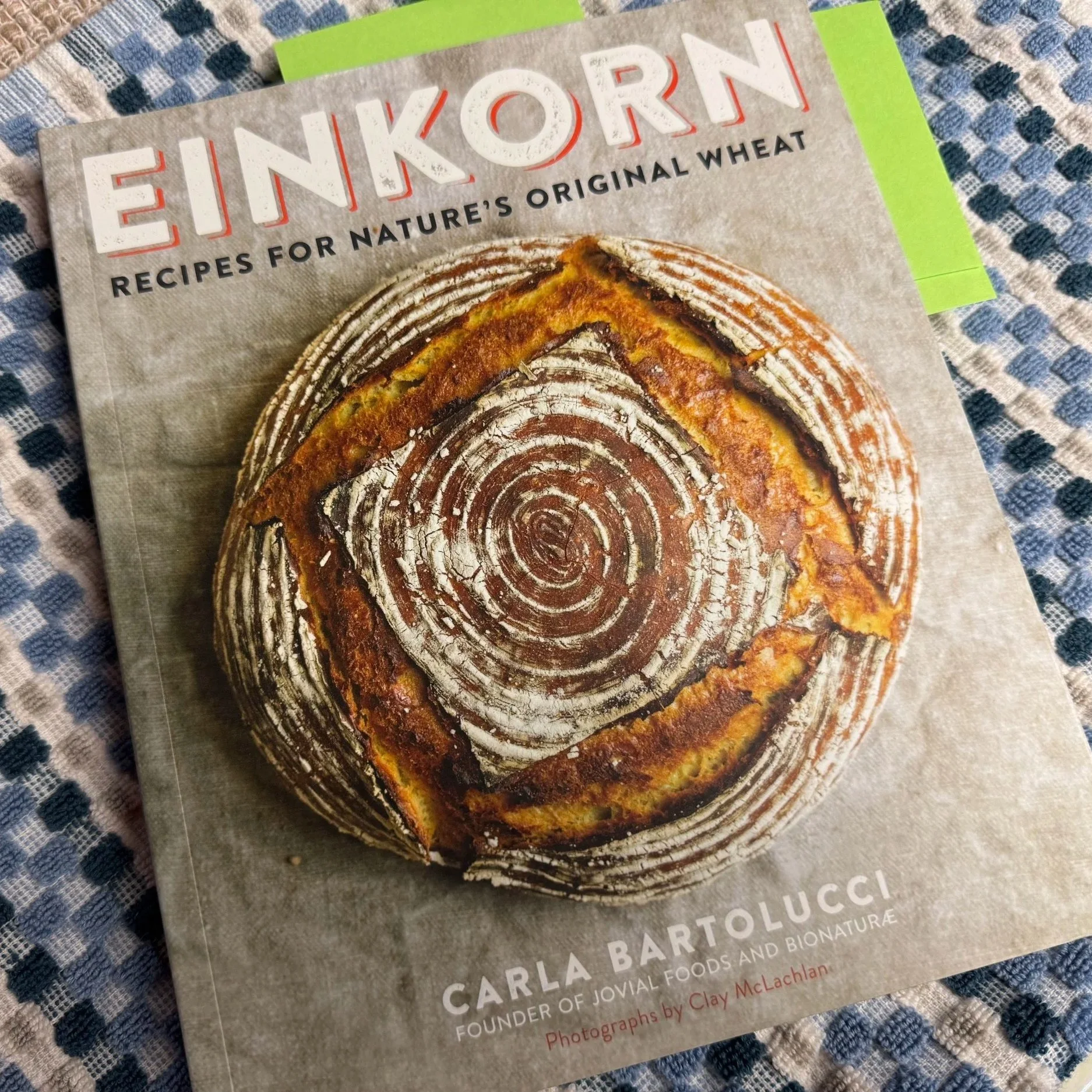
And somehow I forgot about it.
So this morning, slightly humbled and freshly caffeinated, I opened the book and followed the recipe exactly. No improvising. No “well, I usually do it this way.” Just me, the formula, and a willingness to let einkorn be einkorn. There’s even a neat video for it. I’ll link it below for you visual bakers.
Einkorn Sourdough Tutorial
Recipe used:
600g einkorn flour
280g active starter
315g water
1½ tsp salt
I mixed the dough.
I did the gentle turning method described in the book.
I waited for the moment where it usually turns into a sticky blob.
Except this time… it didn’t.
It was soft, yes. But not a sticky mess. It held together. It felt calm. Manageable. Like a dough that wanted to cooperate instead of immediately testing my emotional resilience.
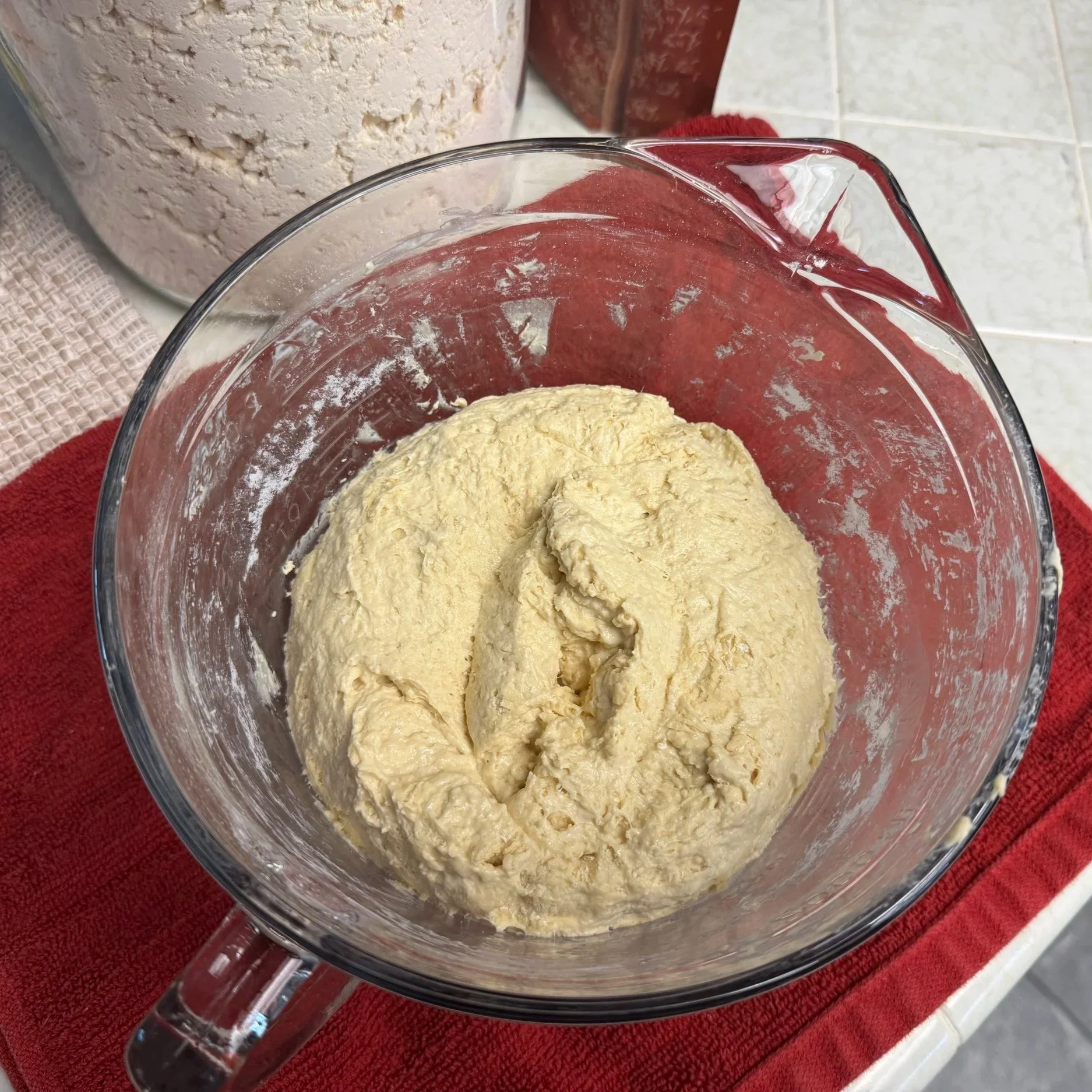
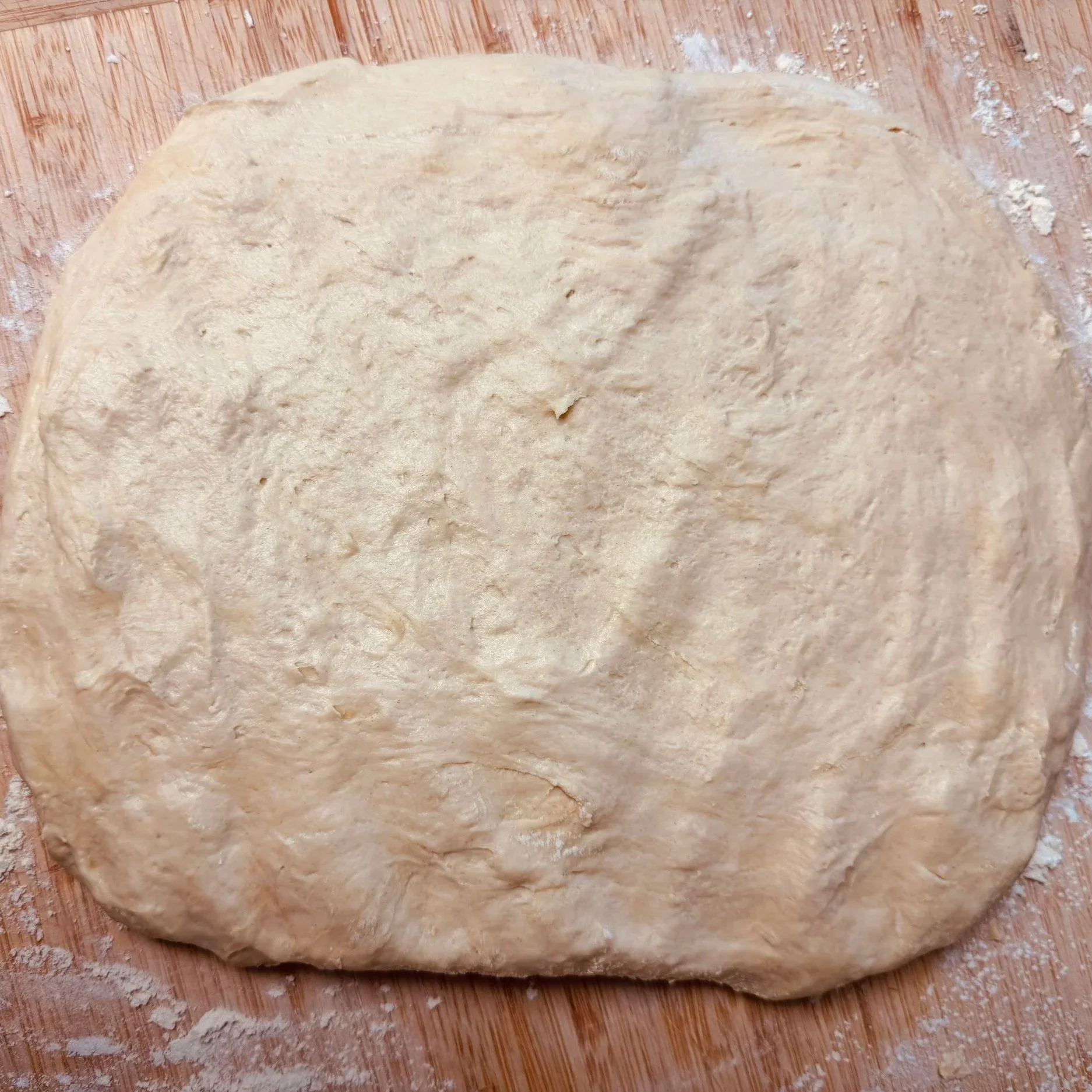
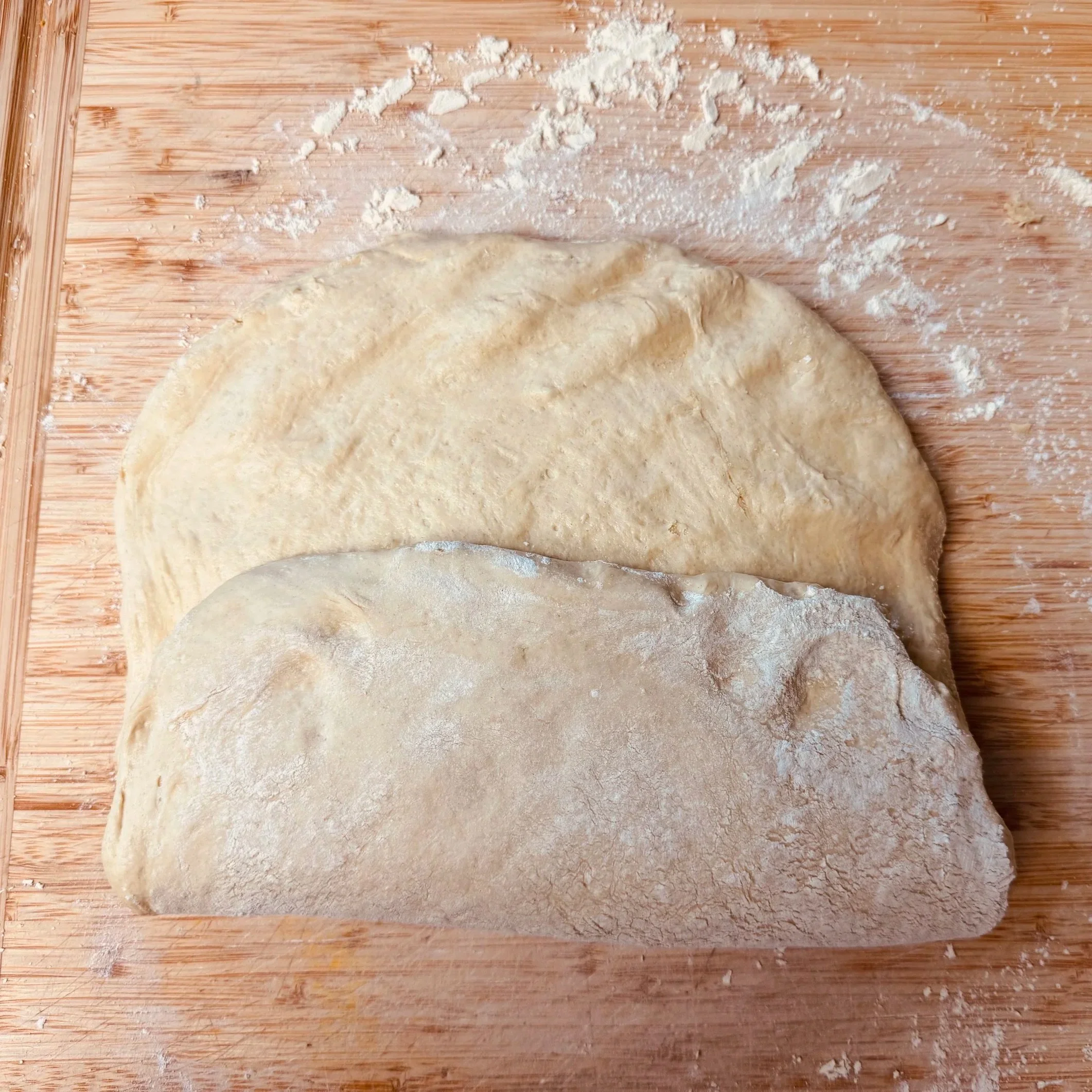
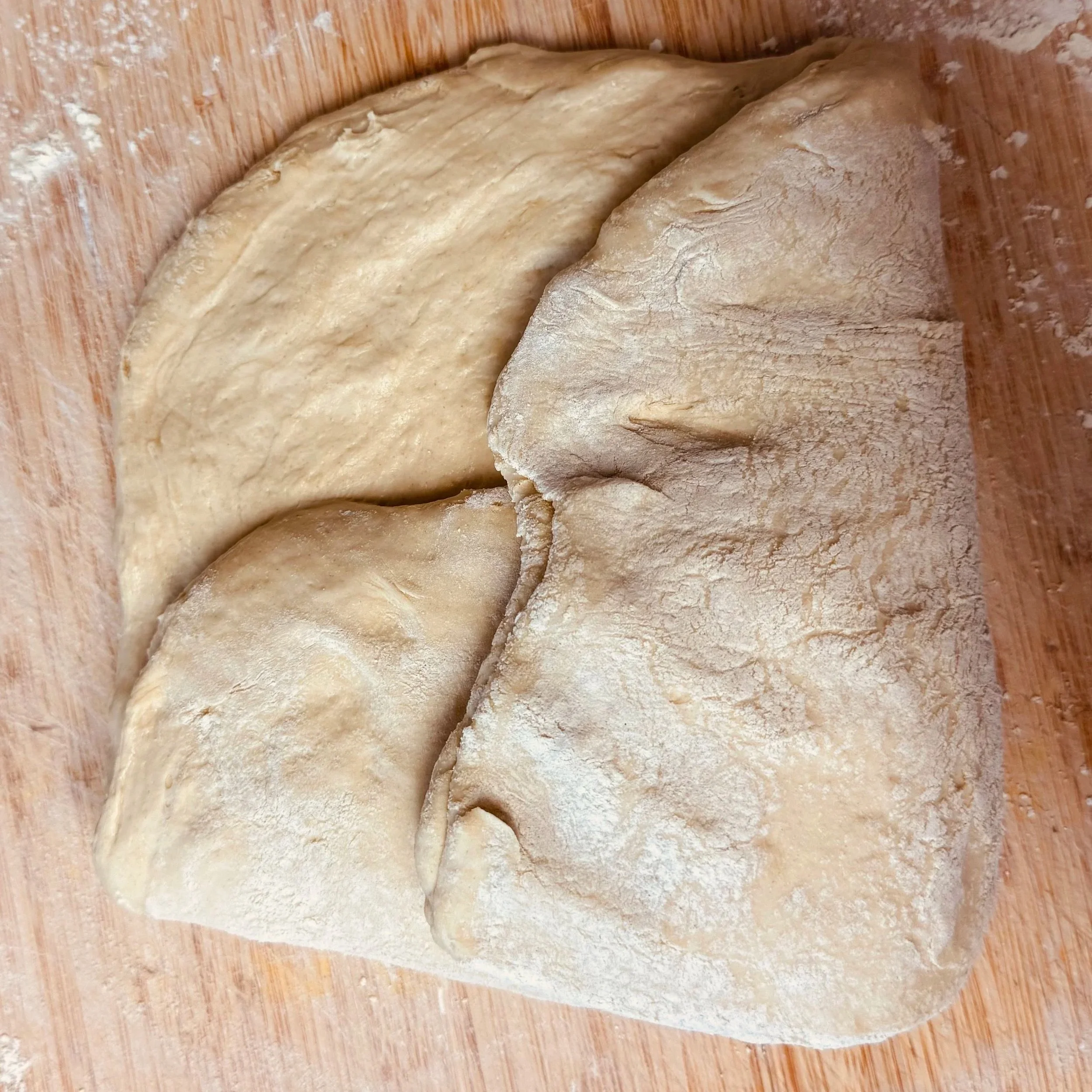
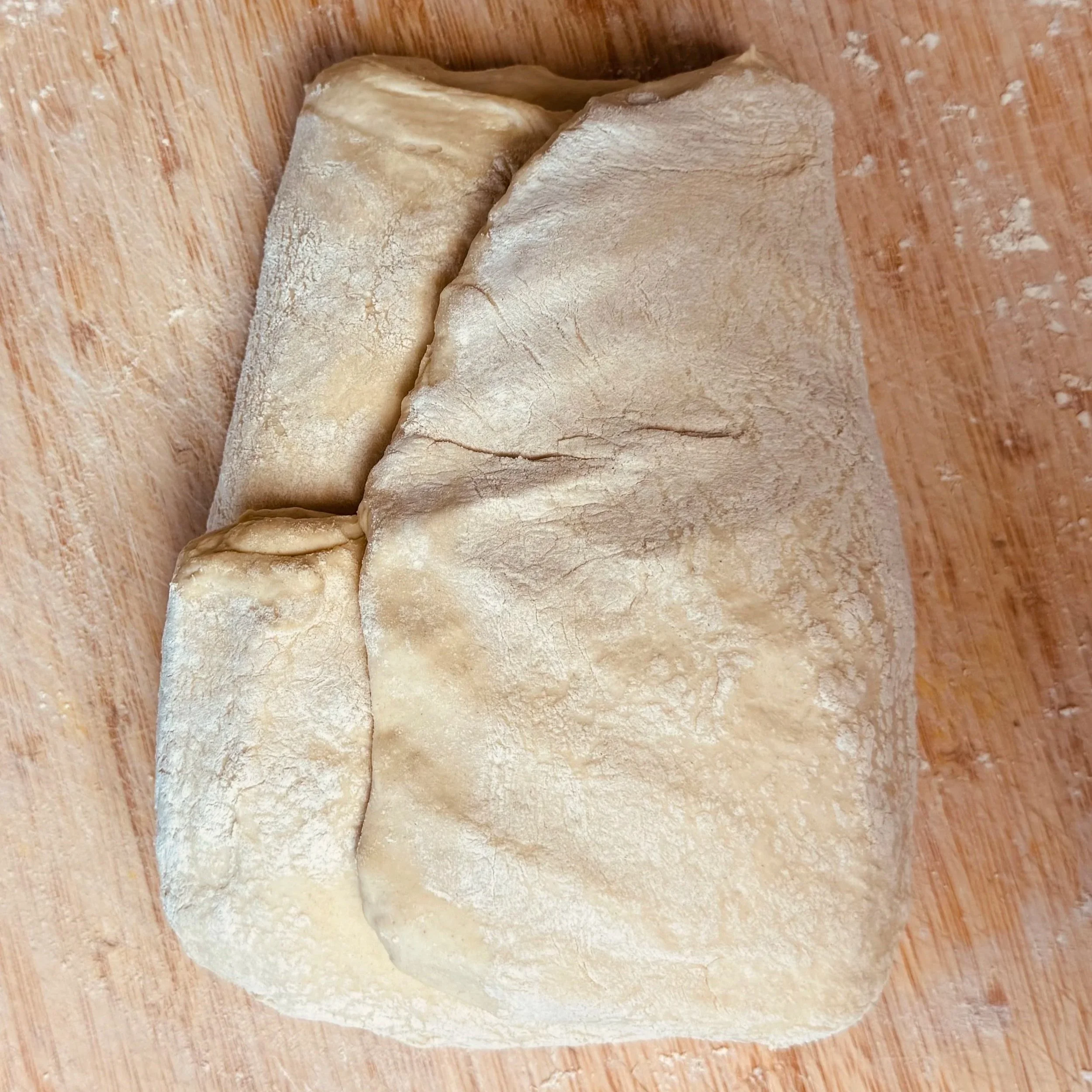
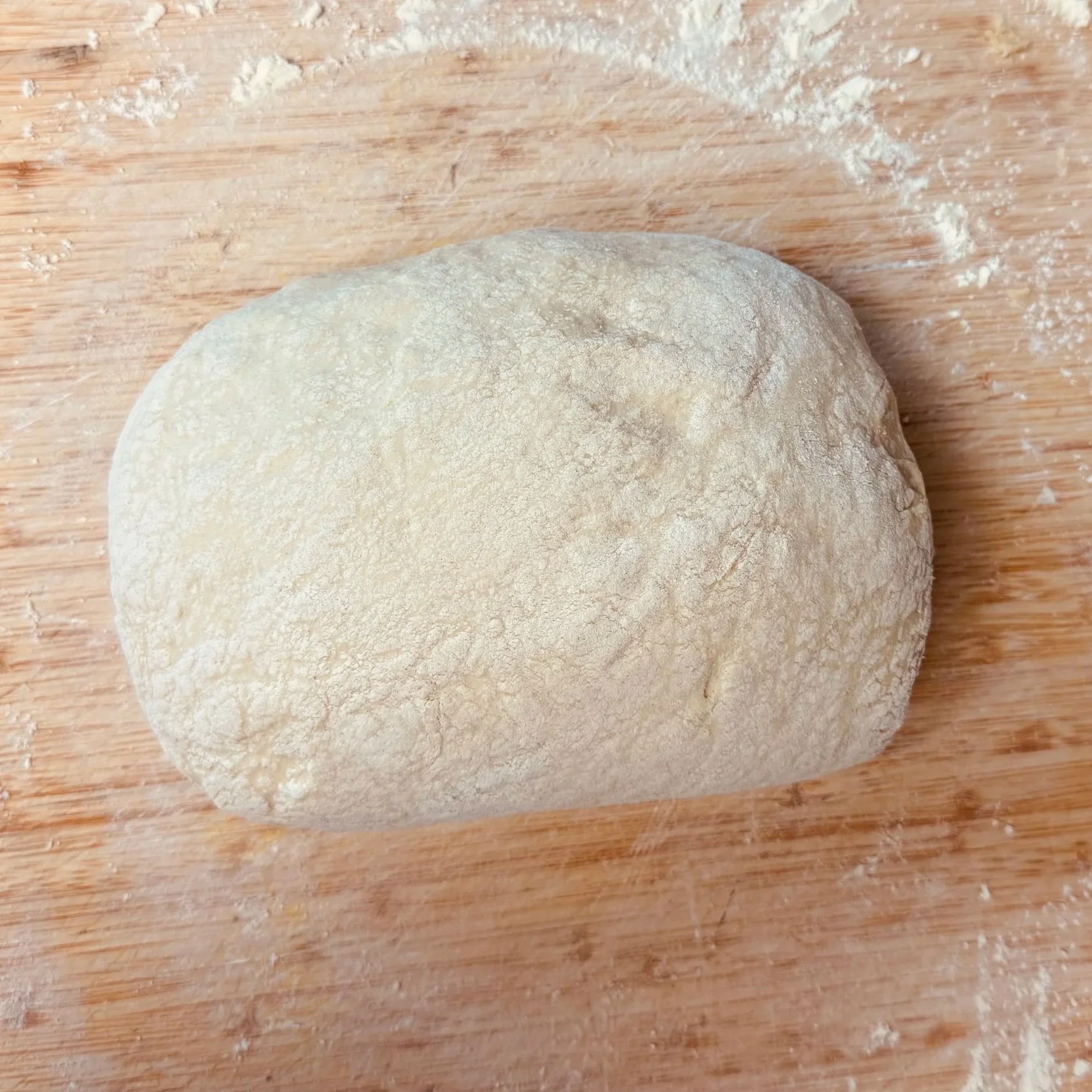
And I’m not being dramatic when I say I felt a wave of relief. Hope, even. The kind that makes you stand in your kitchen thinking, “Okay. We might actually be onto something here.”
Most online recipes treat einkorn like regular wheat with a personality quirk. But it’s not just quirky. It’s fundamentally different. Weaker gluten. Softer structure. It wants gentler handling, less aggressive folding, and a process that works with it instead of against it. Following a formula that’s actually designed for einkorn felt like switching from wrestling the dough to dancing with it.
So here I am. Dough resting. Spirits lifted. Slightly embarrassed it took me this long to open the book that’s been sitting in my kitchen all along.
But also? Rejuvenated.
This loaf suddenly feels possible again.
And now we wait.
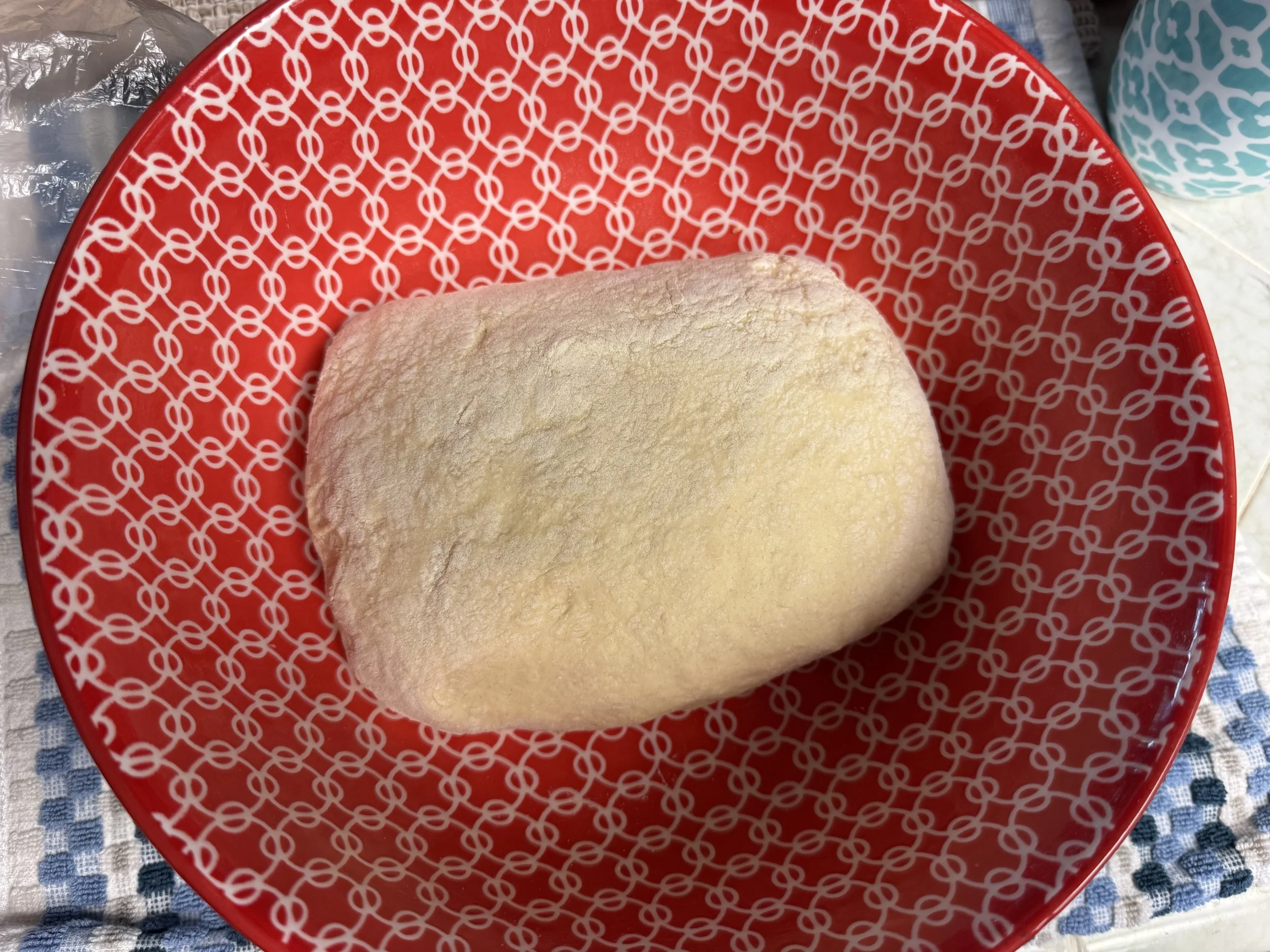
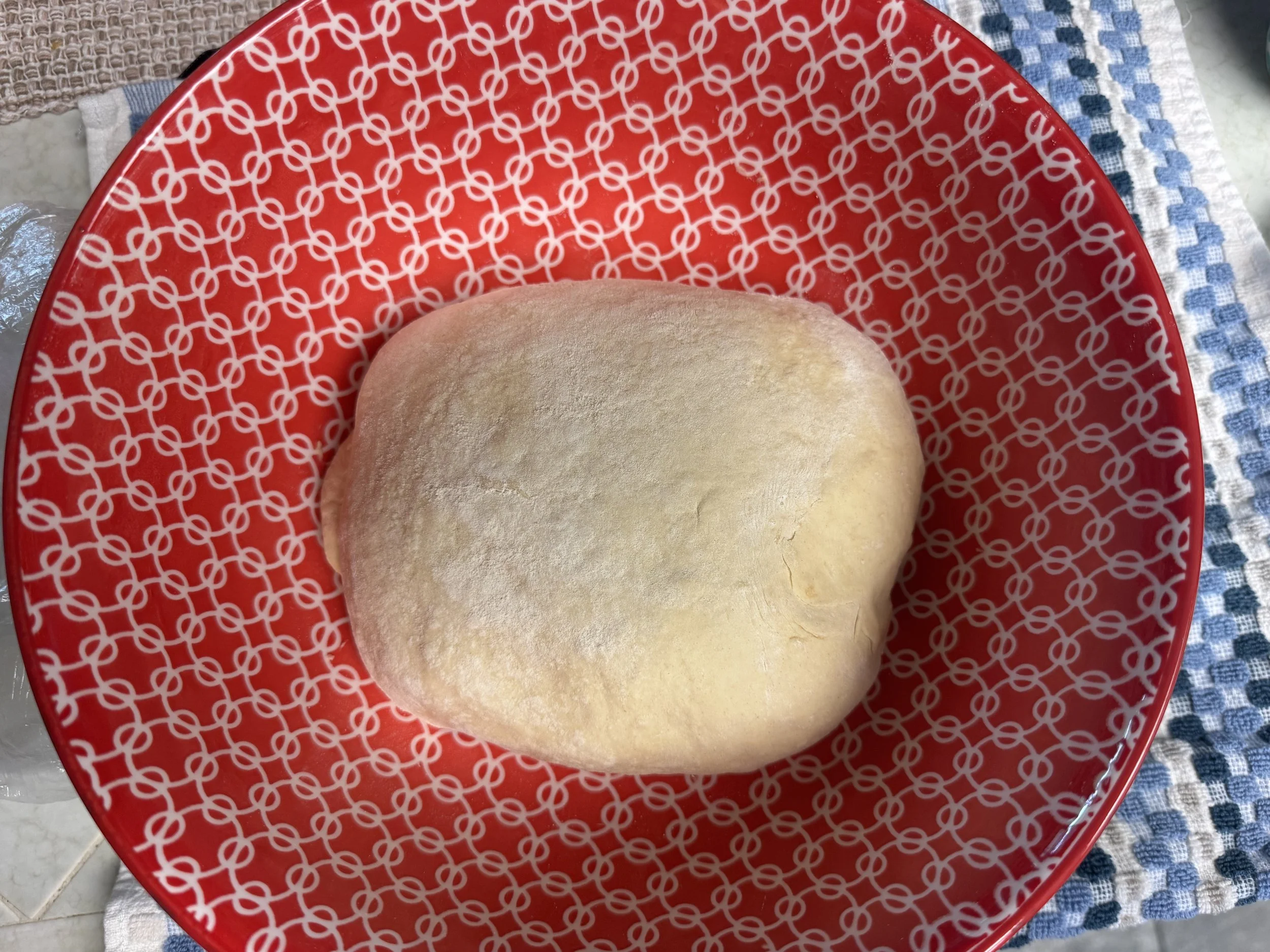
Photos above are in order of first, second, and third turning of the dough.
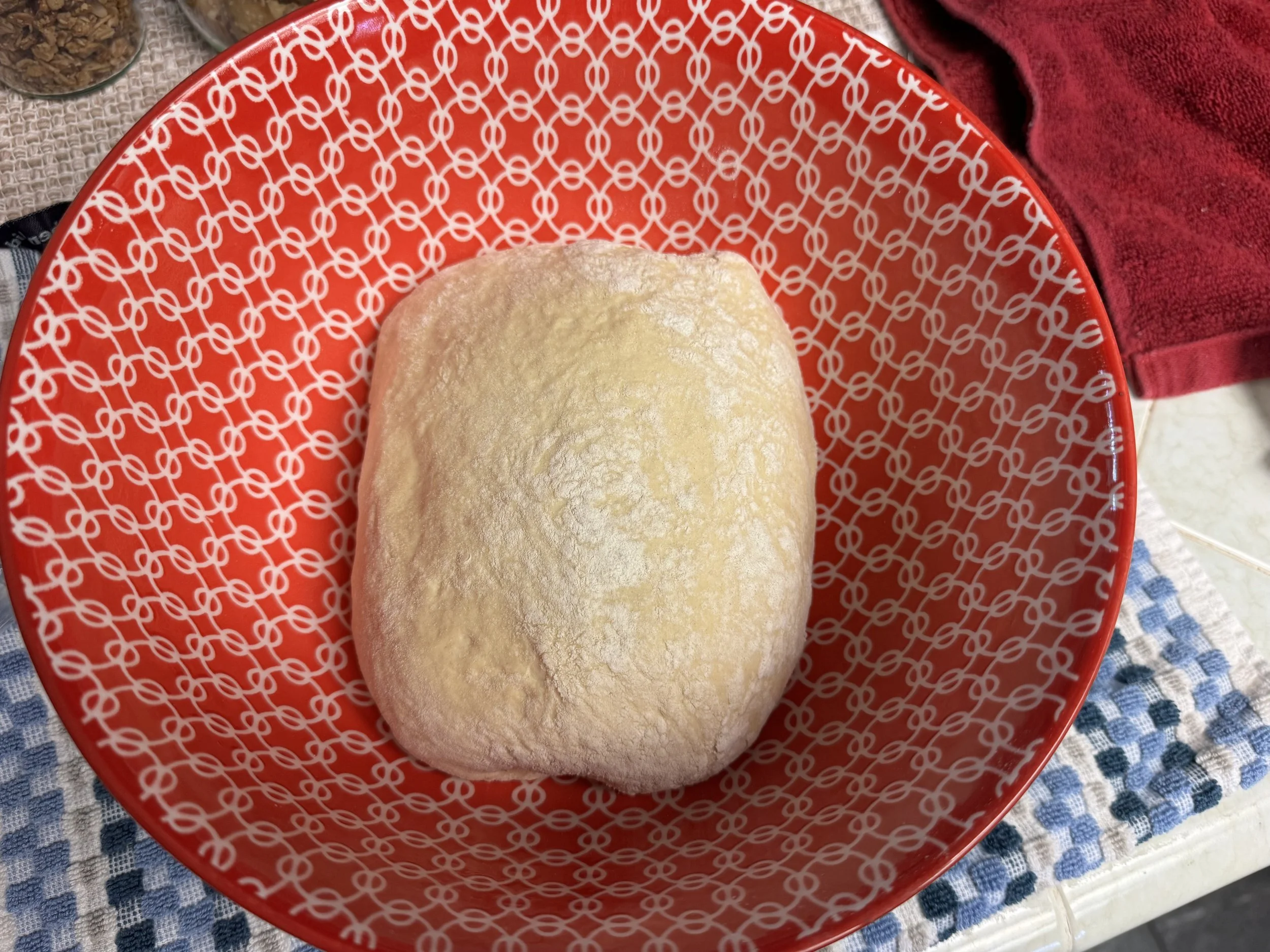
The dough is turned, tucked in, and sitting there looking suspiciously well-behaved. Which, if you’ve been following this einkorn journey, feels almost unsettling. I keep walking by the bowl like… are you sure you’re not going to betray me later?
The recipe says to give it about 3–5 hours and look for roughly a 30% rise. Not a big dramatic doubling. I’m just watching for a gentle puff. A little lift. Some subtle signs of life.
This is the part where I try very hard not to poke it every fifteen minutes. No hovering. Ok maybe a little hovering.
So for now, we wait and let it do its thing.
I’m feeling hopeful. Cautiously, emotionally invested, but hopeful.
Now let’s talk through the bulk ferment and shaping process.
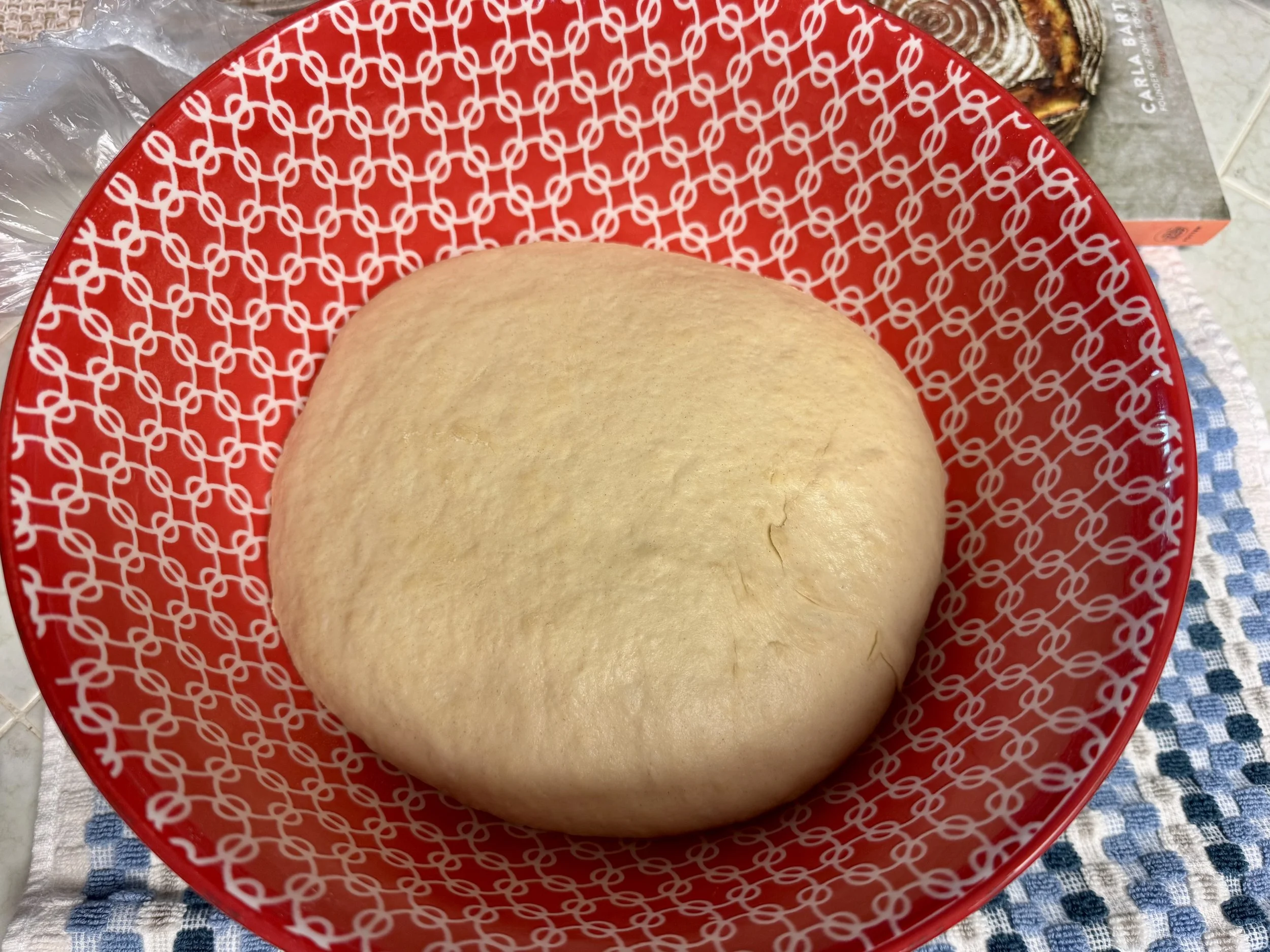
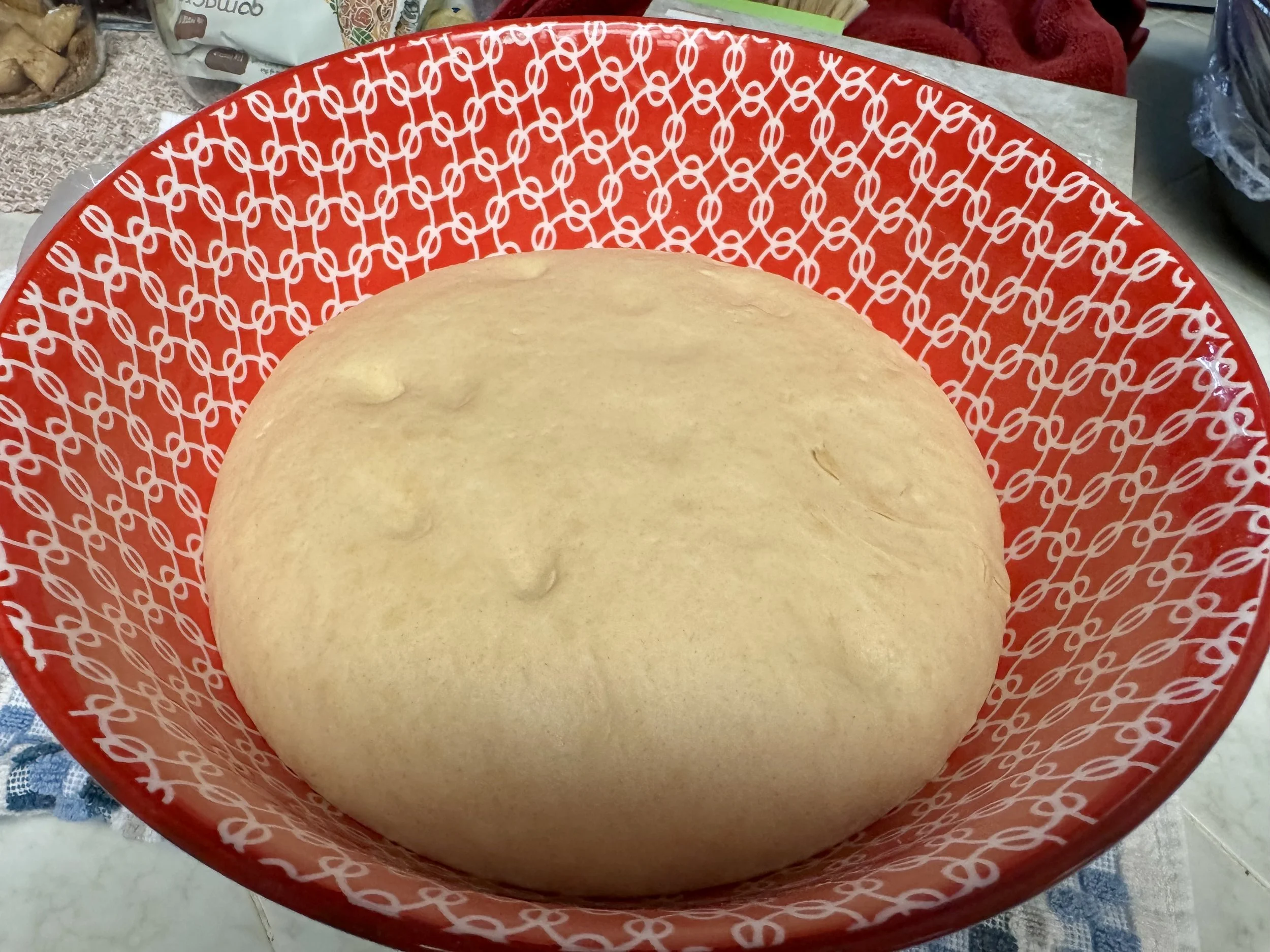
Picture above in order: 3 & 4 hour mark
I let it bulk ferment and it looked pretty good at the three-hour mark. Not wildly puffy, not dramatically jiggly, but clearly alive. Bubbles were there. Structure was there.
And then I did what many of us do.
I let it go another hour. I think I’m more afraid of underproofed than over.
By four hours it still looked fine, but looking back, I probably could have called bulk at three and been perfectly happy. It wasn’t overproofed. It didn’t collapse. But it had already reached that sweet spot where the dough has enough gas and strength to move on. Another hour just nudged it closer to the edge of “very relaxed.”
This is where einkorn (and honestly, any softer dough) likes to humble you a little. It doesn’t always give dramatic visual cues. It won’t always double or dome like strong bread flour doughs.
At three hours, it had that.
At four hours, it still behaved, but it was definitely more relaxed going into shaping. Not a puddle. Just… very willing to spread if given the chance.
So into shaping we went. I turned my dough into my floured cutting board and brought the dough towards the center all the way around. Then tucked the dough, shaping it into a nice tidy ball.
And shaping a well-fermented dough is always a delicate balance. You want to build tension without deflating everything you just spent hours developing. You want to guide it into structure without manhandling it into submission. It’s less “force it into shape” and more “encourage it to become a loaf.”
It tightened up. It held together. It didn’t fight me. Which, in sourdough language, usually means you’re still in a good place.
I’m going to admit something here: I almost convinced myself I ruined the loaf.
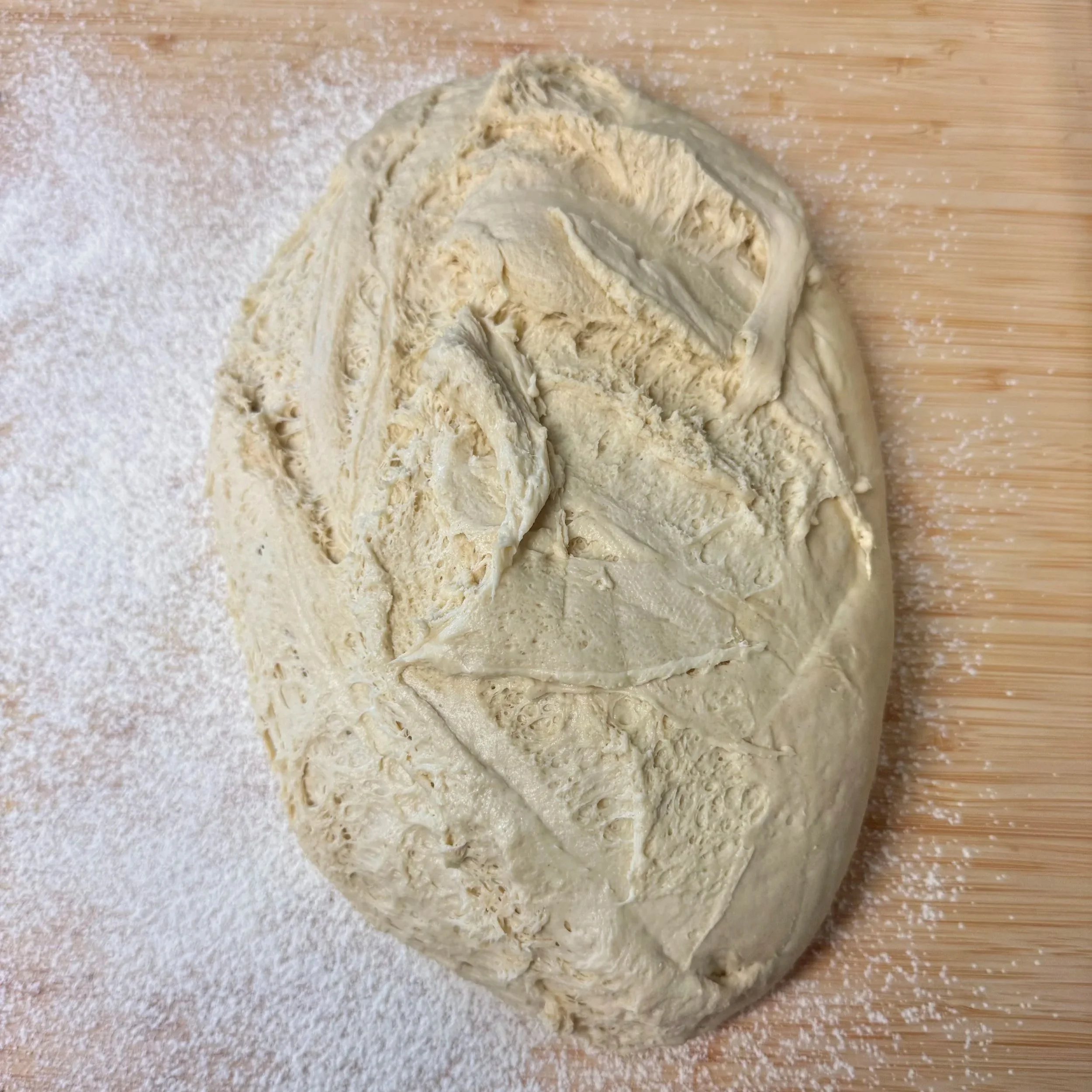
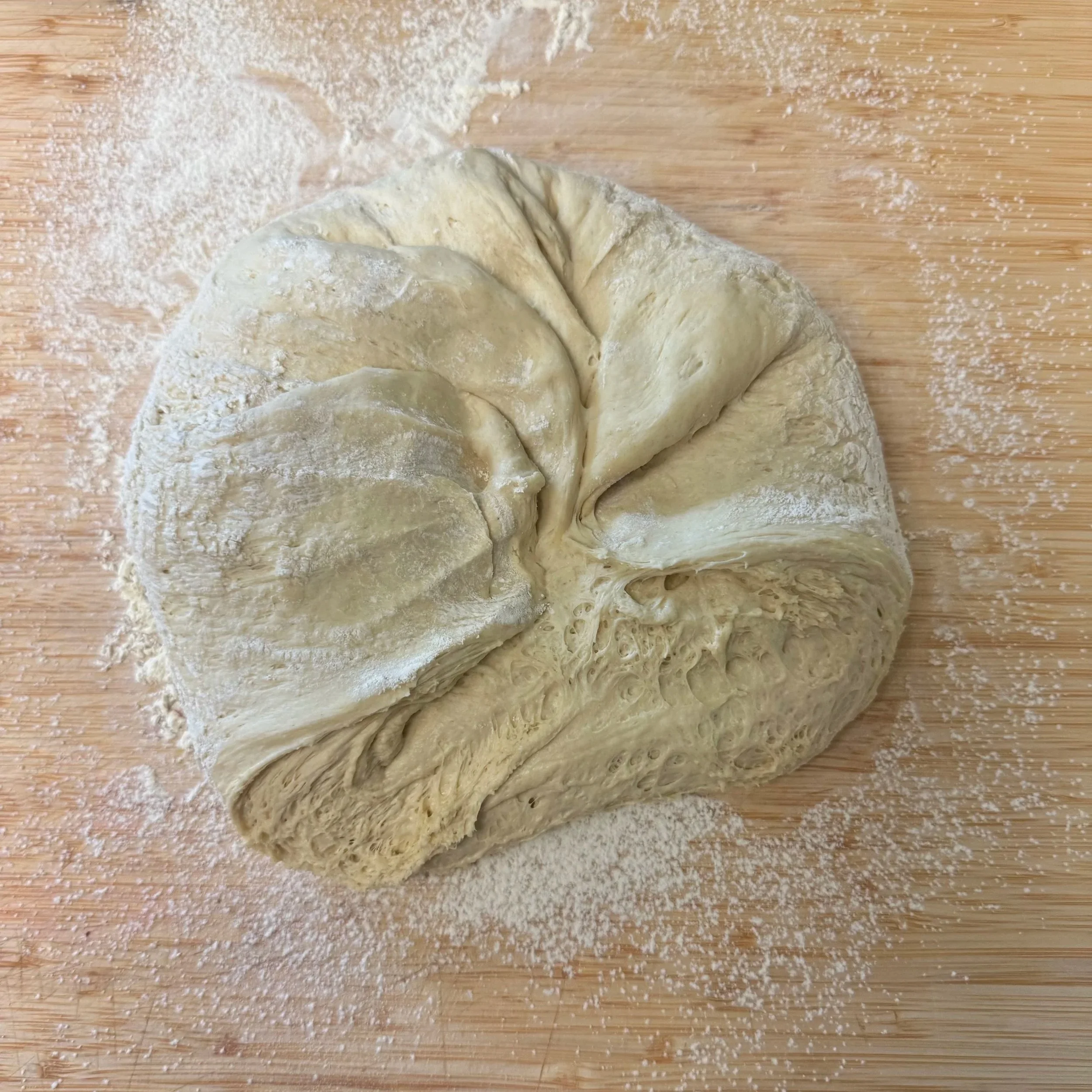
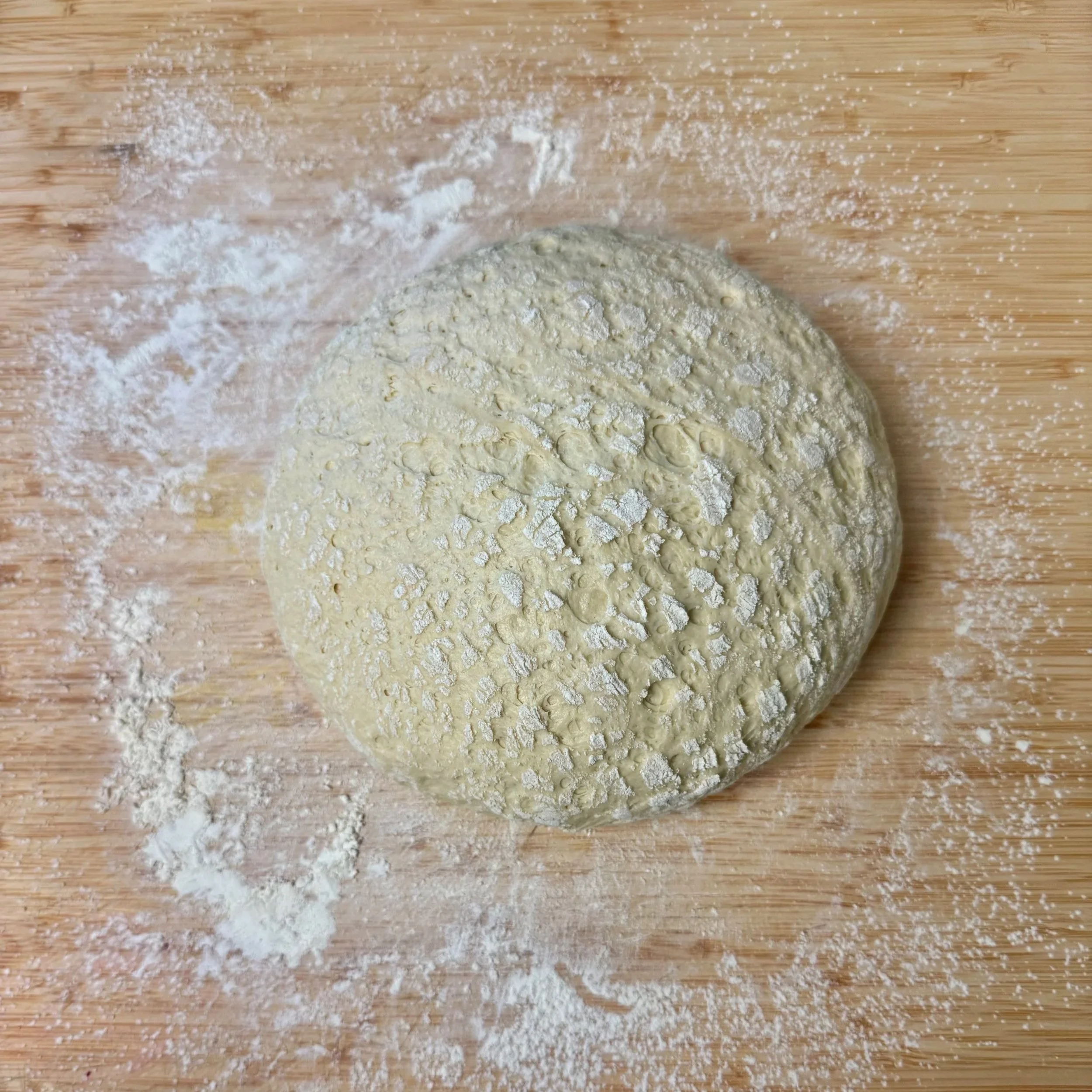
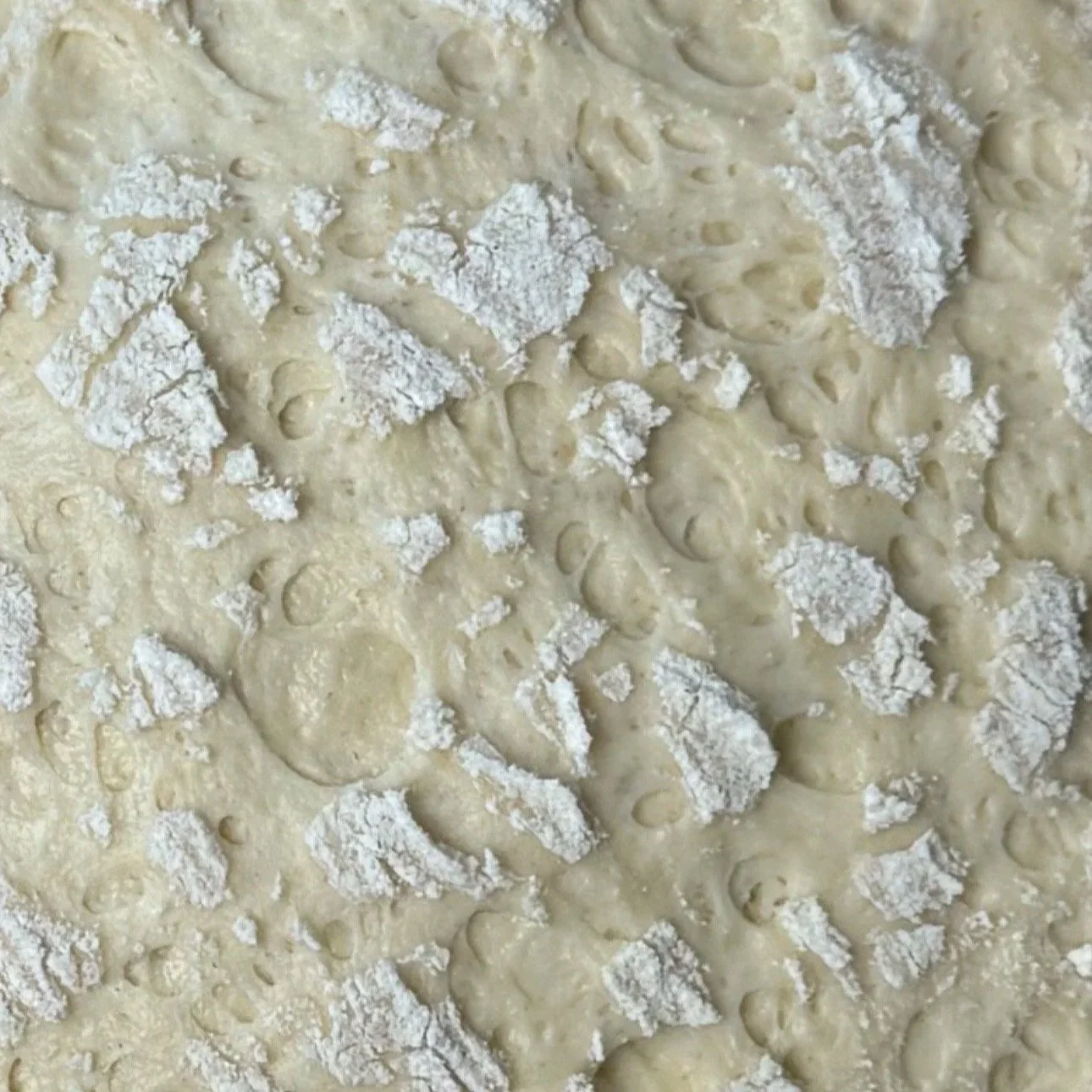
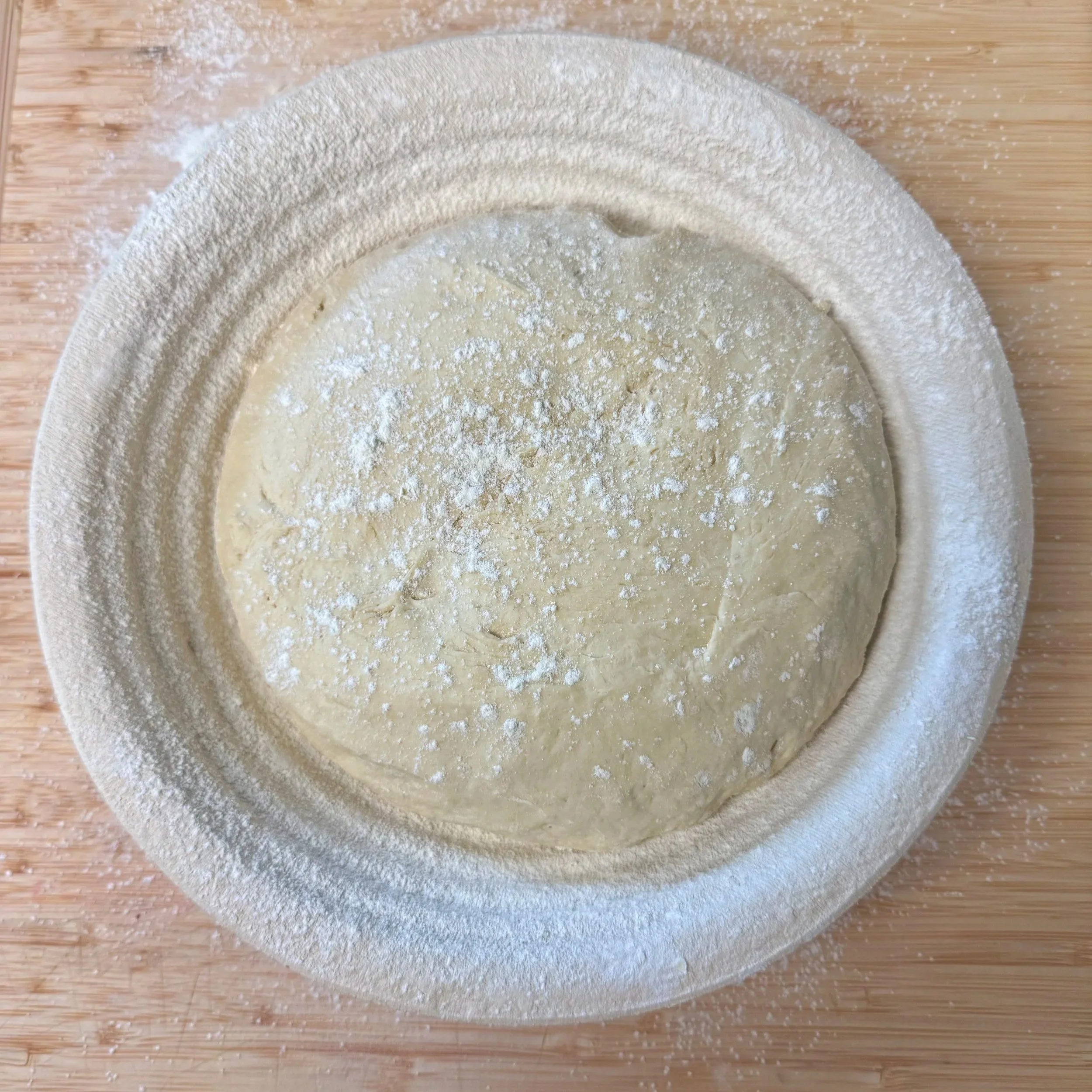
After shaping, I started noticing little tears and webbing on the surface. Not huge rips. Not catastrophic. But enough that I could see the interior structure pressing against the skin. You know that moment where the dough looks just… a little too honest? Like it’s showing you all its secrets?
Yeah. That moment.
I stood there staring at it thinking, “Did I tuck too much? Did I strangle the poor thing? Did I just undo three hours of careful bulk fermentation with one enthusiastic shaping session?”
I slid it into the banneton anyway, quietly hoping that as it proofed in the basket it would sort of… seal itself back up. Not in a magical, glue-it-back-together way. Just enough to relax. Enough to settle. Enough to smooth over the panic I was projecting onto it.
I’m not being dramatic when I say I was on the verge of a full-blown sourdough spiral while this loaf was going into the oven.
You know that moment right after you flip it out of the banneton? The dough is sitting there in the Dutch oven, scored, floured, vulnerable… and suddenly every decision you made over the last several hours replays in your head.
Did I bulk it too long?
Did I shape it too tight?
Did I ruin the skin?
Is it about to spread into a sad, flat disk that reflects my emotional state?
Yes. That was me. Standing in my kitchen, staring at this loaf like it held my entire sense of self-worth. And at one point I actually thought, I might have a nervous breakdown if this loaf doesn’t look like all the work I’ve put in.
But here’s what I kept reminding myself: structurally, it looked right. It held its shape when I turned it out. It didn’t pancake across the parchment. The surface had tension. The score opened slightly, which is always a good sign that there’s life in there.
This is the most psychologically dangerous phase of baking sourdough. Not bulk fermentation. Not shaping. Not even scoring. It’s the first stretch of time after the loaf goes into the oven and before you can see what it’s becoming.
Because at that point, there is nothing left to do. No more folding, tucking, adjusting, or fixing. The dough is in the hands of heat and steam now. You just have to put the lid on, walk away, and trust that all the work you did earlier mattered.
So I slid the Dutch oven into place, put the lid on, and told myself what every baker eventually has to learn to say:
Here goes nothing!
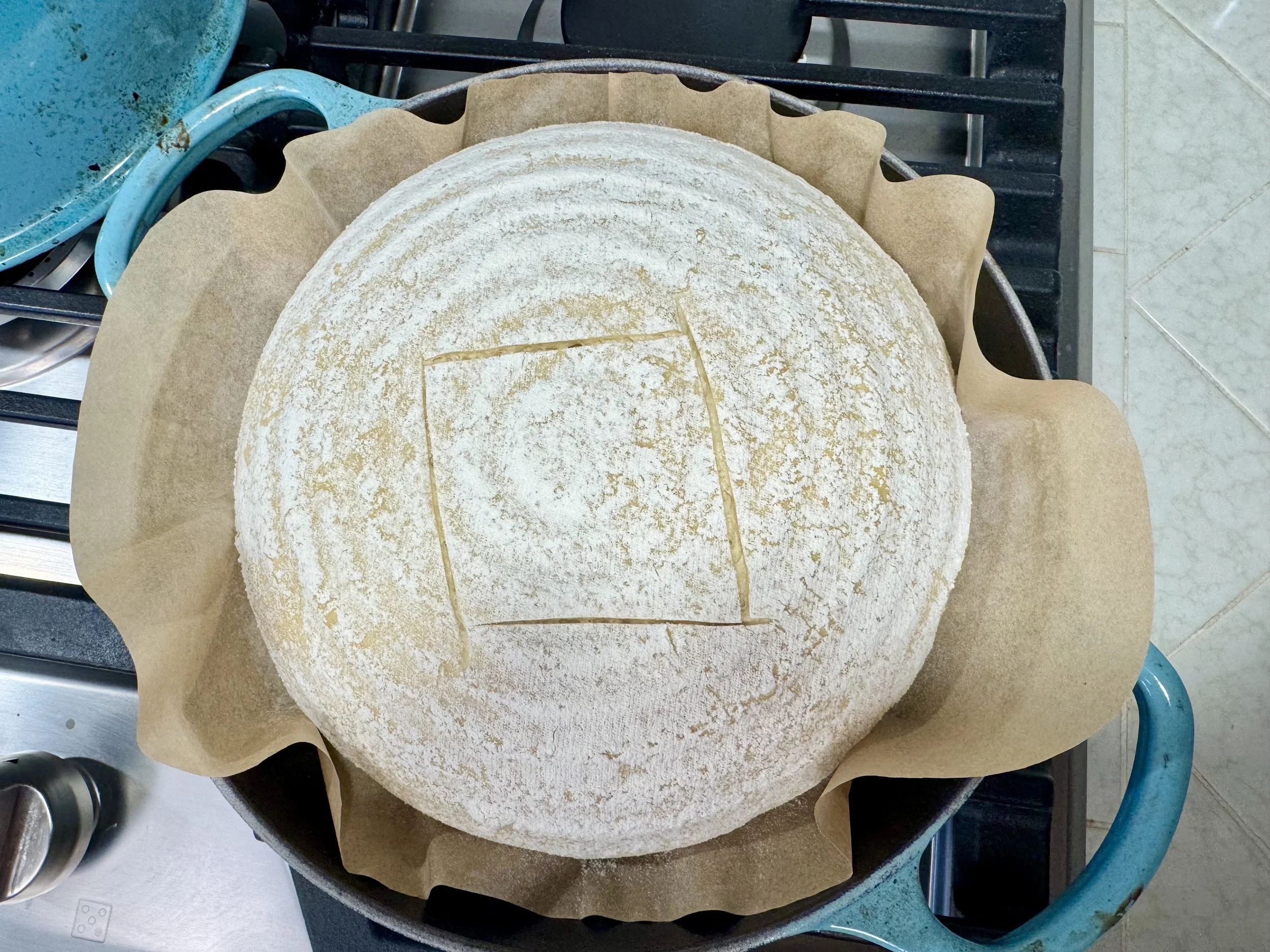
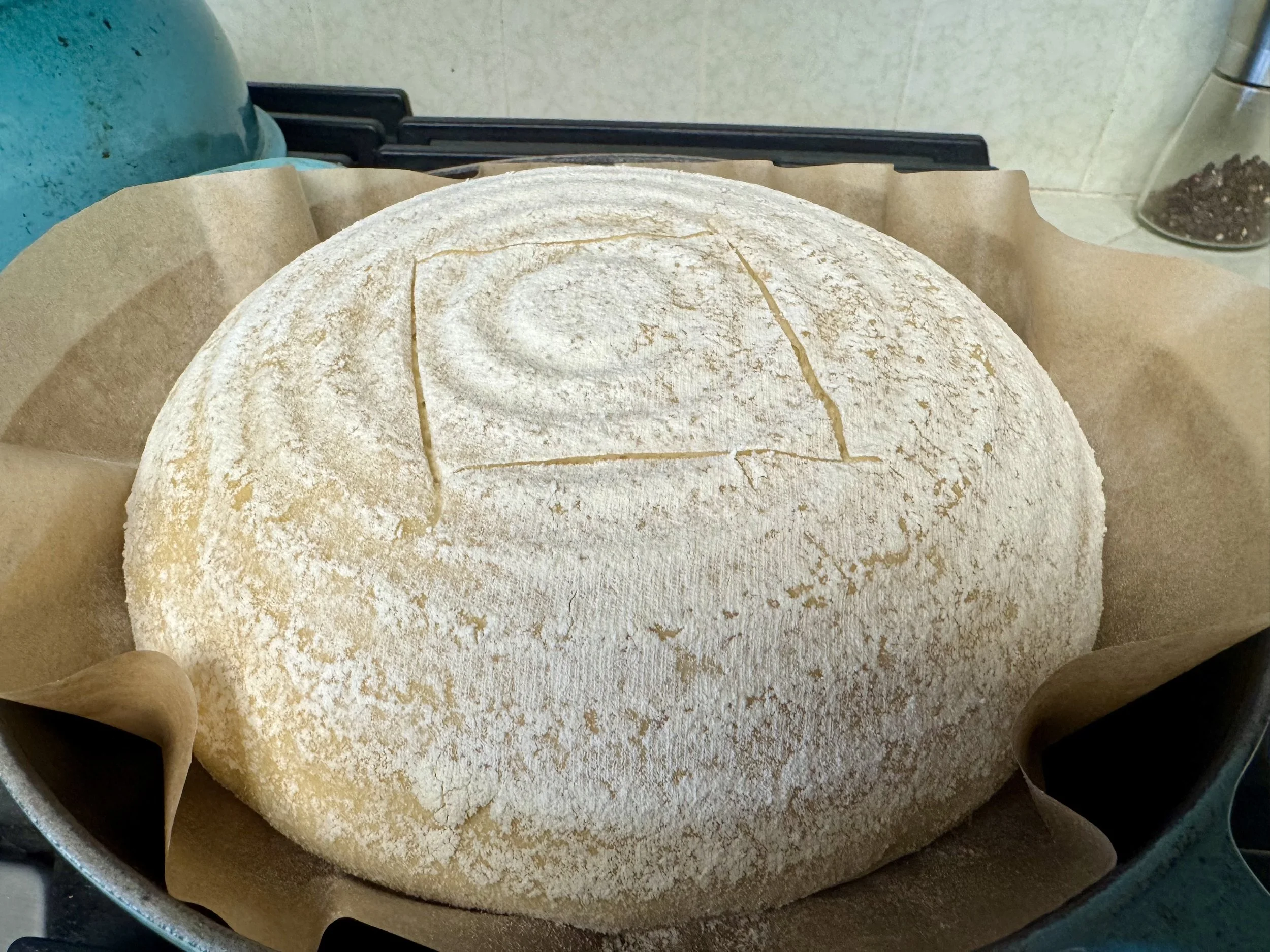
When I tell you those 40 minutes felt like the longest 40 minutes of my existence, I am not exaggerating.
I wish you could have heard the noise I made when I pulled the lid off the Dutch oven.
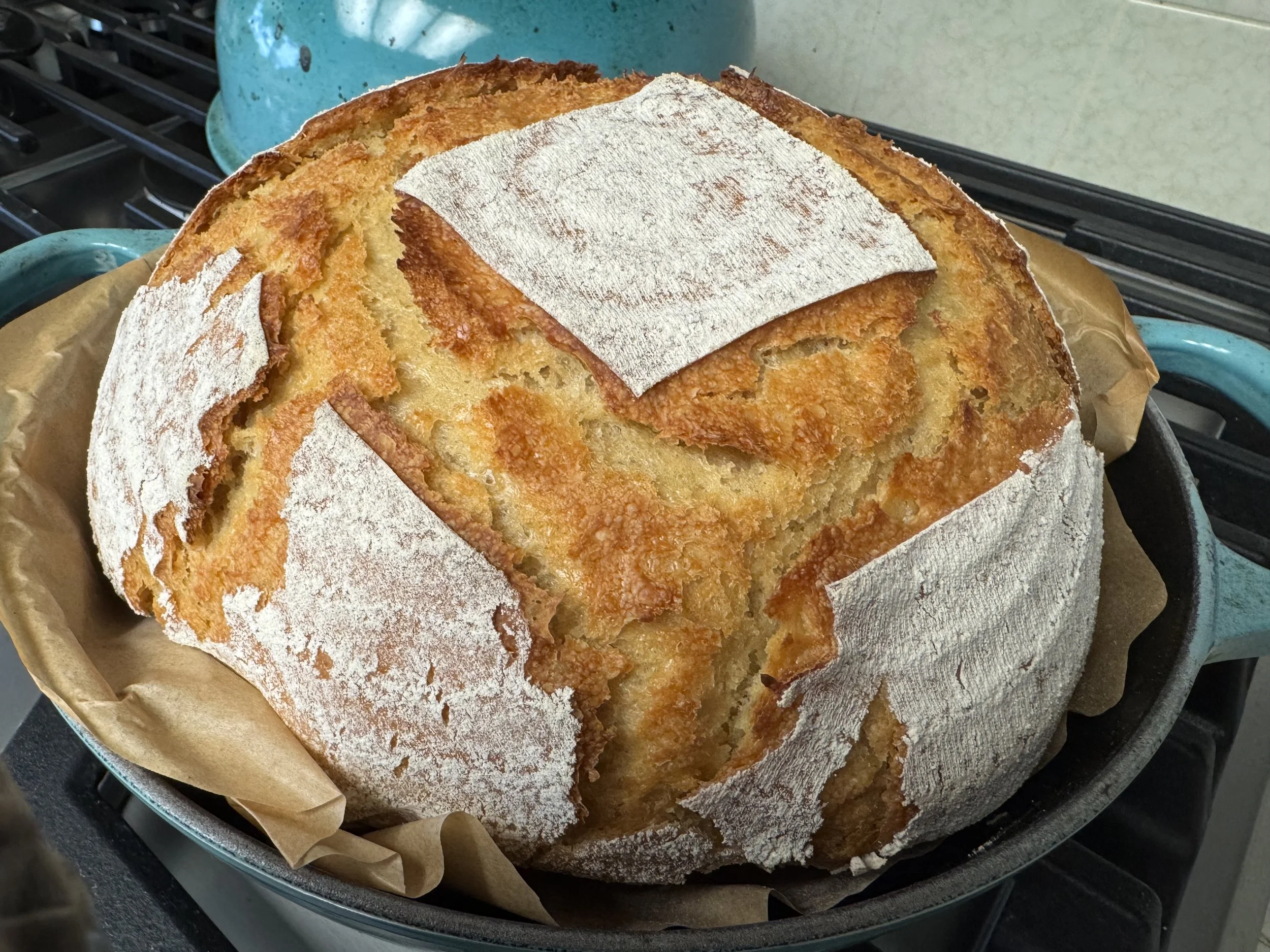
Because after all that spiraling about torn skin and over-tucking and “did I just ruin this loaf,” what came out of the oven looked like it had zero interest in my anxiety.
The loaf rose up tall and round instead of spreading out like a sad pancake. I cringe thinking about that first loaf.
I stood there staring at it thinking,
“Oh. So we were worried for nothing.” I was so worried that I tore the delicate skin. I mean I was staring into its guts.
And now we wait for the hardest part: letting it cool before slicing.
Because if the outside is any indication, the inside is about to tell the rest of the story.
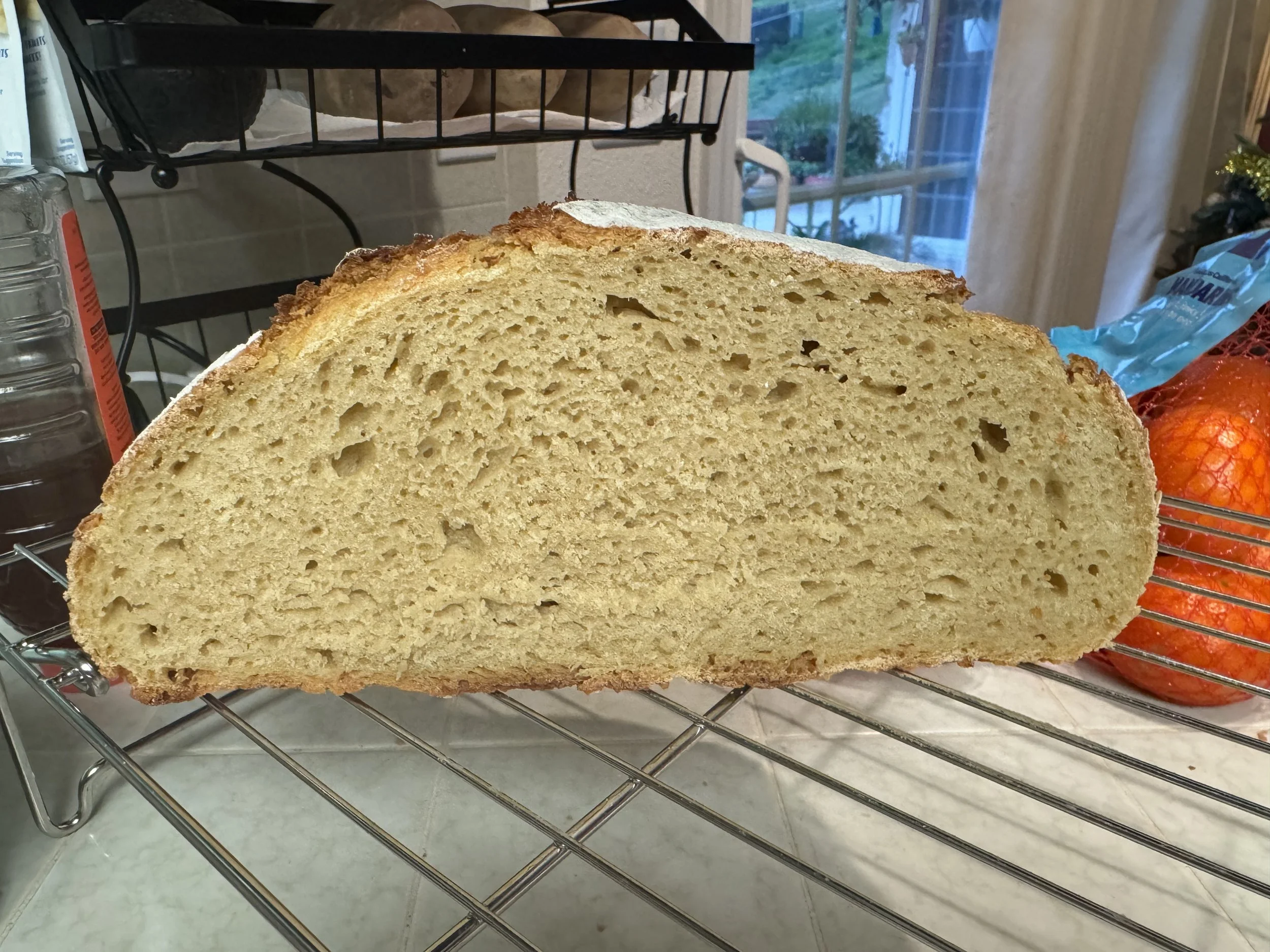
I’m genuinely happy with how this loaf turned out. It’s a big improvement from the last two. A better rise and better structure.
The crust baked up deeply golden with that signature einkorn color, almost honeyed, and the crumb came out soft and even with small, tender pockets throughout. Not wildly open, not dense. Just right for slicing, toasting, and reminding yourself that persistence pays off.
It really is a great recipe, and for anyone determined to make a 100% einkorn sourdough work, this one is worth holding onto.
For this attempt, I stuck closely to the recipe from Einkorn: Recipes for Nature’s Original Wheat, and I’m glad I did.
Stay tuned and stay cultured.
—Sabrina 🫙
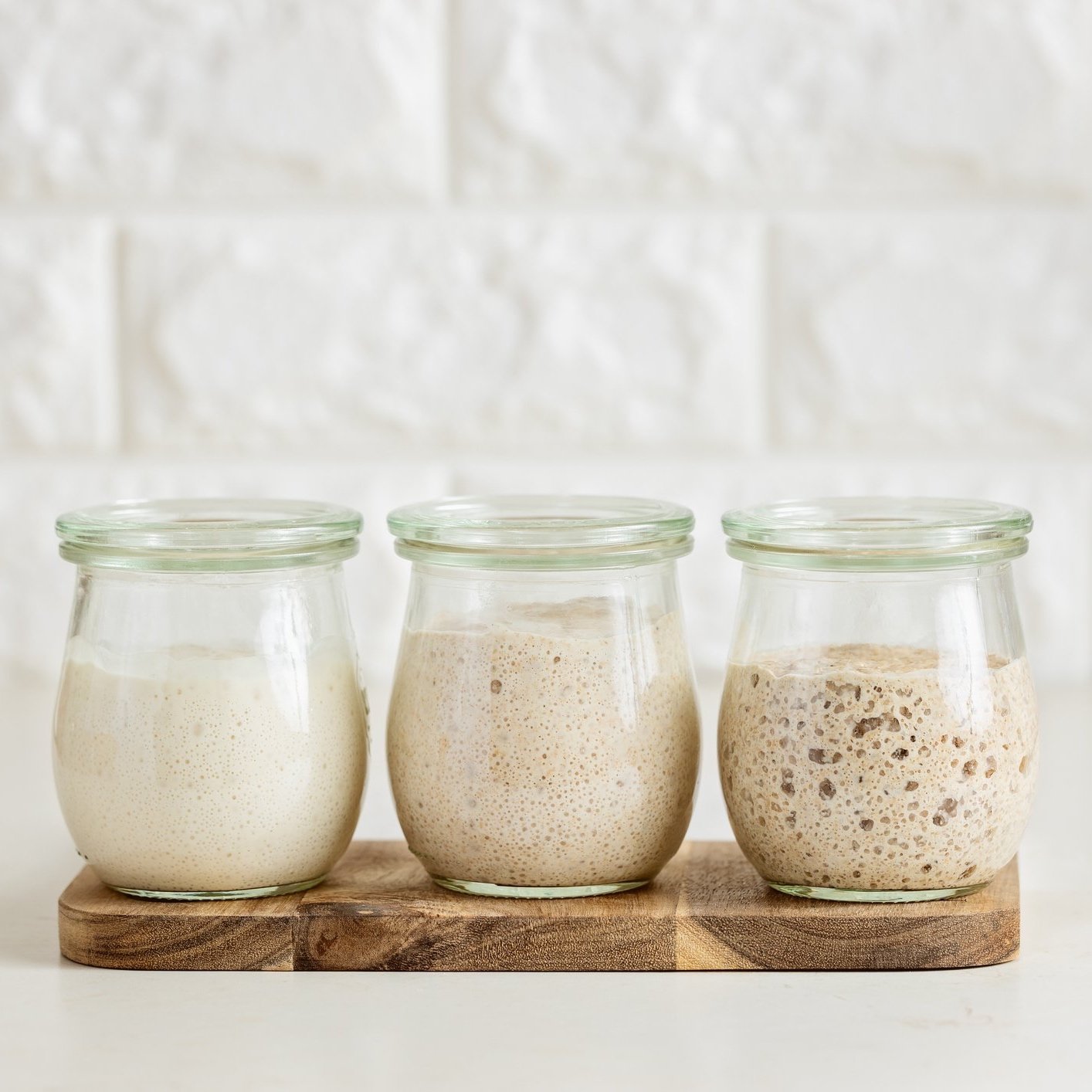
Our Ancient Einkorn Sourdough Starter is truly something special. It has a creamy personality with soft vanilla notes and a gentle milk-like sourness that makes every loaf feel rich and comforting. The flavor is delicate but layered, giving you complexity without overpowering tang.
This starter is also incredibly enthusiastic when it comes to rising bread. It is lively, responsive, and more than ready to lift your loaves beautifully. Of all the ancient grains, einkorn comes closest to behaving like modern wheat, which makes it a wonderful choice if you want something heritage-inspired but still approachable to bake with.
Visually, it resembles common wheat more than other ancient grains thanks to its naturally light colored flour. The result is a loaf that feels both rustic and refined, with a tender crumb and a warm golden glow. If you love ancient grains but want reliability and elegance in your baking, this einkorn starter delivers.
Expect:
• Creamy flavor with soft vanilla notes
• Gentle, milk-like sourness
• Lively fermentation and strong rise
• Beautifully balanced flavor without sharp tang
• Tender crumb and warm golden color
• Ancient grain character with approachable baking performance
Elegant, reliable, and full of quiet complexity, this einkorn starter brings ancient grain baking into the modern kitchen with ease.
Our San Francisco “Fisherman’s Wharf” Sourdough Starter captures the unmistakable character of the famous sourdough breads that have made San Francisco baking legendary. Known for its lively fermentation and classic tangy flavor, this starter produces loaves with the signature taste many people associate with the city’s historic bakeries.
San Francisco sourdough has long been celebrated for its unique flavor profile, shaped by the coastal climate and traditional fermentation methods used by generations of bakers. This starter brings that same spirit into your kitchen, delivering the bold, aromatic character that sourdough lovers recognize immediately.
The finished breads develop a beautifully balanced tang, with a chewy yet tender crumb and a crisp crust that makes every slice memorable. The flavor is vibrant and satisfying—perfect for rustic loaves, sandwich bread, and the classic sourdough boules that feel right at home on a soup-and-salad table.
Each bake evokes the experience of strolling along Fisherman’s Wharf, where the aroma of fresh sourdough fills the air and warm loaves are enjoyed with butter, chowder, or simply on their own.
Simple, lively, and full of West Coast character, this starter makes it easy to bring the spirit of San Francisco sourdough baking into your kitchen.
Expect:
• Classic San Francisco-style sourdough tang
• Perfect for boules, sandwich loaves, and artisan breads
Bold, nostalgic, and wonderfully flavorful, this starter produces sourdough breads that capture the iconic taste of San Francisco baking.
Our Wild Dark Rye Sourdough Starter brings bold flavor and energetic fermentation to traditional rye baking. This culture is known for its lively nature, producing a vigorous starter that bakers love for its strength and character.
Rye starters are naturally aromatic and active, and this one is especially spirited. When it’s ready to be fed or used in dough, the surface will be bubbling with life and activity, so much so that it can seem like it’s ready to spill right out of the jar if ignored for too long.
As it ferments, the starter develops the rich, earthy character that dark rye is known for, creating breads with deep flavor and a pleasantly tangy aroma. Its strong fermentation power makes it excellent for producing hearty loaves with beautiful rise and structure.
The finished breads are bold and rustic with a moist crumb and the distinctive depth that dark rye flour brings. It performs beautifully in traditional rye loaves as well as rustic breads blended with wheat flour.
Simple, lively, and full of personality, this starter makes it easy to bring the bold tradition of dark rye sourdough baking into your kitchen.
Expect:
• Extremely lively and active starter
• Bold, earthy dark rye flavor
• Aromatic, complex sourdough character
• Perfect for traditional rye loaves and rustic breads
Energetic, flavorful, and wonderfully rustic, this Wild Dark Rye Starter produces hearty sourdough breads with bold character and lively fermentation.