Honey Soaked Nuts
Feb 25 | Written By: Allie Faden
Sometime between August and December, nuts are being harvested all around the Northern Hemisphere. What month is determined by the type of nut, with pecans being latest (fair; they’re my least favorite) and almonds earliest, but this is the harvest range for nuts more broadly. In the States, we tend to see excellent sales on nuts from a bit before Thanksgiving until generally a bit after New Year’s. I tend to wait until the post-Christmas sales, because that’s when grocery stores are really trying to clear out the bulk of their remaining stock and are dropping those prices with a quickness. Accordingly, bags of nuts in shells will often be at or under $4/pound. Even with the current inflation system, nuts are on sale during late winter. I saw some 1# bags of mixed nuts for a bit under $3 while at the store today (I was there for more honey for the nuts I already have). I didn’t get any of them because I’ve obviously got plenty already, but I wanted to!
I am not convinced that my family love seeing the influx of as much as 30 pounds of nuts in a given year in our home, but I am certain that they love the aftermath of it. You also could do peanuts, pistachios, sunflower seeds or pepitas, and also don’t forget Brazil nuts. All the nuts and seeds!!
I buy so many nuts because of honey soaked nuts. Child Tester (who is about to be renamed Teen Tester, as she’ll be 13 in a few days!) will eat these happily, but Ross is the true lover of honey soaked nuts. It’s really for him that I make them, since CT and I like them but not like he does. Not sure I’ve seen anyone who liked honey soaked/infused nuts more than Ross does. Usually, I do walnuts, hazelnuts/filberts, and almonds. Hazelnuts tend to be the preferred nut in my house, so I do more of these than the others combined.
Sometimes I add dried fruits to the mix, sometimes not. These decisions tend to get made in the moment, based on what’s in the pantry, what sounds good, and what I think needs to be used up. This year I did almonds, hazelnuts, and an almond/hazelnut mix. I didn’t buy a lot of walnuts this year since I just wanted to be able to make a few of pastries with those throughout the year, so I focused on the other two for soaking. You could throw some citrus rinds or already candied citrus rinds in the mix, too, if desired. I bet that would be good! Will be finding out in a few months, now that I realize this is a variety I need to start making.
In general, you will get about a pint of shelled nuts from each pound of unshelled. I mostly use 8oz jars for these, so 2 jars per pound. The pictures that follow are from my most recent batch, not how I make every batch. I like to mix things up so there are more choices on what kind(s) of soaked nuts will be eaten in a given moment.
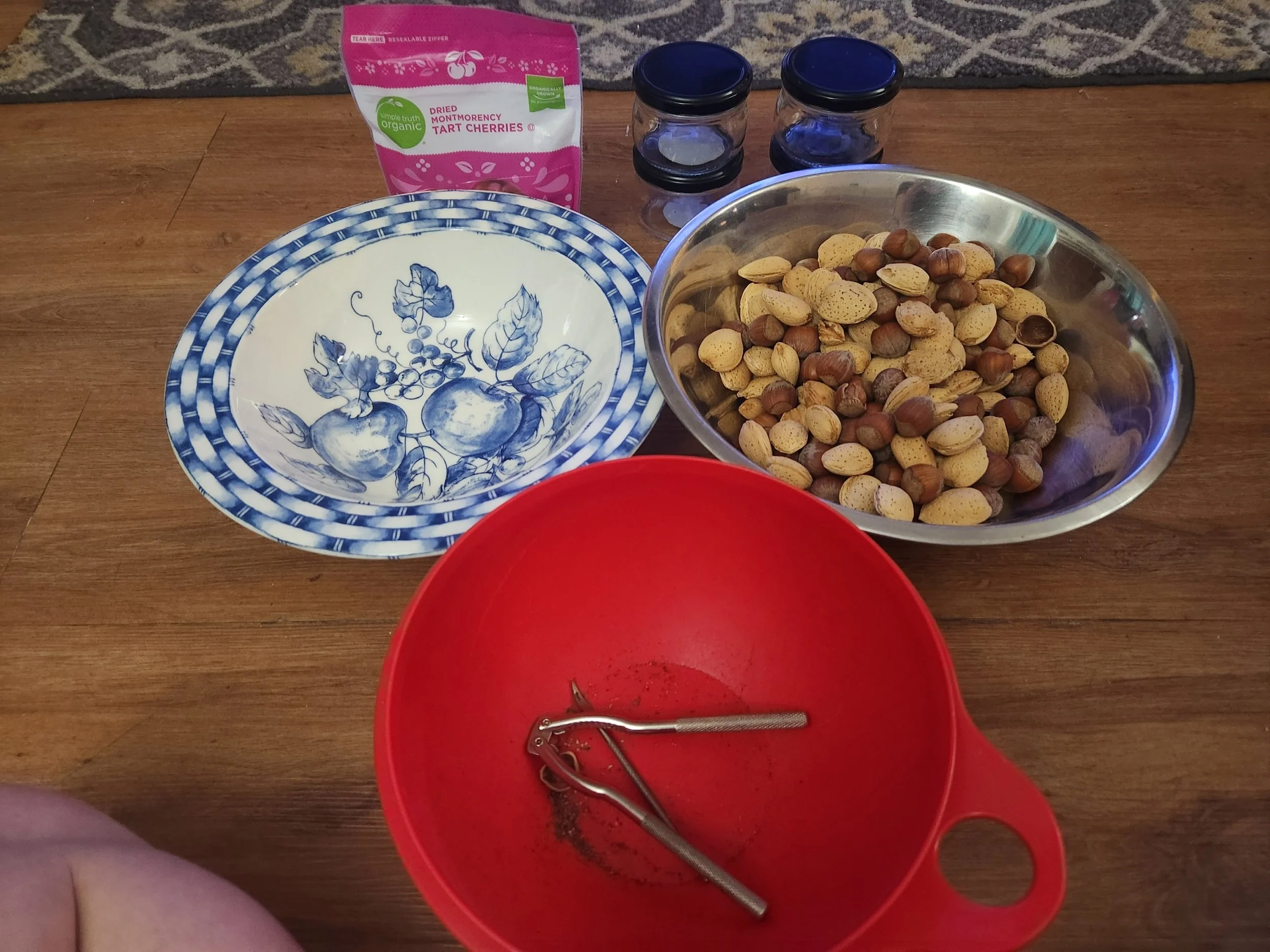
Do this on whatever floor in your house isn’t carpeted. It is wild and messy business shelling nuts. Also? Don’t be like me. Find a nut cracker you love that doesn’t have textured grips. You’re gonna get some lovely callouses from textured ones, but the process of that isn’t fun at all.
I chose tart cherries for this because I found them on manager special. Sometimes I do blueberries, mulberries, dates, apples, or apricots. Sometimes plums. I should do raisins sometime. Whatever you do, if it involves fruit, do not use fresh fruit. You will have some fun and interesting short meads if you don’t listen to me, but what we’re doing here requires dried fruits. Any dried fruit is fine and you can have fun pairing different fruits with different nuts.
You don’t have to put fruit in. A lot of the time, I don’t.
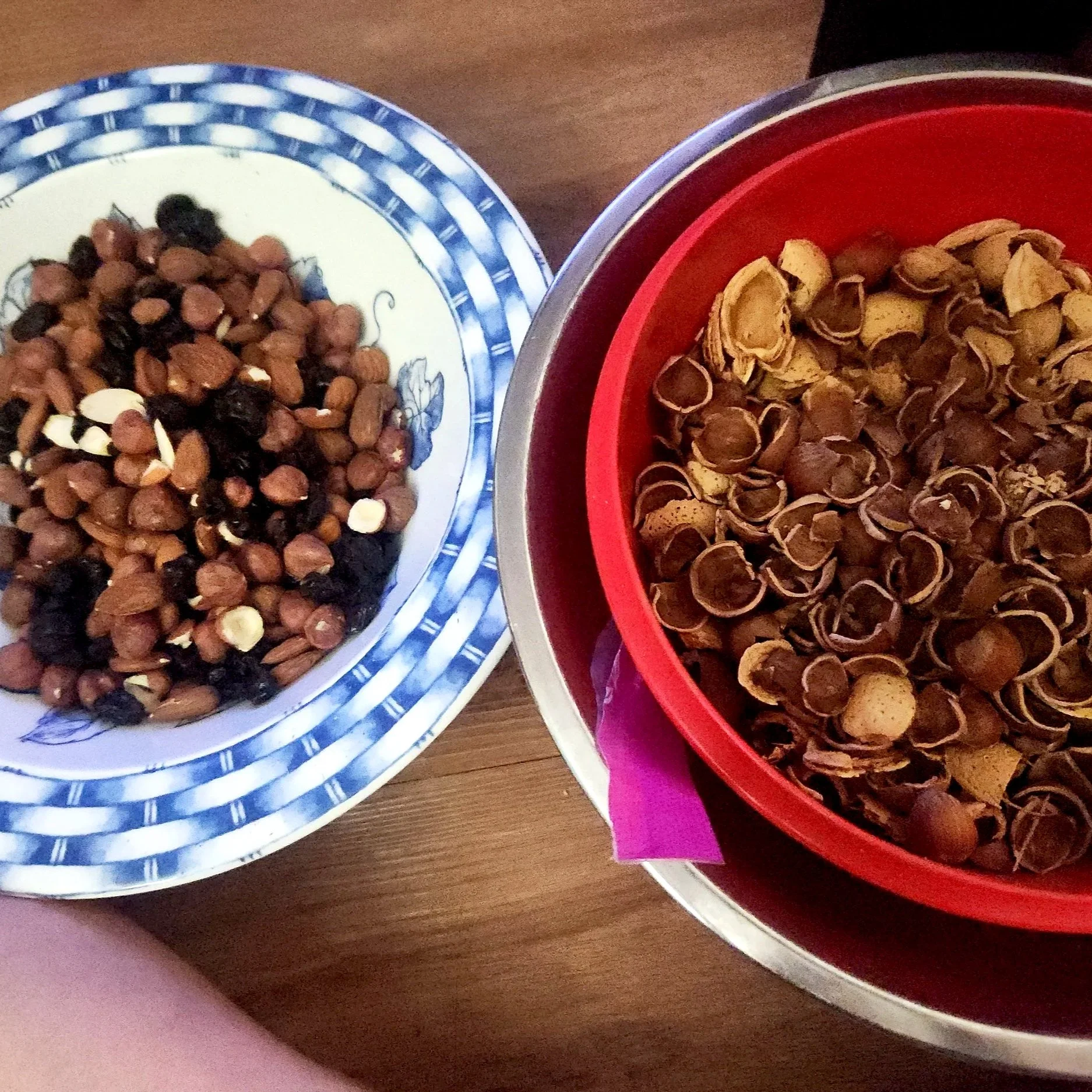
Here we are, with a bowl of shells and a bowl of nuts and fruit. As you can see, it’s fine if you break some of the nuts. Those ones just soak up the flavors faster, is all.
For reasons I cannot fathom, this song is stuck in my head. Since I like to share, here y’all go! (Y’all may or may not have missed this nonsense, and I’m sorry if you’re one of the ones who didn’t miss it).
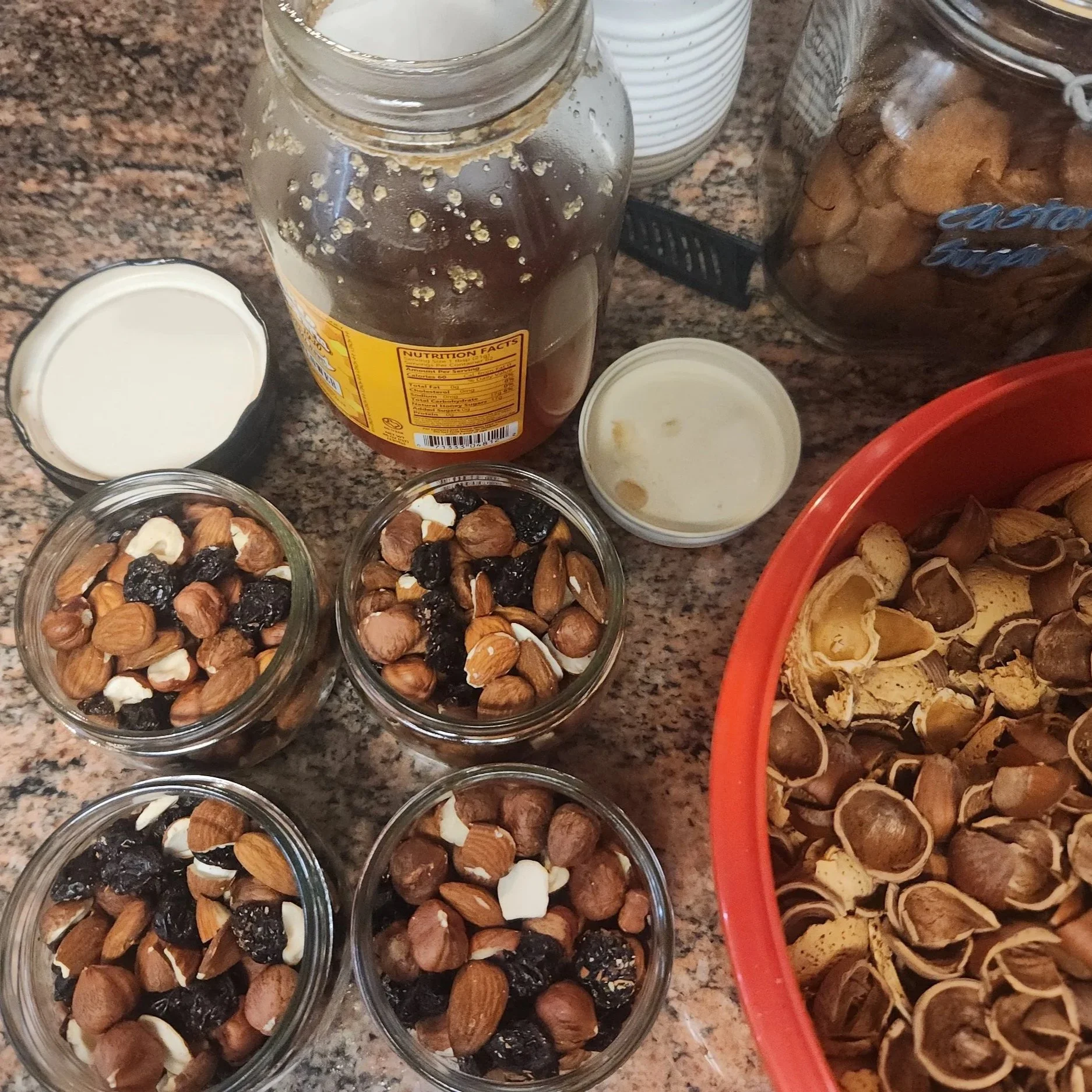
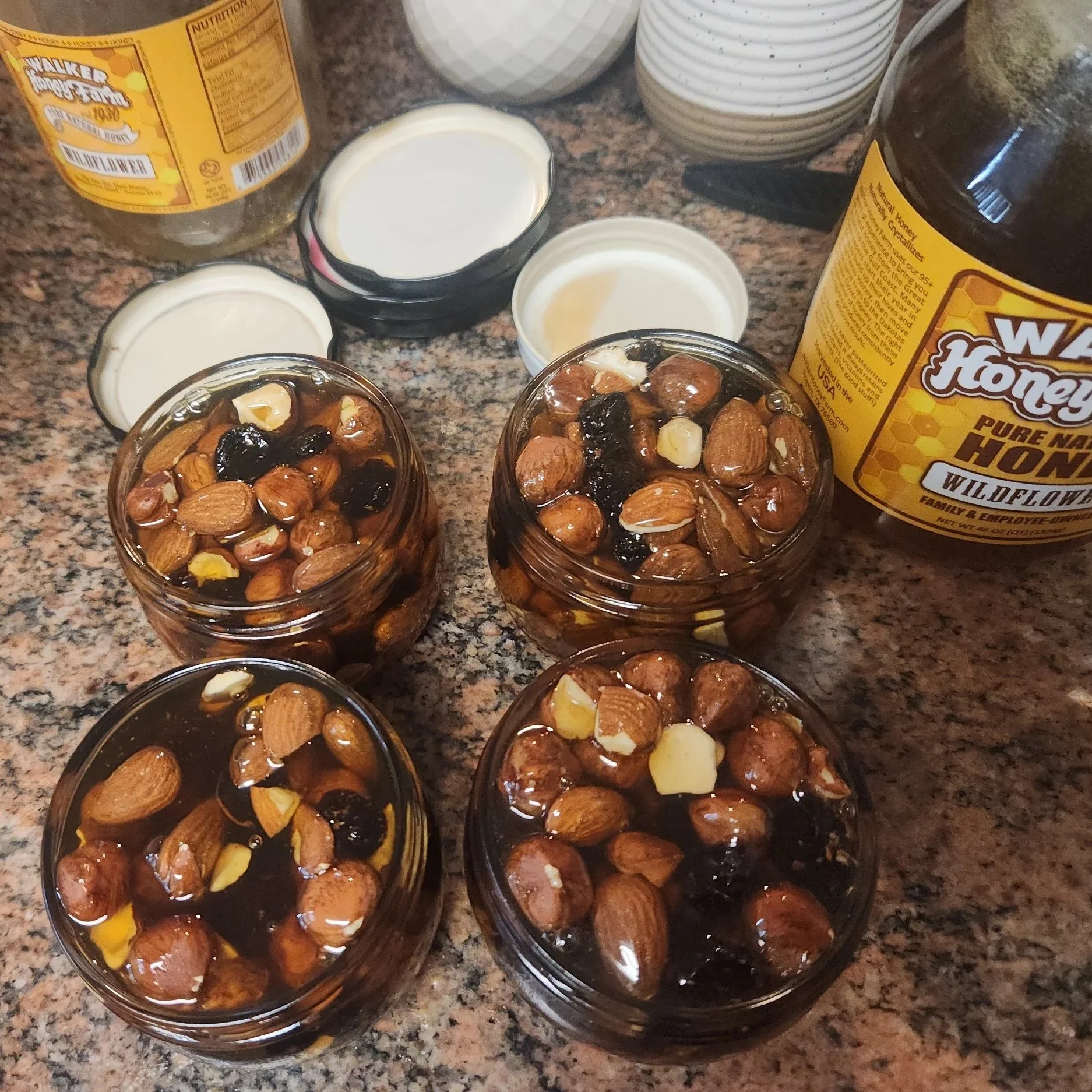
Alright! Your jars are full! My system of getting the honey in there is to pour honey in to fill, then let the jars sit for a minute to filter down. Rinse and repeat until your jars are full to somewhere between the bottom of the threaded section and the top thread. Make sure you wipe down the rims before you put your lids on. Take my word on that! These are now full. Lids time!
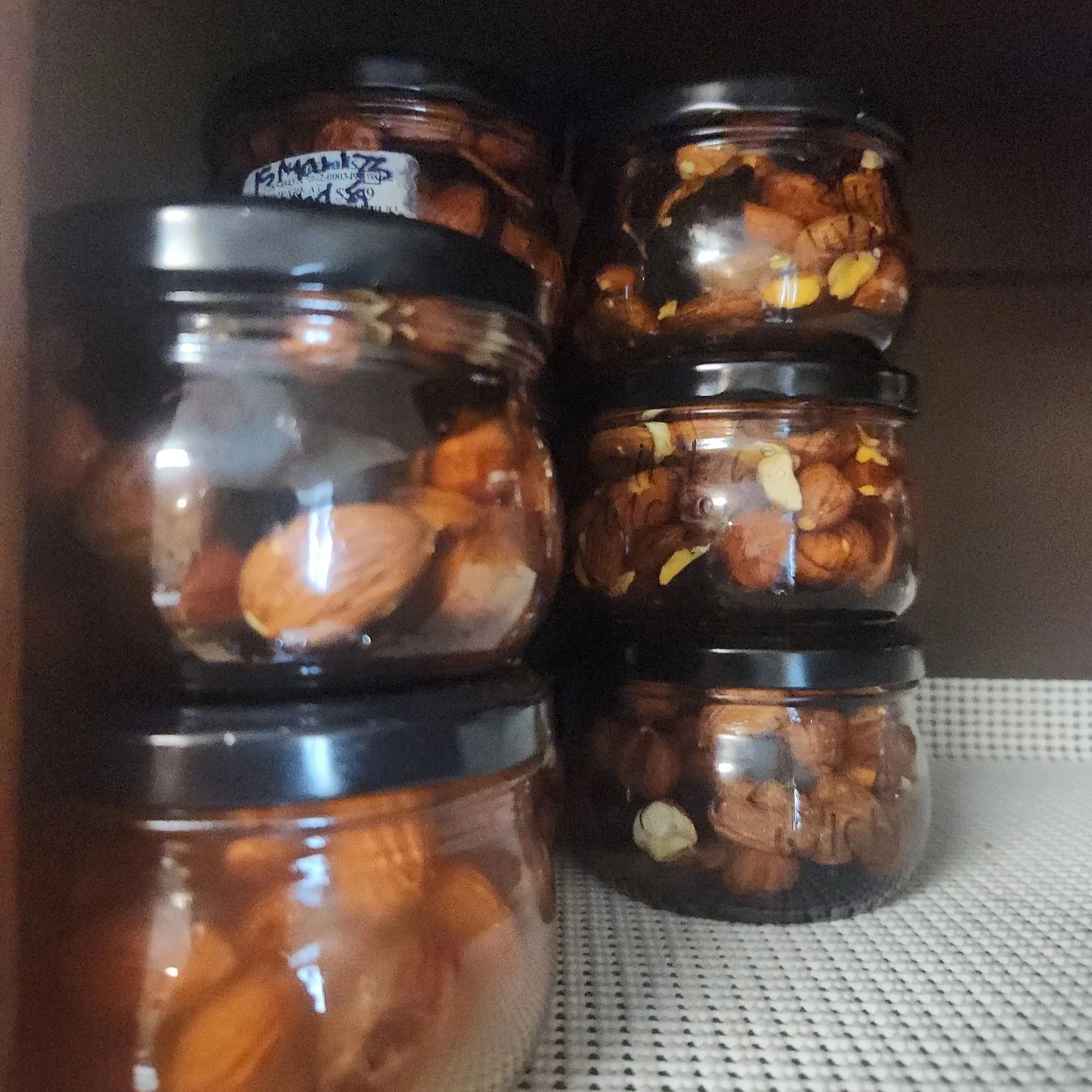
The last of the 2025 jars. I really do need to make a lot of extra jars this year.
What All You Can Use These For
Outside of eating spoon-to-mouth, these usually are eaten with bread in my house. I also like to put them in porridges such as oatmeal. They’re also excellent with millet porridge. Sometimes I will add these in place of dry nuts into baked goods, but if you do this then you want to make sure you’ve considered how much honey is going into your recipe so you can make adjustments to your liquids as needed.
Ross keeps jars of these at work with whatever various bannocks I’ve been making during a given time period, and he likes them for snacks or eats them for lunch if he forgets to bring his.
These are also a great topping for ice cream and the like.
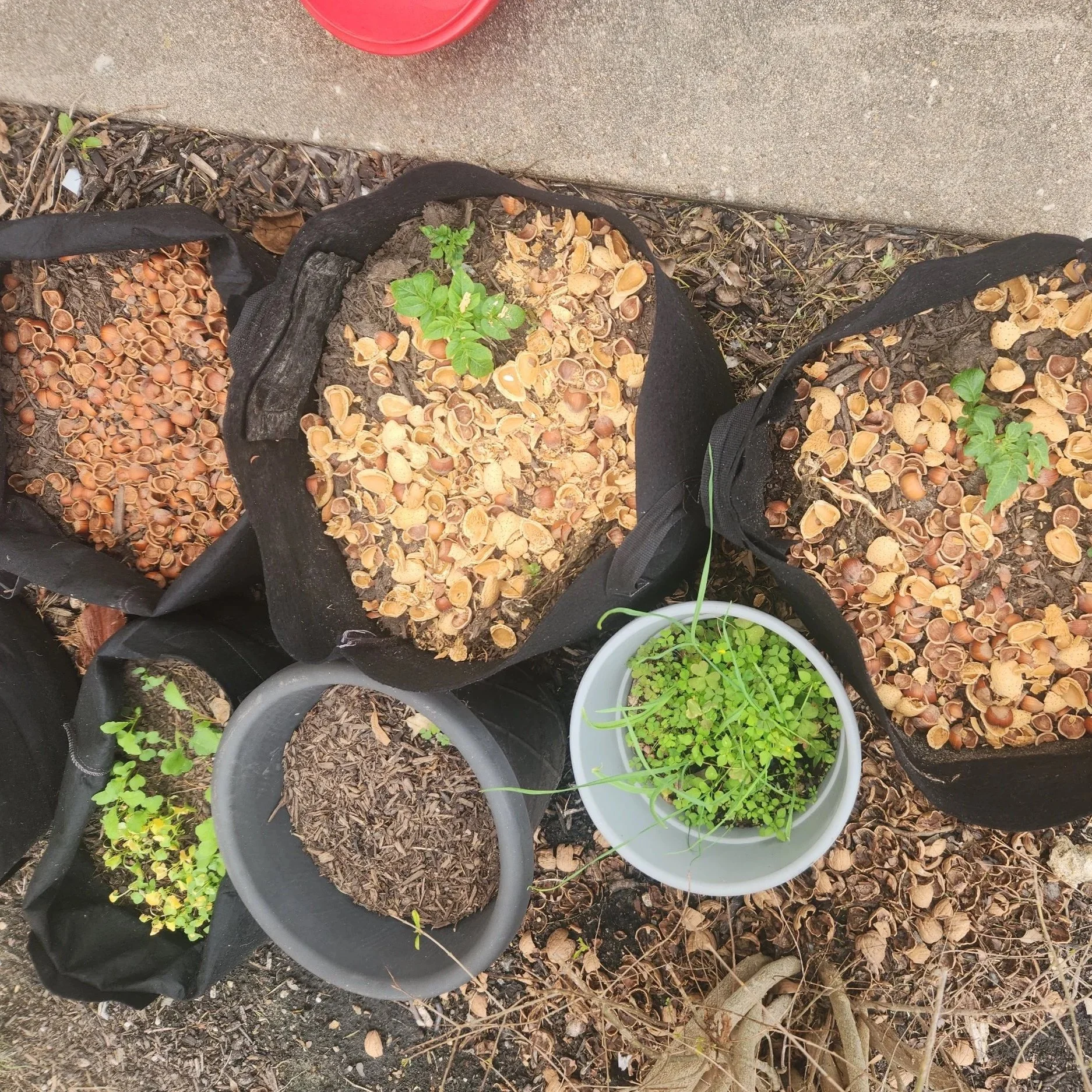
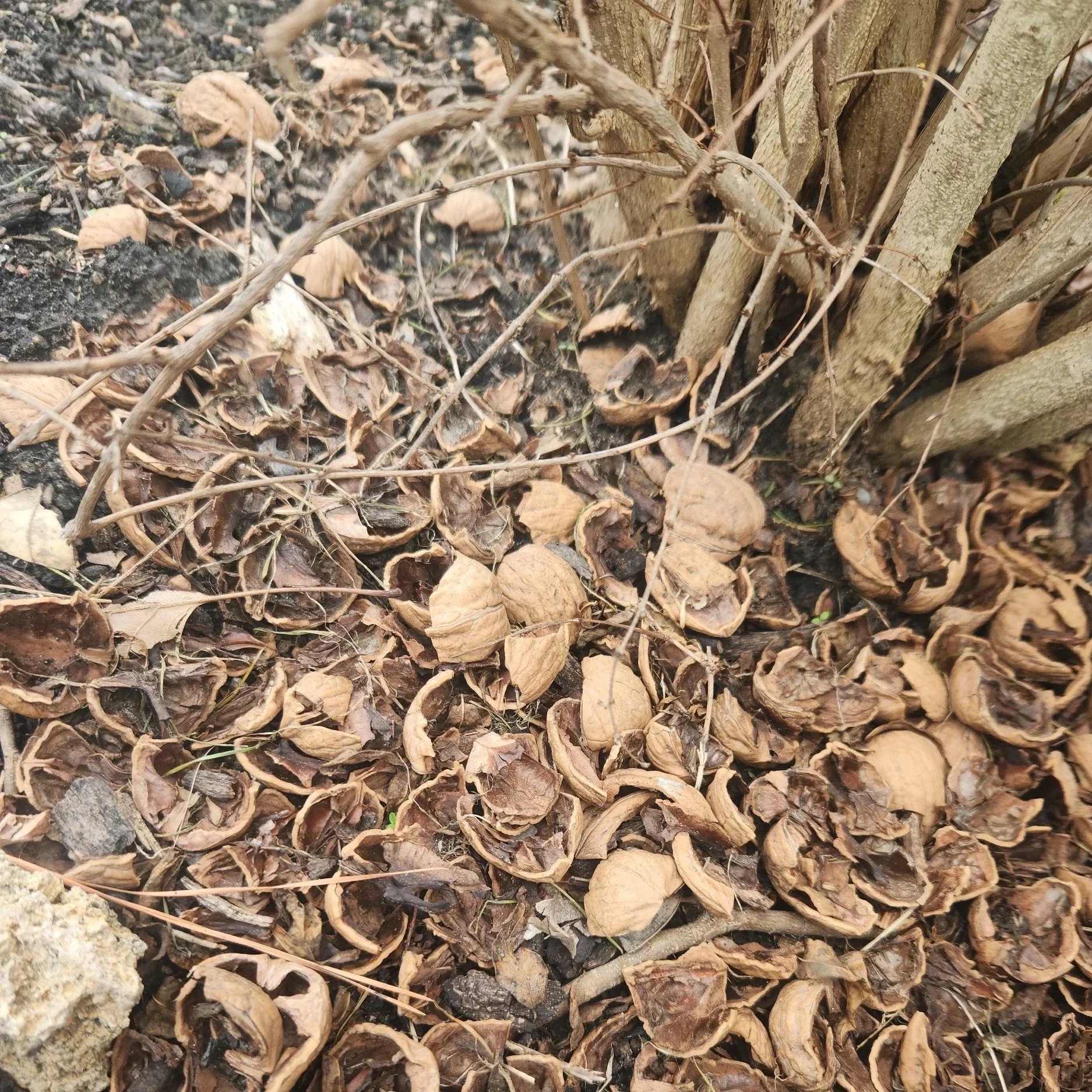

Shells! You gotta do something with them, so use them as mulch! I’ve only been using shells for mulch for… I think this is my third year but am not 100% on that. As you can see, there’s really limited degradation here, so my assumption/guess is that they’ll take about a decade to decay. If anyone knows the answer to this question, please tell us in the comments!
Some Questions and Answers
Sabrina had some questions about what is happening here (not just about the mulch haha), and I’m glad she did because I didn’t realize how much information about these I simply take for granted. Answers below!
What kind of honey?
I using raw and unfiltered honey(s) that is/are produced in Texas. I use Walker and Stroope the most, though I sometimes buy honey from other vendors/brands. Stroope apparently has a cotton blossom honey out now, so I’m gonna need to get some of that and check it out. Moore Family Farm has hives spanning 6 counties in Southeast Texas, and I tend to buy their honey when I’m at HEB while needing honey. I bought 1.5 gallons of Moore honey today, in part because of these and in part because of other honey projects.
My vote is that you buy whatever authentic honey is in your budget and, ideally, near or near-ish to where you are. If you are a pollen allergies sufferer like me, this may also be helpful for you to purchase honey that is produced in or near your area. You want to do a quick search on whatever company’s honey you are considering because there are frequent honey scandals. The scandals are about fake honey. You can read some not-updated info on that in part 3 of our honey series.
How much honey? Honey is expensive!
Yeah, legit it is expensive. I don’t think I ever use less than 48oz of honey on this annually. I will probably use double or triple that this year, since I’m trying to get ahead so there’s no shortage in my house of 2026 honey nuts in 2027. In my area, 48oz jars of local or local-ish raw, unfiltered honey costs $16-25, so it’s not a massive expense. Your mileage may vary, of course. I paid about $60 today for the 1.5 gallons of Moore honey I bought. I was absolutely not complaining about that price!
What do you do with the infused honey?
I like it on toast, with some cheeses, in some teas, spoon-to-mouth (my favorite), and on and in pastries. I’m planning on trying some of it out in thumb print cookies this year. The jars that Ross takes to work usually come back devoid of any remaining honey, because he tends to use big spoonfuls of both the nuts and the honey on his bread. He has not said, but I suspect he wipes out any honey that remains with crusts. For bread, my family favor crusty loaves with big holes in the crumb, as that type of bread really does catch a lot of the honey and it’s stout enough to not become soggy if you’re taking your time eating. That said, if you are eating this frequently at places other than home, you might consider long-lasting breads like bannock or maslin.
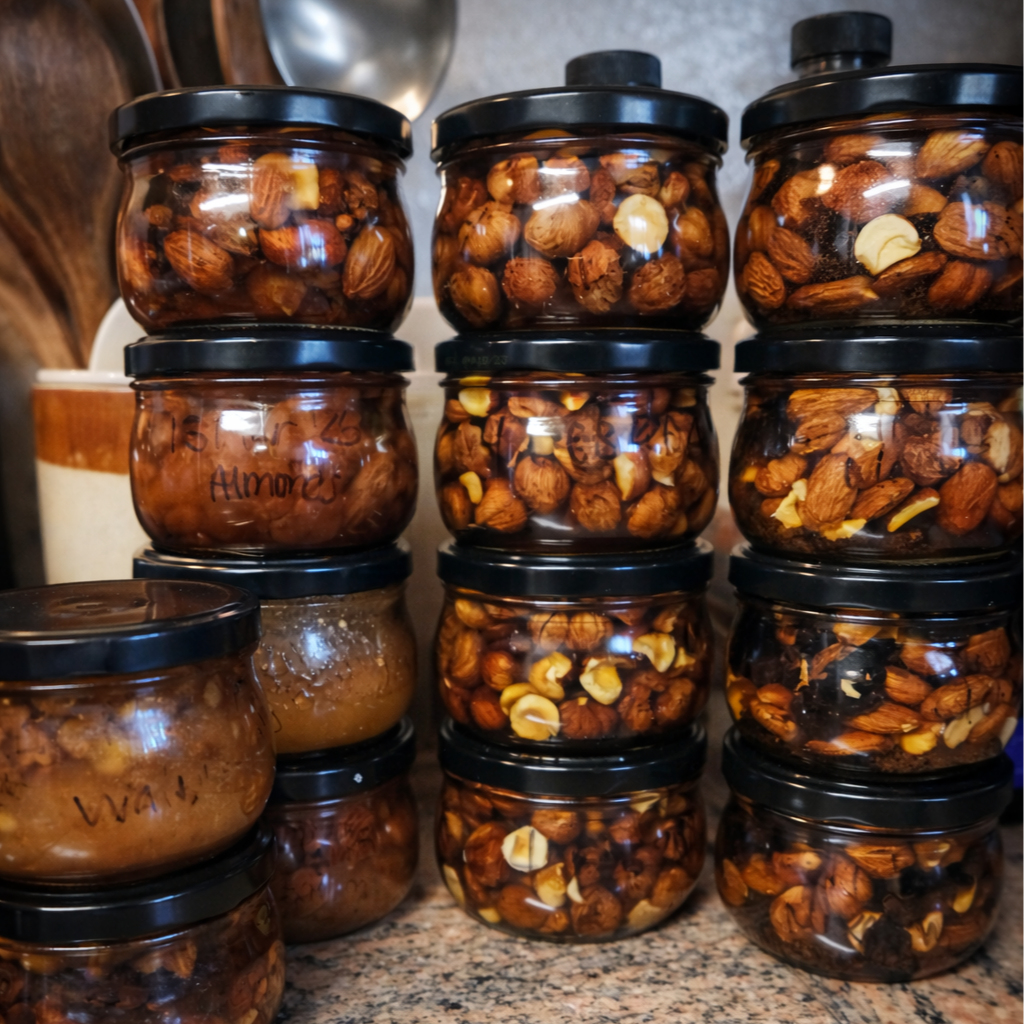
The 6 jars on the left are what’s left of the 2025s. You can see crystallization in some of those, which is completely normal if you’re using raw honey. If you don’t like a more spreadable honey, you can gently reheat it in a water bath on the stove. You can also use your microwave in short bursts (like, 5-10 seconds) if you want to, but the honey is at much higher risk of overheating. If that doesn’t bother you? Go for it!
The 8 on the right are 2026. I’m going to switch over to pint jars when I do the rest of the 2026s, because fewer containers missing from my cabinet and fewer dishes to wash later. If y’all try this out, let me know in the comments what you thought about the process!
—Allie
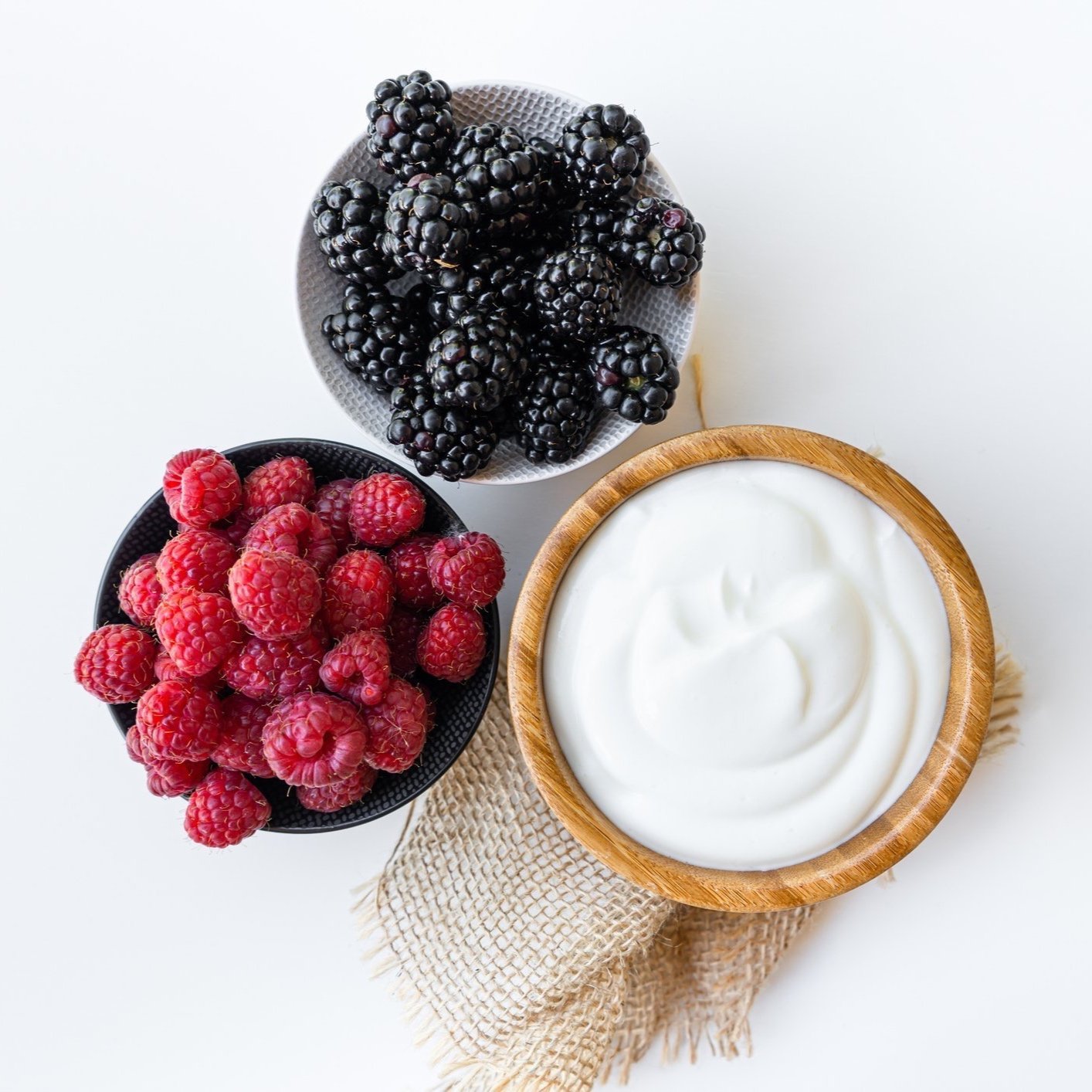
Our Original Greek Thermophilic Yogurt Culture produces a rich, creamy, beautifully tart yogurt that captures the classic flavor people love about traditional Greek yogurt. Thick, satisfying, and naturally high in protein, it delivers the familiar store-style experience without added sugars, stabilizers, or unnecessary ingredients.
This thermophilic culture thrives at warm fermentation temperatures and produces a clean, bright tang with a luxurious texture. When the yogurt is strained, much of the whey is removed, creating the thick consistency Greek yogurt is known for. The result is a spoonable, velvety yogurt that feels both indulgent and nourishing.
You can strain it lightly for a classic Greek-style yogurt or strain it further for an ultra-thick texture approaching cream cheese. The longer you strain, the thicker and richer it becomes. And don’t toss that whey! It’s full of nutrients and flavor and works beautifully in smoothies, breads, soups, and even fermentation projects.
Simple, reliable, and wonderfully versatile, this culture brings authentic Greek yogurt making right into your own kitchen.
Expect:
• Classic Greek-style tartness
• Thick, creamy texture after straining
• Naturally high protein yogurt
• Reliable thermophilic fermentation
• Adjustable thickness depending on strain time
• Nutrient-rich whey perfect for baking, cooking, and smoothies
Bright, tangy, and deeply satisfying, this culture makes it easy to enjoy authentic Greek yogurt made fresh in your own kitchen.
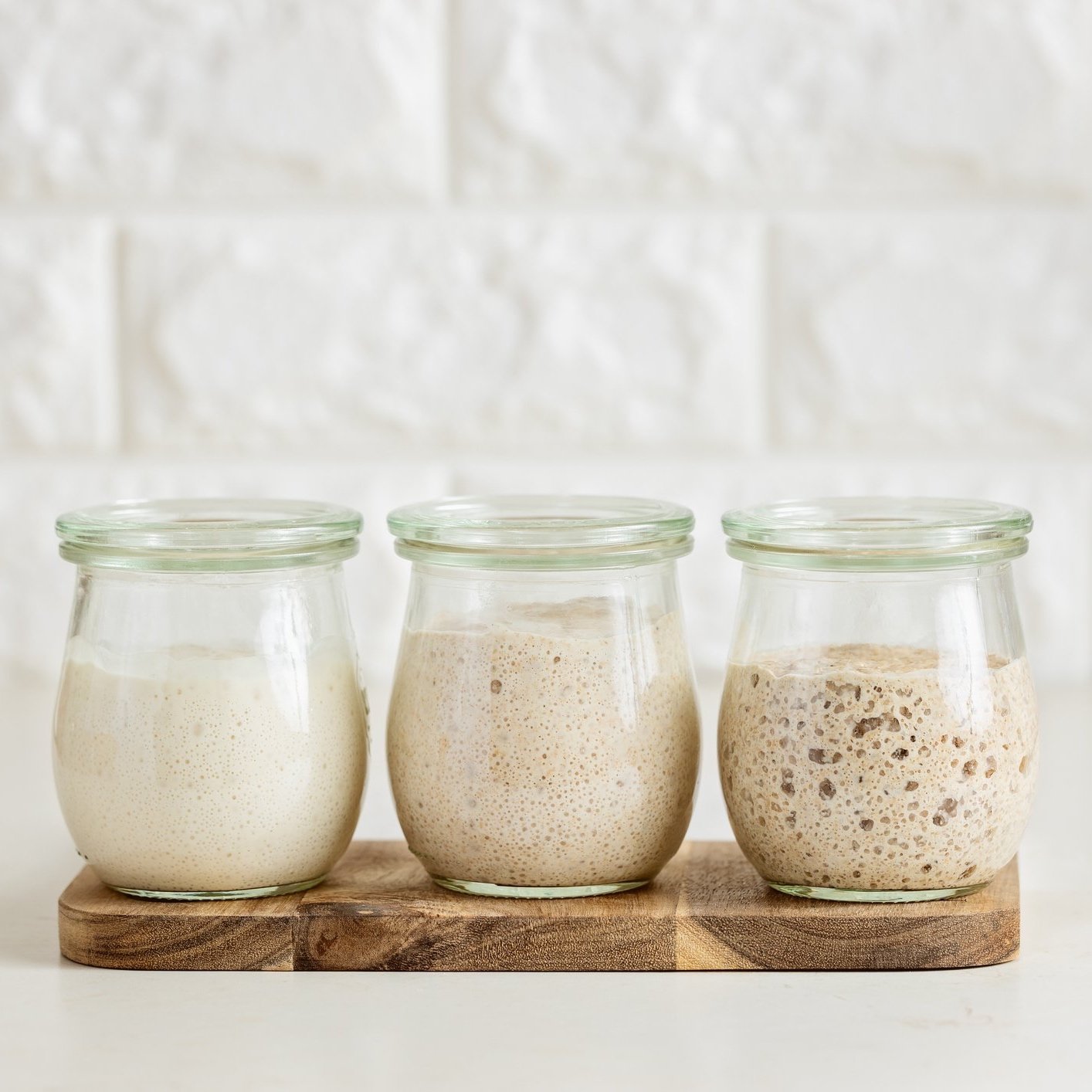
Our San Francisco “Fisherman’s Wharf” Sourdough Starter captures the unmistakable character of the famous sourdough breads that have made San Francisco baking legendary. Known for its lively fermentation and classic tangy flavor, this starter produces loaves with the signature taste many people associate with the city’s historic bakeries.
San Francisco sourdough has long been celebrated for its unique flavor profile, shaped by the coastal climate and traditional fermentation methods used by generations of bakers. This starter brings that same spirit into your kitchen, delivering the bold, aromatic character that sourdough lovers recognize immediately.
The finished breads develop a beautifully balanced tang, with a chewy yet tender crumb and a crisp crust that makes every slice memorable. The flavor is vibrant and satisfying—perfect for rustic loaves, sandwich bread, and the classic sourdough boules that feel right at home on a soup-and-salad table.
Each bake evokes the experience of strolling along Fisherman’s Wharf, where the aroma of fresh sourdough fills the air and warm loaves are enjoyed with butter, chowder, or simply on their own.
Simple, lively, and full of West Coast character, this starter makes it easy to bring the spirit of San Francisco sourdough baking into your kitchen.
Expect:
• Classic San Francisco-style sourdough tang
• Perfect for boules, sandwich loaves, and artisan breads
Bold, nostalgic, and wonderfully flavorful, this starter produces sourdough breads that capture the iconic taste of San Francisco baking.
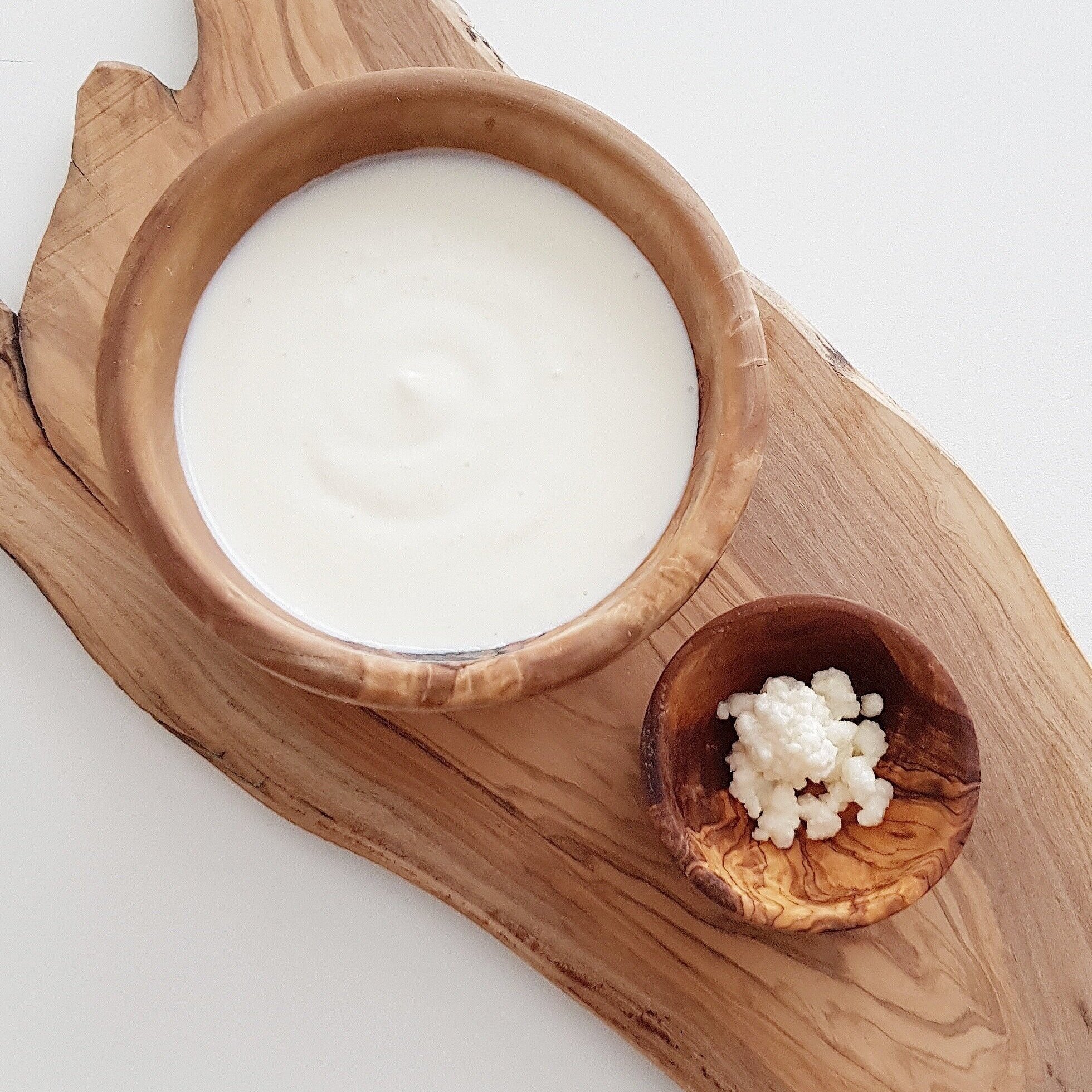
Our Milk Kefir Grains have been carefully sourced from cultures all around the world and blended together to create one of the most diverse and resilient kefir cultures available. The result is a lively, dependable culture that produces rich, tangy kefir full of character.
Milk kefir grains are living colonies of beneficial bacteria and yeasts that work together to ferment milk into a probiotic-rich drink known as kefir. Despite their name, they are not actual grains like wheat or rice. Instead, they resemble soft, jelly-like curds or small cauliflower florets. Milk kefir originates back centuries to the Caucasus Mountains, where kefir has long been cherished as a nourishing fermented milk drink. Traditionally passed down from generation to generation, kefir grains were often considered a treasured household culture.
As the grains ferment the milk, they feed on its natural sugars and transform it into a creamy, lightly tangy beverage with a gentle natural effervescence. The finished kefir is refreshing, complex, and wonderfully nourishing.
With regular care, milk kefir grains can be used indefinitely and will naturally grow and multiply over time, allowing you to continually produce fresh kefir at home. This makes them a favorite among both new fermenters and experienced cultured food enthusiasts.
Simple, traditional, and incredibly rewarding, milk kefir grains make it easy to enjoy fresh homemade kefir while supporting a healthy, balanced gut.
Expect:
• Tangy, creamy probiotic kefir
• Naturally complex flavor with gentle effervescence
• Living grains that grow and multiply over time
• Highly resilient and adaptable culture
• Continuous kefir production with proper care
• Perfect for drinking, smoothies, and cultured recipes
Lively, nourishing, and endlessly reusable, these milk kefir grains produce authentic homemade kefir that quickly becomes a staple in any fermentation kitchen.