Salt fermented fruits
Mar 25 | Written By: Allie Faden
Salt Fermented Fruits are a fun and, typically, less often style of fermentation. Most of the time when we’re fermenting fruits, we’re using sugar to do it. But dry salting fruit is also a thing! For most of you, I’d expect that the only dry salted fruits you’re accustomed to seeing are Moroccan salt-preserved lemons. These lemons are definitely one of the most popular fruits that are cured in this manner. But they aren’t the only ones: umeboshi/hoshiume, those wonderful Japanese preserved plums are also a great example! Some cultures dry salt mango, tart cherries, li hing mui (a Chinese salted plum), and there are also dry salted olives. This is, of course, not an exhaustive list of examples for this type of ferment. If you have dry salted fruits you love make, please let us know about them in the comments! We are always hoping for new ideas from y’all for better noms!
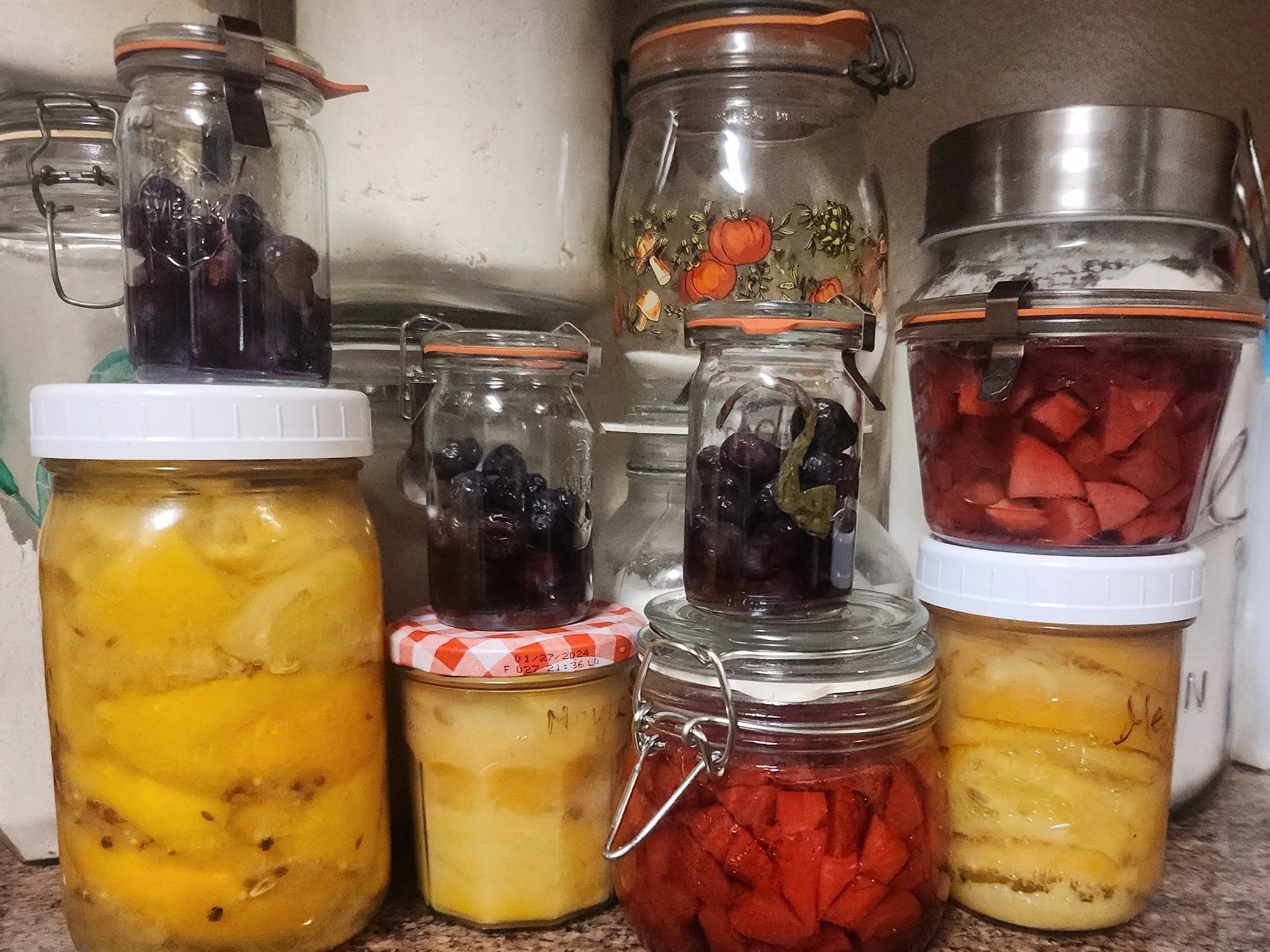
The Quick and the Dirty
Your salt percentage should be 2-3.5%. 2% is generally considered the standard. Remember that the more salt you use, the slower (and ultimately, more sour) your ferment will be. If you want it to be low-key, definitely go with 2%.
I am reasonably certain that all of mine were in the 2-2.25% range. I say “reasonably certain” because y’all know I didn’t measure. I sprinkled some salt on the bottom, added a layer of fruit, then of salt, etc. before sealing up the jars. If you prefer not to measure as well, be chill on the sprinkles: we aren’t making sauerkraut here! But not too chill, because obviously you still need them to ferment instead of rot.
I closed up my jars once I’d filled them, and set them in a lower-light area of the kitchen to ferment. I haven’t opened any of my lemons, as of the time this is/was written, because they won’t be done as quickly as the other fruits. Lemons take more time. But! I always have at least a jar or two tucked away for the times when I’m waiting for more to be ready. Once you’ve got your rotation period settled, it’ll be easy to make sure that what you need is there for you.
You can, if desired, dehydrate your fruits once they’re fermented to your tastes. I will be doing that with my plums and strawberries.
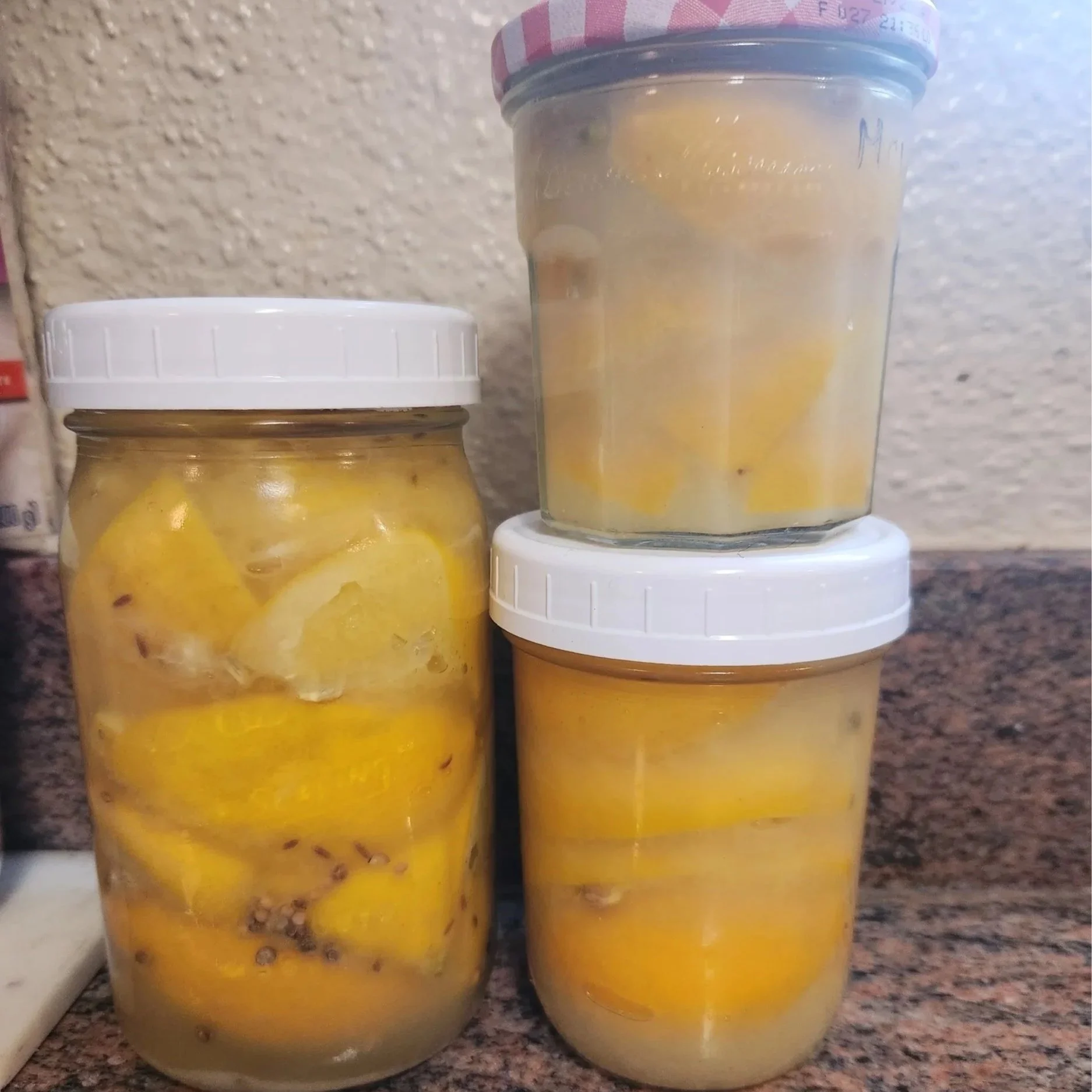
Meyer lemons.
The jar of Moroccan-style lemons on the left has spices in it and olive oil on top of the lemons. The remainder are just the lemons and the salt. For many people who cannot access traditional beldi lemons (me!!), Meyers are a wonderful substitute. I make two kinds of these: the standard salt and lemons style, and the Jewish (and probably other ethnic groups too) spiced style with olive oil on top. I tend to use the plain ones more, so I make more of those, but I always keep spiced salted lemons on hand as well. Use whatever lemons you have access to. If you grow pink lemons or other lemons with fun flesh colors, please let us see pictures of your salted lemons in the comments!
How to, Regular Style
To make these, you will cut your clean lemons into quarters lengthwise. Almost. If you’re doing this traditionally, you will leave one end attached and will pack some salt into the center before smooshing it down into your jar. Once all the lemons have been cut, salted, and smooshed, it’s up to you if you want to top it off with some lemon juice if your lemons were too dry to give you extra juice. I never do, but some/probably most people do.
You may be noticing that my lemons don’t look like they’re cut but still whole. That’s because I cut them into quarters throughout the fruit, as it feels like less work to me, and it’s definitely faster to get them into the jars. Doing it this way, layers of salt and layers of lemon quarters. You’ll definitely use more salt for lemons than you would if you were dry salting any other fruits I personally can think of, excepting olives. Still gotta smoosh them down, though - that part of the process is non-negotiable in my opinion.
How to, Spiced Style
It’s basically the same, except that you will add spices to the bottom (or each layer; world is your oyster!). Some people like to add cinnamon, allspice, clove and other sweeter types spices. I tend to go with coriander seed, cumin and/or anise or fennel seed, black pepper, and occasionally a bit of a dried out vanilla bean. Most of the time I’ll stick at least one dried chile in them, but I seem to have not done that this time. Once all the lemons and spices are smooshed in, top off with more lemon juice if you feel moved to do so, and then add a layer of olive oil to the top. Use the good stuff, not the… un-good? less good? olive oil.
Then you put lids on and store. Put them where you’re going to remember they exist, because at least in theory, you should be shaking them daily for the first week or so. I often decide by day 3 or 4 to skip that step because I am lazy and also because I have not found a significant quality difference between shaken and not. Don’t try to stir them; they’re packed in too tightly.

James Bond: the character who single-handedly destroyed properly made martinis.
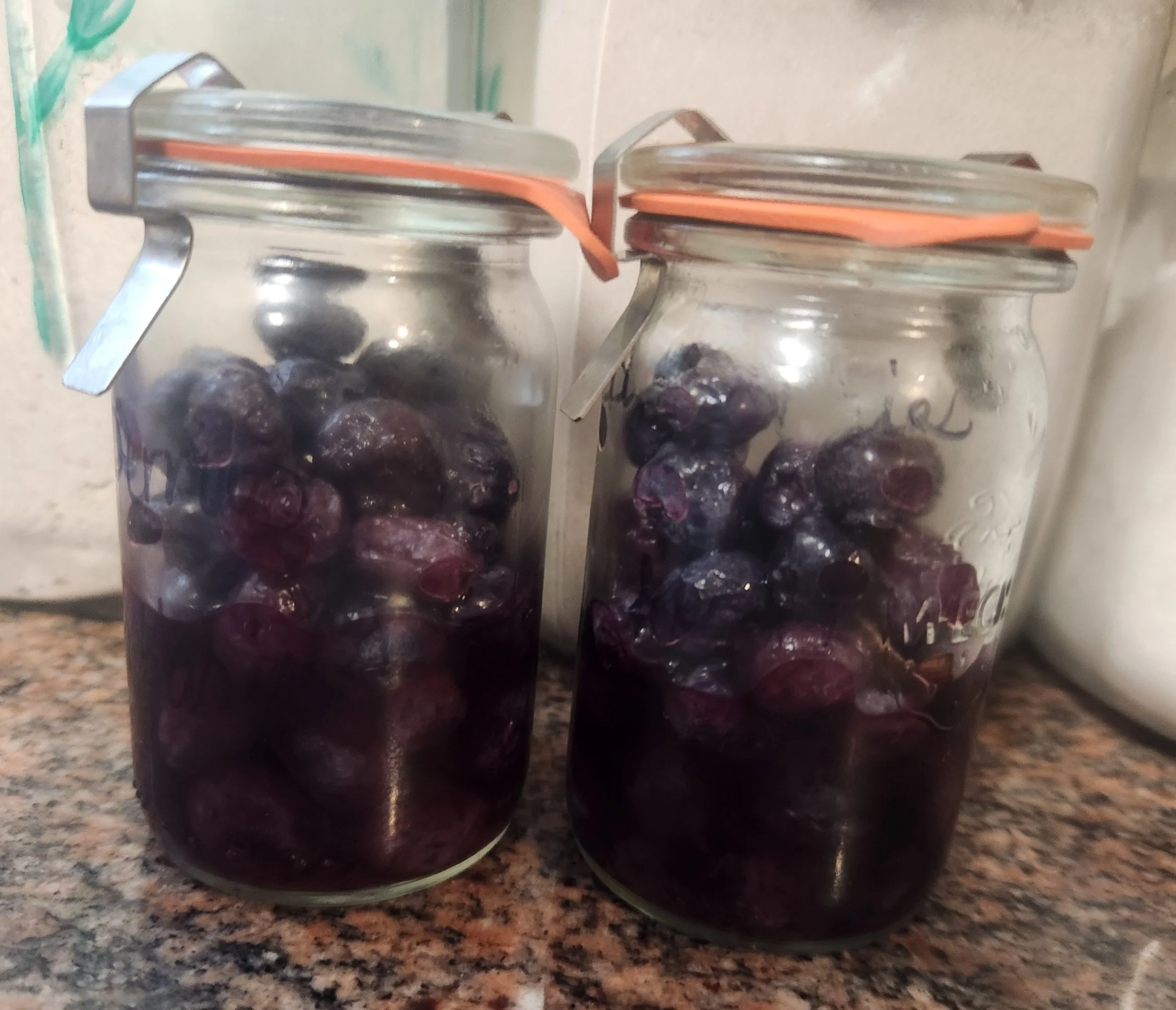
Blueberries!
I think these ones are the best, despite loving plums about as much as I love blueberries. Originally, there were 3 jars, but I ended up eating some of one jar (see way down below) and putting the rest in the other two so I could free up a jar. The jars I made were: plain, blueberries with lemon basil, and blueberries with mint. I can’t remember if they were spearmint or peppermint, but will try to eat that jar soon to find out.
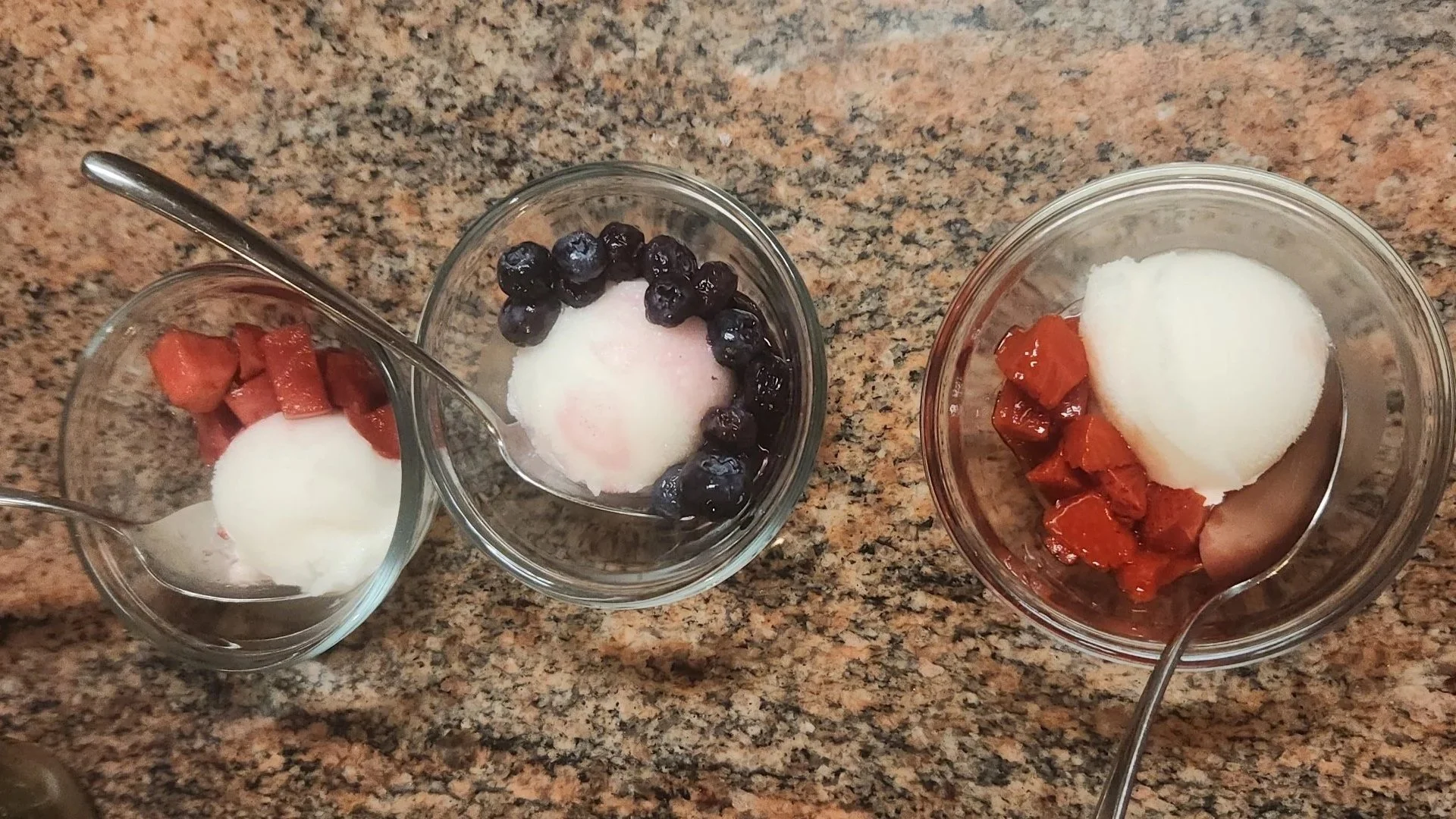
Of the 3 not citrus salted fruits, these were the only ones that didn’t sour quickly. You can eat these blueberries with lemon sorbet (see below) without your face contorting, if you left them out for more than 3-4 days before putting in the fridge. Possibly the other fruits would have been less sour with regular ice cream, which has only now occurred to me.
How to? Same as the lemons! Sprinkle a layer of salt in the jar, then put in some blueberries, then some more salt. You really do NOT need to go heavy on the salt here, nor ferment them for a long time, and probably ought not. 3-5 days is plenty good before they wander into the fridge and/or get eaten. With lemons, you can go as long and/or as heavy on the fermenting and salt as you want. You really cannot with a lot of other fruits without them becoming omg sour. If you like Warheads and even more sour candies? Heavier on the salt and/or age longer.
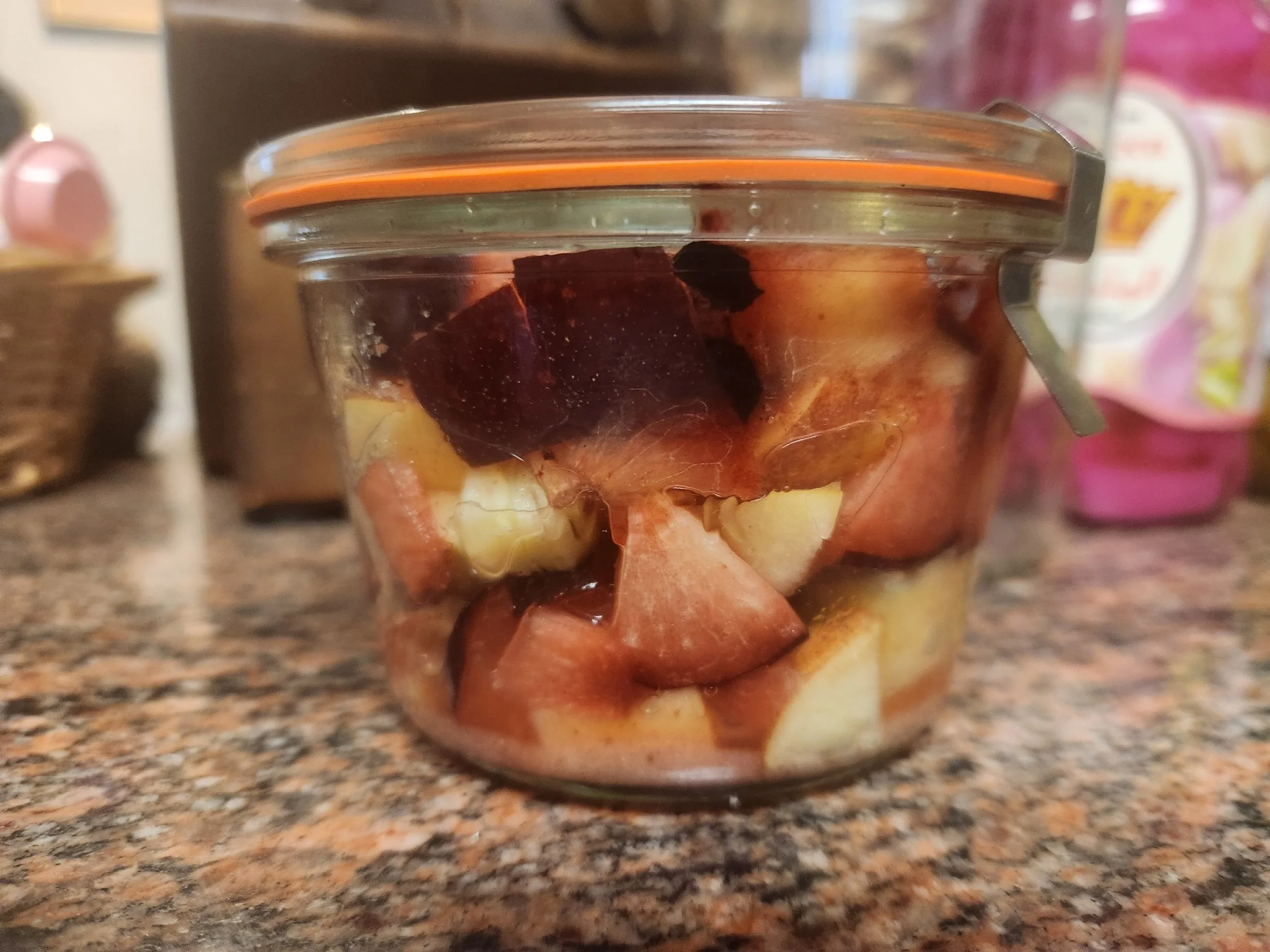
Plums!
There are a few kinds of plums in here, because I really just wasn’t eating my plums as fast as I normally do. With these, still the same: thin layer salt, layer of fruit. Etc. These will get sour fast, presumably because they’re cut instead of whole. If one of y’all wants to do a comparison between cut and whole plums, please let us know how it went and what happened!
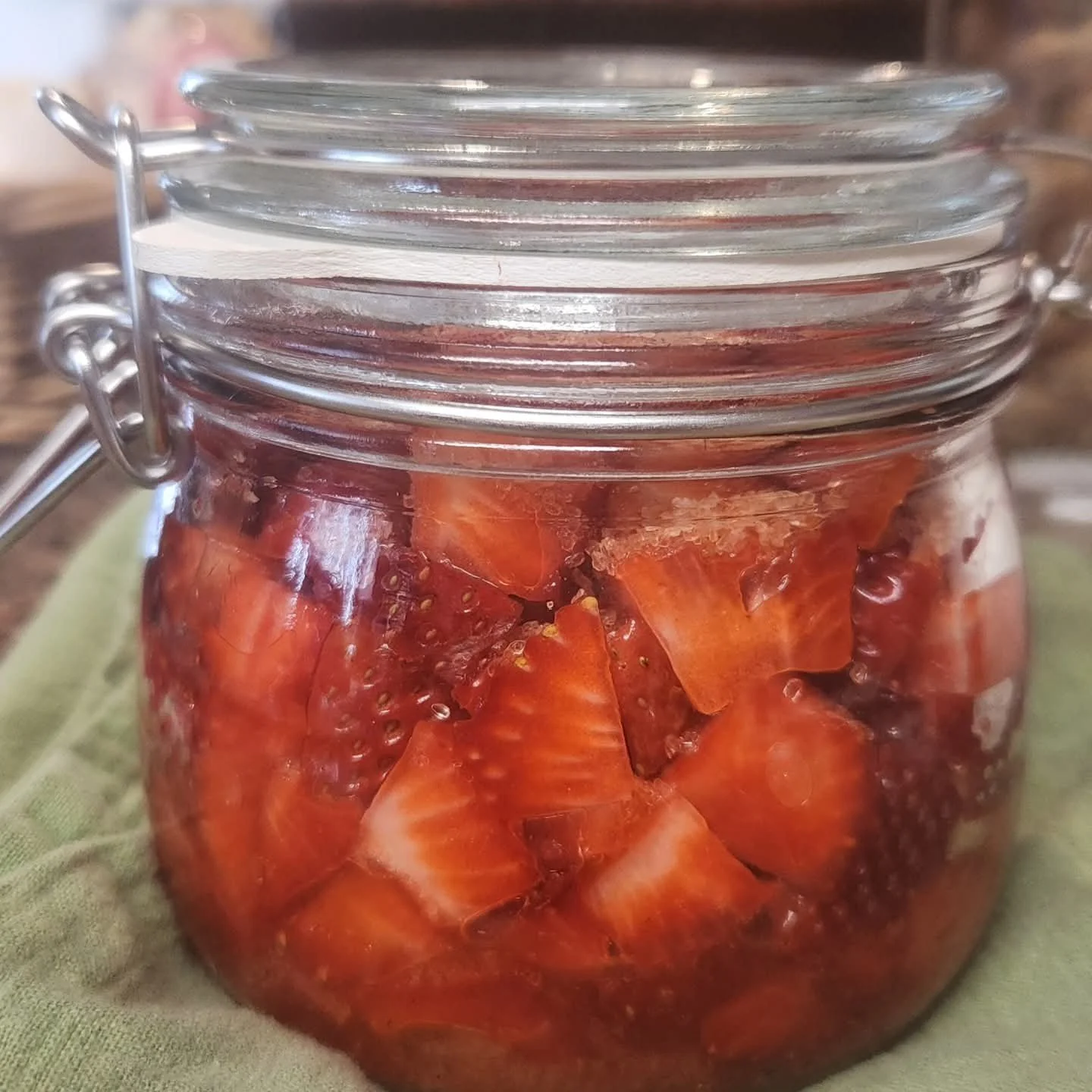
Strawberries!
Please also let us know if you wind up doing these whole. I really do want to know how long they can ferment before they’re like Warheads in various iterations. I am, however, but one woman so I cannot try quite so many as I might like to.
This would be a really great space to put in a bit of a vanilla bean, or even a splash of vanilla extract. Whenever I try doing whole salted strawberries, vanilla will definitely be part of the show. Possibly cardamom as well. Who can say?
Wrapping Up: A Quick Recap
What is important to remember is that:
This is gonna be a 2-ish percent (by weight) amount of salt for your fruits.
You can do this with pretty much any fruit you want to.
You also can ferment it for as little as 2-3 days or as long as you’d like.
I’m really interested in trying out apples and peaches for this. (maybe not recap?)
The longer it ferments, the more sour it gets, per usual. With fruit, because they are so high in sugar, it happens faster than with most veg.
You want to be proactive in testing your batches at least every other day, if not daily.
You can dehydrate fermented fruits, like little fruit jerky snacks.
Happy experimenting and fermenting!!
— Allie
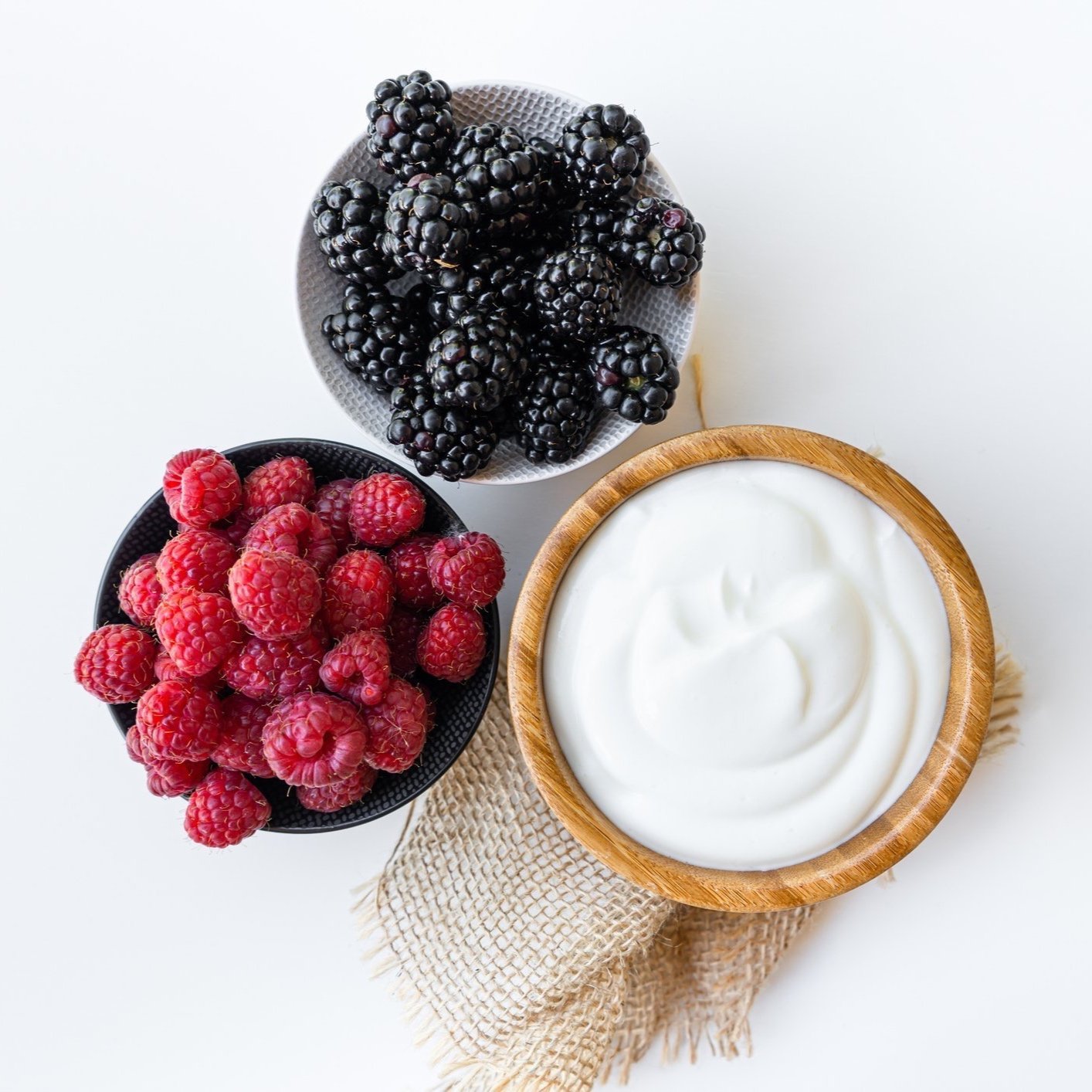
Our Buttermilk Style Thermophilic Yogurt Culture brings together the best of two traditional dairy cultures to create a yogurt that is exceptionally smooth, mild, and satisfying. By combining classic yogurt bacteria with buttermilk cultures, this yogurt develops a uniquely balanced flavor that is creamy, gentle, and beautifully rounded.
The finished yogurt cultures thick and velvety with a soft, mellow tang rather than a sharp sourness. It has a richness that feels comforting and familiar, while the buttermilk cultures contribute subtle depth and smoothness to the overall flavor.
This style reflects a more traditional approach to yogurt making, where multiple cultures work together to build complexity and texture. The result is a yogurt that is creamy yet thick, mild yet flavorful, and perfect for everyday enjoyment.
Simple, dependable, and wonderfully smooth, this culture produces a yogurt that feels both classic and comforting.
Expect:
• Creamy yet thick yogurt texture
• Mild, smooth flavor with gentle tang
• Balanced character from both yogurt and buttermilk cultures
• Reliable thermophilic fermentation
• A soft, mellow yogurt without harsh acidity
• Delicious plain or with fruit, honey, or granola
Creamy and mild. This culture produces a yogurt that feels comforting, traditional, and endlessly enjoyable.

Our Swedish Buttercream Mesophilic Culture creates a rich, indulgent cultured cream inspired by classic Scandinavian dairy traditions. This hybrid culture blends the character of Swedish sweet cream with the gentle tang of cultured buttermilk, producing a beautifully thick and creamy fermented dairy.
As the culture ferments at room temperature, the cream develops a luxurious texture with a smooth body and just a hint of tanginess. The result is a cultured cream that is rich, balanced, and wonderfully versatile.
The finished buttercream is thick, silky, and mildly tangy, making it perfect for enjoying on its own or incorporating into both sweet and savory recipes. Its creamy texture and balanced flavor make it a delightful addition to baked goods, sauces, and spreads.
This culture is essentially a hybrid blend, designed to bring together the best characteristics of Swedish sweet cream and cultured buttermilk in a single fermentation.
And if you already happen to have both of those cultures in your kitchen, there’s truly no need to order this one. Simply channel your inner kitchen wizard and combine them to create your own Swedish buttercream at home.
Simple, rich, and wonderfully satisfying, this culture makes it easy to bring a unique Scandinavian-style cultured cream into your kitchen.
Expect:
• Thick, creamy cultured buttercream
• Mild tang with rich dairy flavor
• Smooth, silky texture
• Easy room-temperature (mesophilic) culturing
• Perfect for spreading, baking, and cooking
Rich, creamy, and delicately tangy, this culture produces a beautifully smooth Swedish buttercream that adds depth and indulgence to everyday recipes.
Our Improved French Yogurt Culture allows you to create the classic French-style yogurt known for its thick, creamy body and beautifully smooth texture. Rich and indulgent, this yogurt offers a bold, bright tartness while still maintaining the silky consistency that makes French yogurt so distinctive.
While similar in thickness to Greek yogurt, French-style yogurt is noticeably smoother and more delicate. This improved culture develops a sharper, more pronounced tartness than our original French yogurt culture while still producing the creamy, custard-like texture that French yogurt lovers expect.
The process follows the traditional French method of yogurt-making. Rather than culturing the yogurt in one large container and stirring it afterward, the milk is cultured directly in the individual serving jars. The yogurt is then left undisturbed, allowing it to set naturally into a thick, smooth body that holds its shape.
The finished yogurt is rich, creamy, and luxuriously thick with a pleasantly sharp tang. It can be enjoyed straight from the jar, topped with fruit or honey, or served as a decadent breakfast or dessert.
Simple, traditional, and beautifully refined, this culture makes it easy to create authentic French-style yogurt right in your own kitchen.
Expect:
• Thick, custard-like French-style yogurt
• Smooth, creamy texture similar to Greek yogurt but silkier
• Sharper, brighter tartness than the original French culture
• Yogurt remains unstirred for a thick, set consistency
Rich, tangy, and wonderfully smooth, this culture produces authentic French-style yogurt with a bold flavor and beautifully creamy finish.