Sardines: An Origin Story
July 1 | Written By: Allie Faden
I have been a bit obsessed with sardines lately. Not obsessed with eating them, but obsessed with the weirdness of my stores intermittently showing empty sardine shelves well beyond what I’d expect at the early stage of product shortages.. I originally thought this was due to the prevalence of sardines on YouTube prepper videos, and I do still think this is part of it. The rest, however, appears to be centered on some weird new health trend that’s focused on sardines, which my friend Rachel told me about and then showed me evidence in TikTok screenshots. Y’all feel free to tell me more in the comments than the broad strokes I learned about the new sardines craze! I am legit interested.
I am not, for the record, saying it’s weird to consume sardines as part of one’s diet or to suddenly get into them. I personally always have sardines on hand, because yum! But I have never seen sardines be popular, outside Mediterranean and a handful of other cultures. So it’s weird, but also pretty awesome.
Congratulations, Sardines! You’ve gone viral!
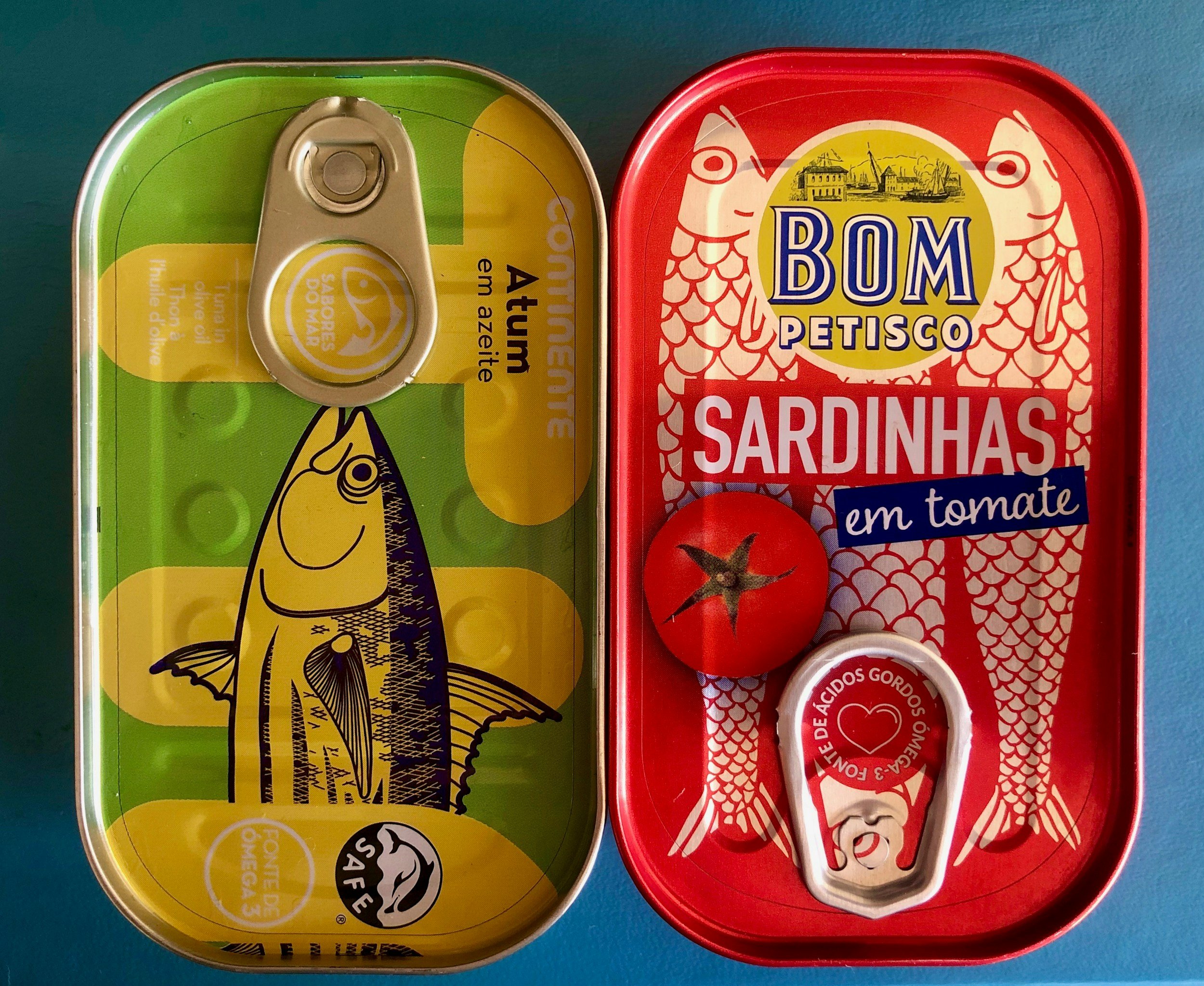
Photo courtesy of Mari Helin @mari, via Getty.
In the event you are unfamiliar with canned sardines, this is basically what the tins look like. They come in pull top cans, generally, but not always, rectangular with rounded corners just a bit longer than the sardines are. They typically will be canned in water, some type of oil (generally soy or olive), with mustard, with tomato sauce, hot sauce, or with other condiments. Generally speaking, they come without their heads but with their bones. Unlike many fish, sardine bones are pretty soft, especially post-canning, and can be eaten for a nice calcium boost. These are usually up higher on the canned fish shelf with the kipper snacks, canned oysters and clams, and so forth above the tuna shelves.
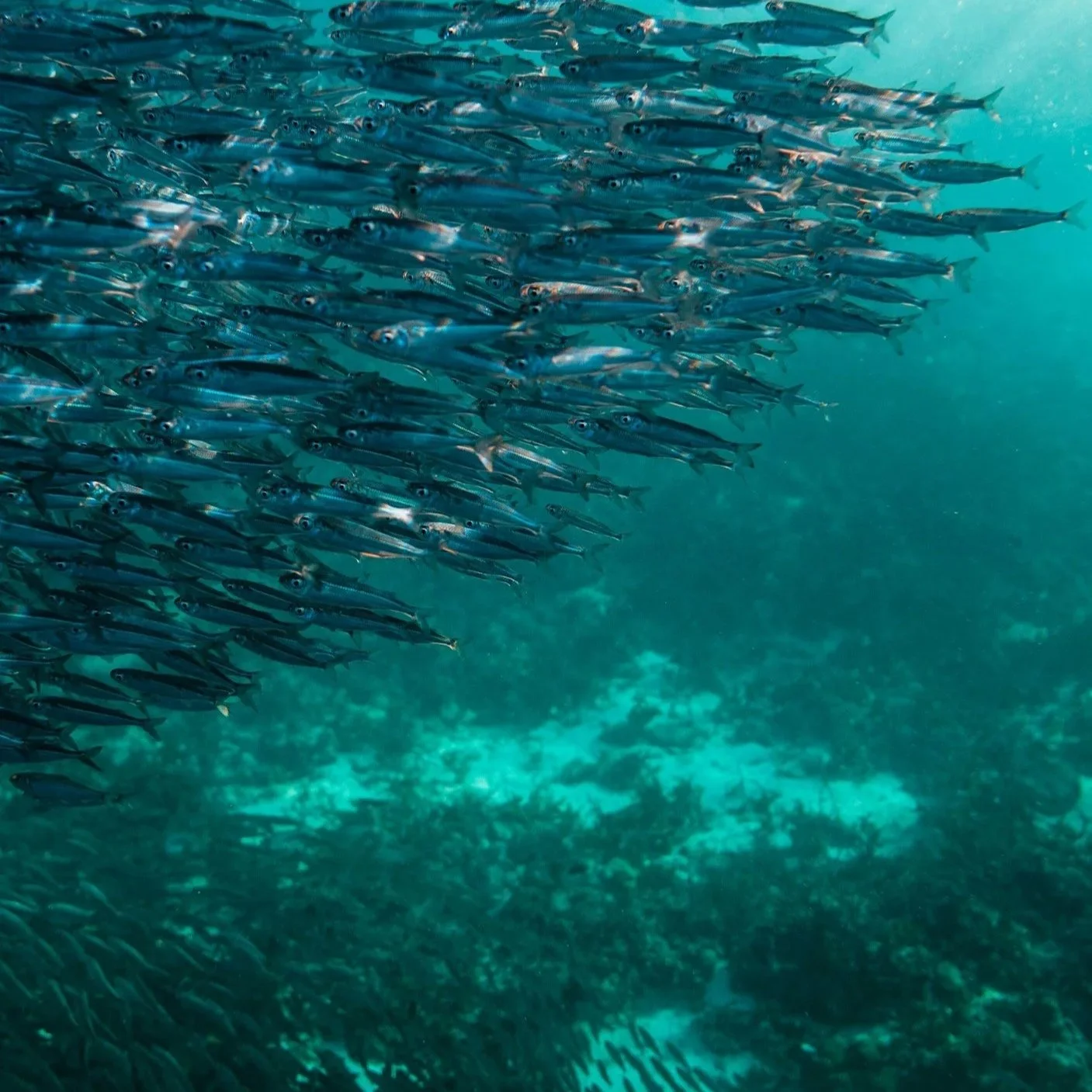
Sardines in the wild!
Photo credit: Clint Bustrillos/@clintbustrillos via Getty
What exactly are sardines? And why should I eat these?
Great question! It kind of depends. Conventionally, what we call sardines can be a lot of types of small fish that are both oily and part of the herring family (Clupeidae), including true sardines. Their name comes from the true sardines that traditionally have been caught near Sardinia. They wander about in giant schools and are caught in smaller-but-still-giant nets.
If your can of sardines came from the Mediterranean region, they are likely true sardines (generally Sardina pilchardus). Norway? Probably sprats. France or Iberia? Pilchard, probably, which is largely differentiated by size. And so forth. But in either case, they give you calcium through consuming the bones, lots of protein (23g per 3.5-ish ounce can), tons of Omega 3 and 6 fatty acids, healthy monounsaturated and polyunsaturated fats (11g per can), B12, selenium, vitamin D, iron, and phosphorus.
The below map shows the global distribution of sardines. Their coastal distribution is impressively wide, though they don’t live along all coastlines.
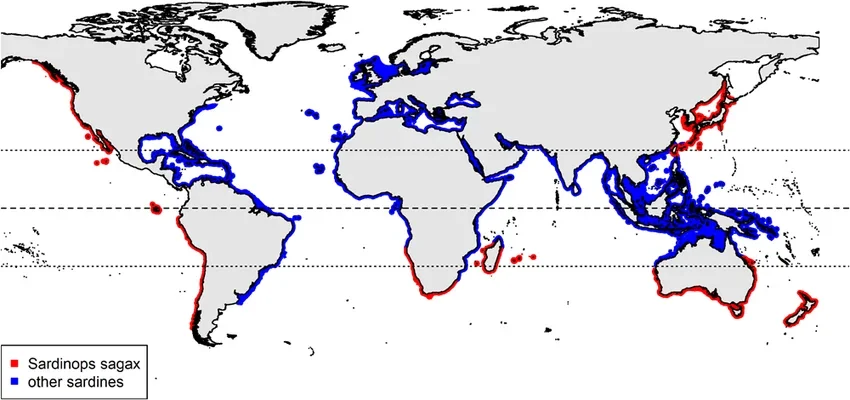
Map courtesy of Frontiers in Marine Science
When you think about it, these little superfoods are just waiting to be gobbled up!
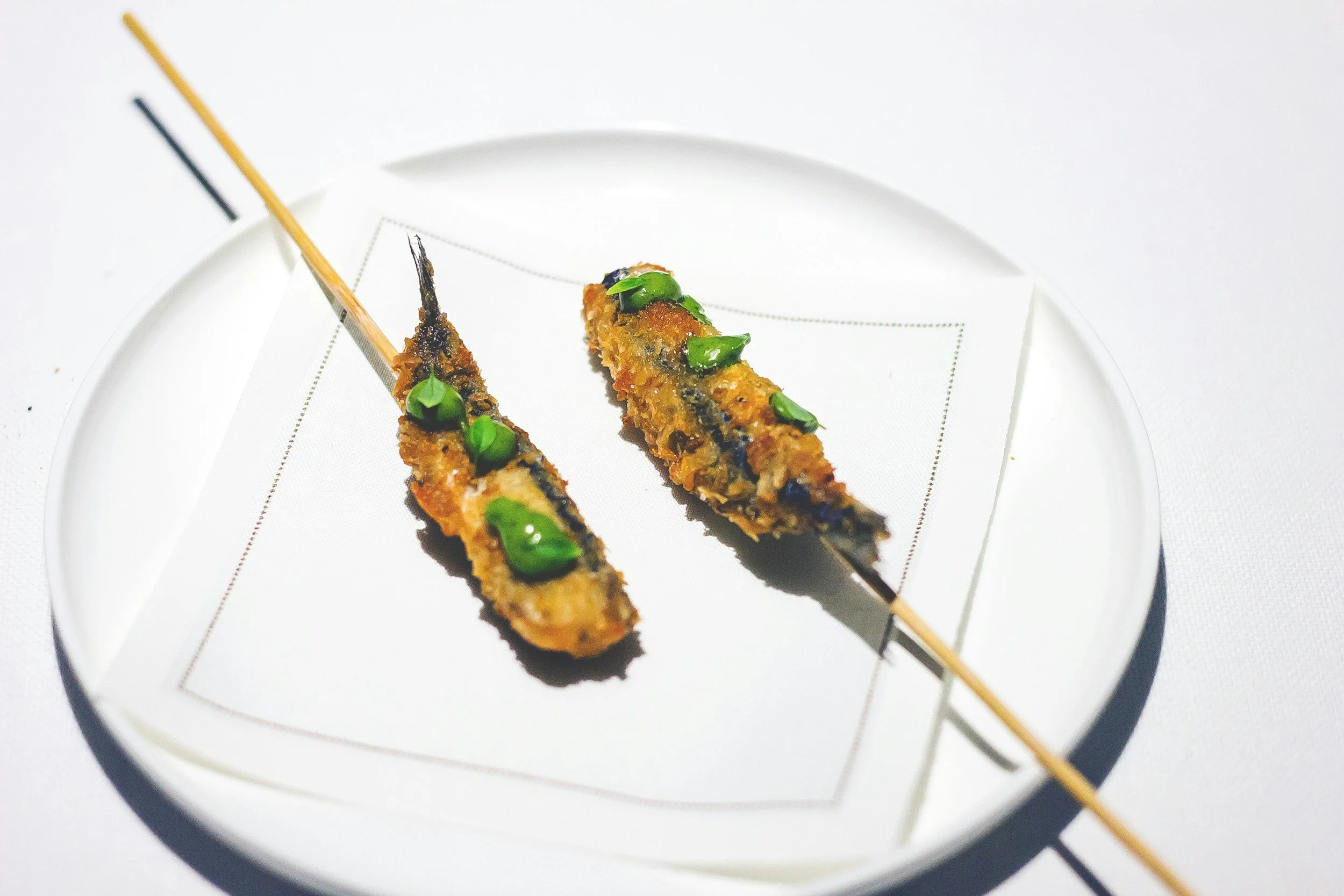
Wine Dharma, @winedharma via Getty
Um… how have I never heard of, let alone eaten, deep fried sardines?! I showed this to Child/Teen Tester, and she said, “oooo can we make these?” At long last, she is not rolling her eyes (as only a teen can do at a professional level) at me for loving sardines as much as I do!
Have any of you tried these? And if so, are they as omgyes as they look?
A warning, for those of you who love sardines already or are hoping to fall in love with them
I like to think I strongly dislike being the bearer of bad news, but I do like for y’all to know things even when they’re unpleasant: many sardine populations are at critically low levels due to overfishing. This means that, because of existing and emerging conservation laws, many, many global sardine populations are starting to have fishing limits applied to them. This is solely happening as an attempt to revitalize populations. I say “solely” like it’s not a huge and important thing to do in order to ensure we don’t lose sardines to overfishing in a forever sort of way. We want bigger populations, so it’s a good thing that these declining populations are starting to get protective legislative assists. We don’t want the higher prices that scarcity brings, but we can live with it for the love of sardines!

This is how I feel about the situation. So I’m right there with those of you who are screaming in your hearts. Photo credit: Dev Asangbam/@devasangbam via Getty.
Why do sardines matter?
For such an infrequently discussed fish, they sure are important! Sardines are an intregal part of oceanic ecologies, feeding many non-human animals as well as consuming plankton (they favor zooplankton but will eat any plankton). It’s not just us humans that love them! They are, however, a legitimately important food for humans, too. That’s why we’ve overfished them. If you’re wanting to get a little more in depth about how important sardines really are, I cannot recommend this film strongly enough:
This movie involves exactly no narration, and largely teaches by letting you see how tremendous the impact sardines have on myriad other species is: birds, sharks, dolphins, not-dolphin whales, seals, you name it! They also show human stuff, but the focus is really on the sardines as exemplified by their impact on other species as a vital part of oceanic food webs.
How is this an Origin Story, Allie?
Great question! It’s really not, and especially since sardines are from all over the place. It’s more like an origin of the human use of sardines. Some other information was tossed in for what has turned out to be a lengthy preamble so you can have some basic knowledge of sardines, than a tale of the evolution of sardines.
Sardines of Long Ago
I kind of like the way that sounds.
Sardines have been eaten since no later than the Middle Stone Age (roughly 100,000 years ago), where they (and other fish) were “killed by cold water upwelling, [and] usually netted offshore” in South Africa, with modern indigenous populations still harvesting herrings and sardines with same and similar methods. Near as I can tell, human harvesting of sardines in South Africa has been continuous since it began.
In Portugal during the Middle Paleolithic, the Figueira Brava cave shows clear evidence of extensive and long-term sardine fishing by Neanderthal populations. How cool is that?
By Antiquity, of course, lots and lots of sardine eating peoples. The Roman Empire saw rampant fishing occurring in basically all of the coastal places they have colonized. They used sardines the same way they used a number of different small fish:
Small fish, typically not considered high quality, were used to make fish sauces such as garum, which was used for seasoning and as a condiment, adding an umami flavour to food. Garum, liquamen, allec or muria (Grainger Reference Grainger and Hocquet2014) were prepared by crushing the whole fish and then fermenting it in brine. Pelagic fish, such as sardines, sprats, anchovies and mackerels, were therefore an important component of the human diet in the Roman period in the form of fish sauce, while sardines were also used for the making of fish pastes that could additionally contain other marine and land fauna (Marzano Reference Marzano2018).
In the Americas, North America sees sardine consumption as early as 12,000 years ago in the California Channel Islands. In South American Peru, the Caral-Supe civilization (the earliest known civilization in the Americas, approximately 5500 years ago) fishing and trading sardines approximately 4400 years prior to the institution of the Incan Empire. In addition to personal consumption, each of these peoples also traded these fish extensively with inland societies. Complex trade routes were established, with sardines being high on the list of important trade goods.

Fishing Forward
We’re going to skip over everything from Caral-Super through to modernity. Yes, it’s a lot of sardine history. Yes, it’s interesting. No, unless you’re really interested in the history of canning (me!), it’s not critical to include it. We’re just gonna go ocean by ocean, because it feels easier to me.
But First!
Before we get into the continents, let’s first talk very quickly about sardine populations. Because overfishing is a thing, and it affects a whole lot of types of fish that people love to eat.
The big problem here is that sardine demand doesn’t really decline too much. Not too often, anyway. But populations can and do decline. That’s the current situation, and population declines are pretty much everywhere sardines want to be. Because they’re so darned tasty.
It should be noted that since multiple types of fish (sprats, sardines, etc) are packaged and sold as sardines, some of the nations I will list later in this post will be harvesting not-sardine sardines. I really am just too pedantic to not mention this.
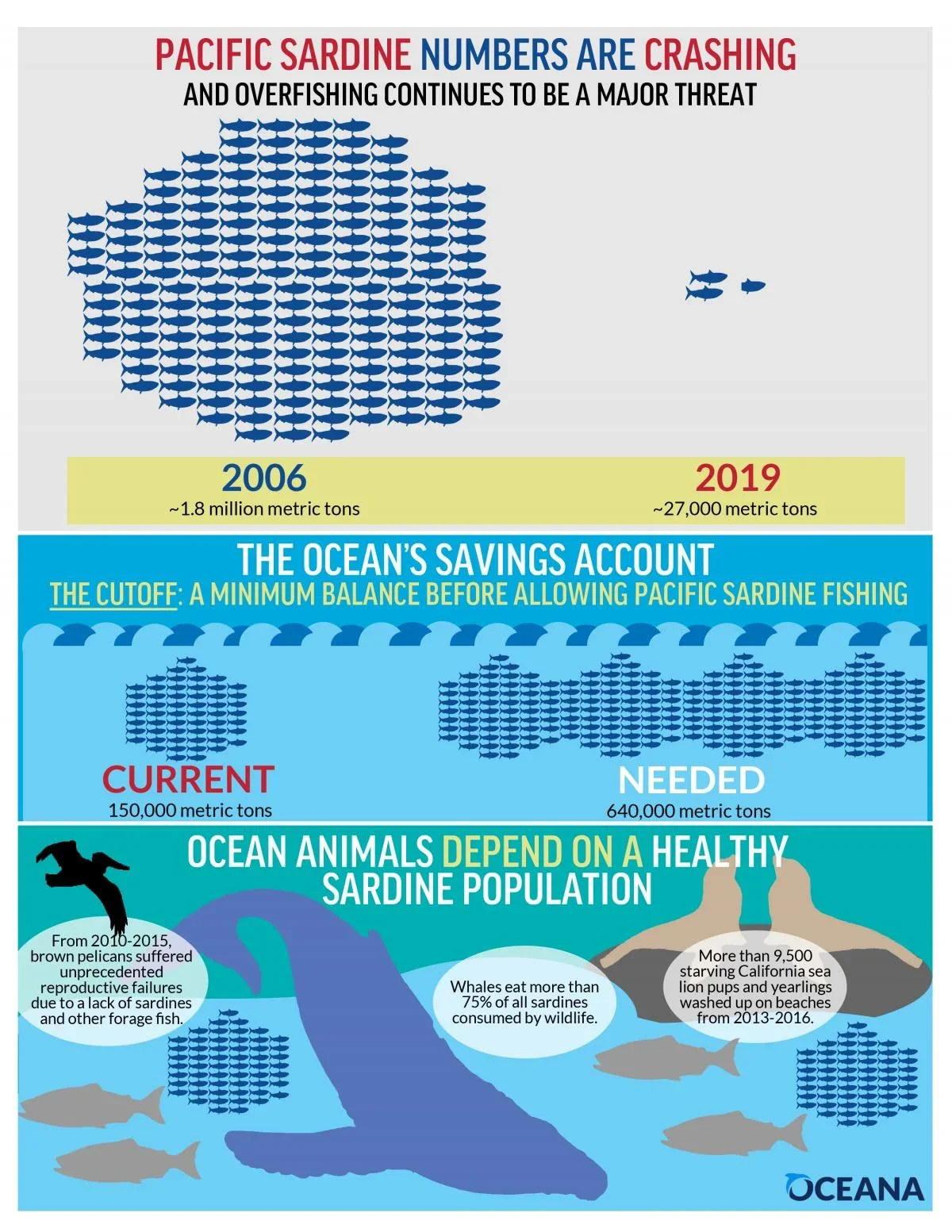
Pacific North America
I’m starting here for the very simple but unrelated reason that it’s the continent I live on. Eastern Pacific harvesting areas are: Baja California (Mexico), Baja California Big Sur (Mexico), California (U.S.), Oregon (U.S.), Sinaloa (Mexico), Sonora (Mexico), and Washington State (U.S.).
You will note that Canada isn’t here, multiple Pacific Mexican states aren’t here, and Alaska is also missing. This is because Eastern Pacific fishing areas all have strict limits on sardine harvesting due to declining populations. Canada and Alaska both closed their packing facilities and do not collect Pacific sardines, full stop. The states in Mexico that are missing are not harvesting sardines either, for the same reason. I think it’s really cool that all 3 nations are coordinating to preserve sardine populations. Be aware that when you buy Eastern Pacific sardines from Mexico or the States, there are limits established such that people can still eat the yums while the sardines can slowly rebuild their ranks. Sustainable harvesting, happily, really is the name of the game these days.
Of note, Japanese Western Pacific sardines have been migrating to America. How interesting is that?
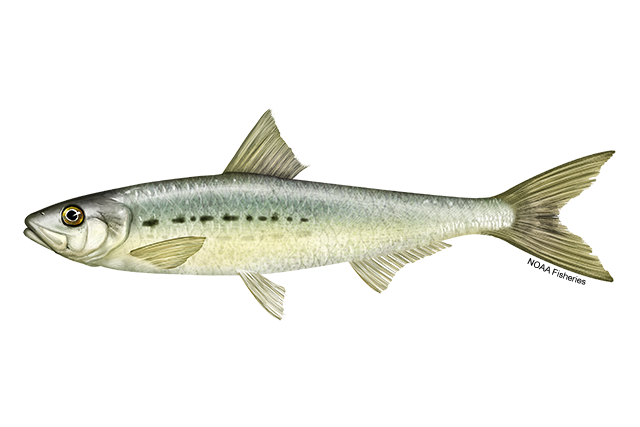
Pacific sardines. NOAA Fisheries
Pacific Australia
Pacific Australian sardines are found in the southern and eastern portions of Australia, largely harvested in New South Wales, Tasmania, and Victoria.
Pacific Central and South America
Peru and Chile! Makes sense it’s mainly just them, given that those nations comprise the largest portion of the South American Pacific coastline. But also, Columbia harvests from the Pacific exclusively. I believe on their Atlantic coast, they import their sardines. Guatemala also harvests from the Pacific, and ditto Nicaragua
Pacific Asia
Sardine fishing countries here include Japan, Indonesia, China, Vietnam, Thailand, and India. Also Russia, as the section of Russia we’re talking about is in Asia.
Next up? The Indian Ocean’s sardine harvesting nations!
Indian Australia
Australian areas that harvest in the Indian ocean are West Australia (where most Australian sardines are harvested) and the Spencer Gulf.
Indian Asia
Sardine fishing countries here include Indonesia, Oman, Yemen, Pakistan, India, and Iran.
Indian Africa
South Africa’s harvests tend to come from Atlantic sardine populations. That said, sometimes/often, some of those fish will get swept up in ocean currents, moving them into the Indian ocean, where things do not go well for them. Atlantic fish tend to prefer cooler climates than Indian fish do, so the fish struggle to manage having found themselves in a hostile environment and generally are unable to save themselves from animal predation. It’s sad, honestly, but I’ve tried to tl;dr it enough that you don’t actually feel sad.
Other African nations along the coast of the Indian Ocean include Tanzania, Malawi, Mozambique. There are, interestingly, also inland lake sardine populations out there that live in the African Great Lakes, and include Tanzania, Malawi and Mozambique, Rawanda, Democratic Republic of the Congo, and Rawanda. This is pretty cool, if you ask me!
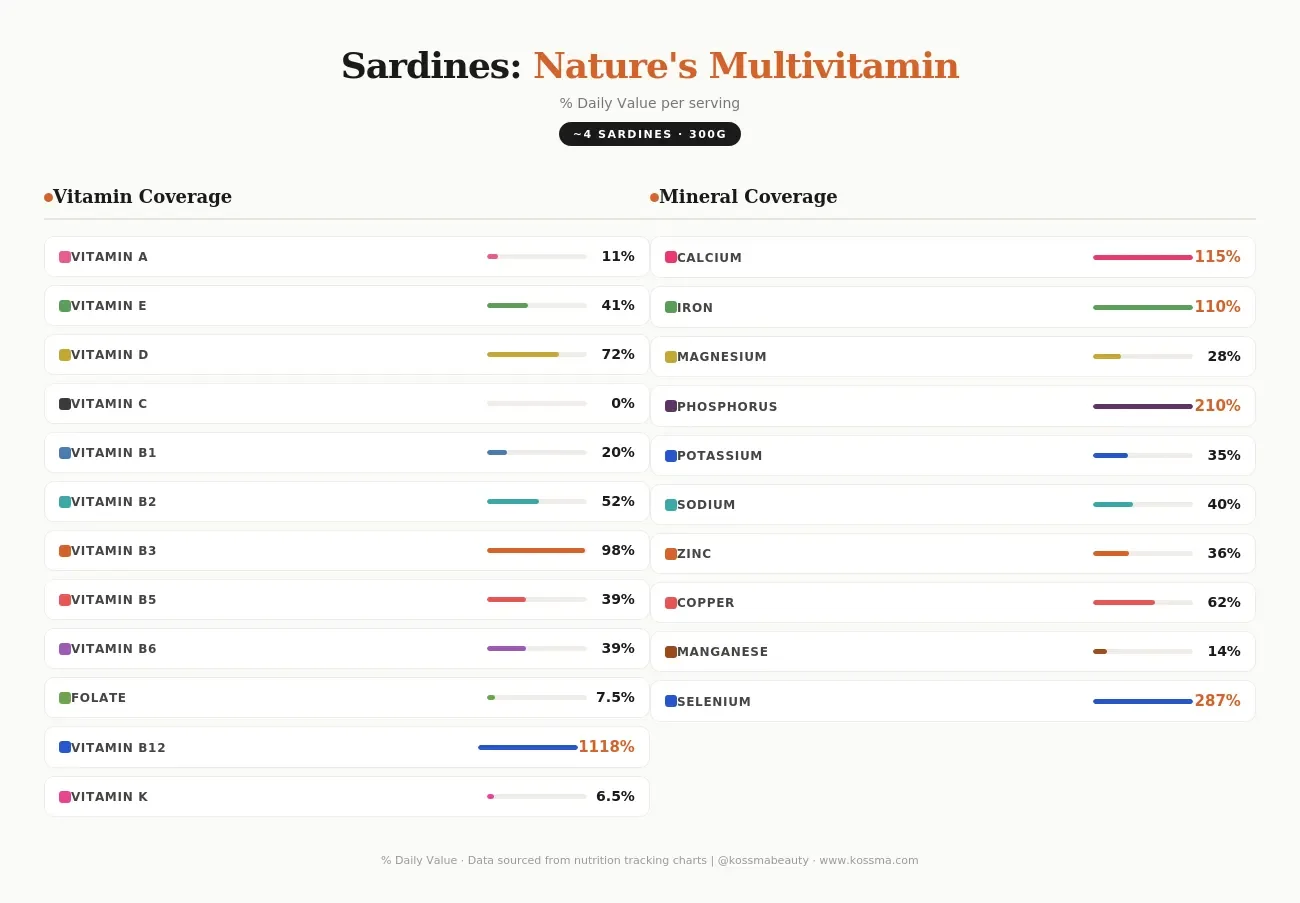
Quick digression to show you why more and more people are starting to recognize sardines as a superfood.
Before we do the Atlantic, here’s a video on Asia’s sardine industry:
Atlantic Sardines
Look at that! We made it to the Atlantic!! Looooooot of countries for this list, so strap in! Also, it’s entirely possible I’ve missed a country or three along the Atlantic populations that harvest sardines. Please tell me if you notice something I missed, because I like it when people let me know something is wrong with an article!
Atlantic Europe
We’ve got Greece, France, Iceland, Norway, Sweden, Scotland, Cornwall, Spain, Portugal (super important, second to Morocco for the Atlantic sardines), Croatia, Italy, the Canary Islands, Slovenia, Albania, Denmark, Ireland intermittently, Estonia, Lithuania (they actually sail on out to the proper Atlantic and harvest there, as there are no sardines local to them), and Poland! Honestly, I was surprised to learn that so many European nations do commercial sardine harvesting!
Atlantic Africa
Along Africa’s Atlantic coast, we are starting with Morocco. That’s because their sardines are generally considered to be the best sardines out there. Also, we see sardine harvesting in Mozambique, South Africa, Senegal, Mauritania, Tunisia, The Gambia, Guinea-Bissau, Namibia, Angola, Egypt, Liberia, Algeria, and Libya.
Atlantic Asia
Generally speaking, the Mediterranean harvests get lumped in with Atlantic harvests. This makes sense to me, but I get it if it doesn’t make sense to you. Turkey, Syria, Jordan (their populations are too small for commercial harvesting), Palestine (their harvests have become extremely small due to infrastructure bombings), and Israel. So these are the West Asian nations that are harvesting either in a commercial way or for local, artisanal products.
Atlantic Americas
Atlantic American (meaning from the Americas, not meaning the United States) sardines are harvested in Canada, the United States, Brazil, Argentina, Uruguay, French Guiana, Suriname, Guyana, Venezuela, Panama, Cuba (very little; most is imported), Haiti and the Dominican Republic (small and artisinal, similarly to Cuba), Costa Rica (ditto), Cayman Islands (ditto; this is a common theme amongst Caribbean islands), the Bahamas (ditto), Puerto Rico (ditto), and Jamaica (ditto).
Wrapping Up
I want to first say that this article has been a lot of fun for me to research and write. I have eaten sardines for as long as I can remember, but I only knew about a quarter of what’s in this article. They are much, much cooler little fish than I realized! For those of you who’ve never tried sardines? Get on out there and get you some! I’m leaving this Jamaican recipe for you. I’m growing and constantly harvesting red callaloo again, which is eaten in Jamaica and has me thinking about Jamaican cuisine. I might see about doing a sardines and callaloo dish!
—Allie Faden

Our Bulgarian Thermophilic Yogurt Culture produces the classic yogurt style that helped make yogurt famous around the world. Deeply rooted in Bulgarian culinary tradition, this culture has been cherished for generations and remains a source of national pride. Its long history and distinctive character are part of what makes Bulgarian yogurt so beloved.
When cultured, it creates a thick, creamy yogurt with a bright, lively tang and a smooth, satisfying texture. The flavor is clean and pleasantly tart, giving it that unmistakable yogurt taste many people recognize as the gold standard for traditional yogurt.
This thermophilic culture thrives at warm fermentation temperatures and produces a dependable, beautifully set yogurt that works well for everyday eating. Enjoy it plain, with fruit and honey, or use it in cooking, baking, and sauces where its rich flavor and creamy body truly shine.
Simple, traditional, and timeless, Bulgarian yogurt brings centuries of yogurt-making heritage right into your kitchen.
Expect:
• Thick, creamy traditional yogurt
• Classic bright Bulgarian tang
• Smooth, spoonable texture
• Reliable thermophilic fermentation
• Beautifully balanced flavor
• Perfect for eating plain, with fruit, or in cooking and baking
Rich, tangy, and deeply traditional, this Bulgarian culture produces the iconic yogurt that has delighted people around the world for generations.
Our American Style Greek Yogurt Culture is a thick, tangy, dependable culture designed to produce the style of Greek yogurt many American yogurt lovers know and crave. This is a hybrid culture that creates a naturally dense, creamy yogurt with a bright, refreshing tang and excellent body.
When cultured, the yogurt sets up thick on its own and can be strained to your preferred consistency. Strain lightly for a classic spoonable Greek-style yogurt or strain longer for an ultra-thick, rich result. It can also be enjoyed unstrained, where it cultures up surprisingly thick and creamy, almost to the point of gentle roping.
The flavor is clean, tart, and refreshing without being harsh. It has that familiar balanced tang and creamy finish that works beautifully in both sweet and savory applications. Perfect for breakfast bowls, parfaits, sauces, dips, baking, or simply eating straight from the jar.
This culture is reliable, active, and easy to maintain. With proper care it can be re-cultured from batch to batch by reserving a portion of finished yogurt to inoculate fresh milk.
Expect:
• Thick, creamy texture
• Classic Greek-style tang
• Can be strained to desired consistency
• Naturally dense even when unstrained
• Reliable re-culturing with proper care
Tart, creamy, and endlessly versatile, this is the Greek-style yogurt culture that delivers the familiar texture and flavor so many people love while still being simple to make at home.
Our Buttermilk Style Thermophilic Yogurt Culture brings together the best of two traditional dairy cultures to create a yogurt that is exceptionally smooth, mild, and satisfying. By combining classic yogurt bacteria with buttermilk cultures, this yogurt develops a uniquely balanced flavor that is creamy, gentle, and beautifully rounded.
The finished yogurt cultures thick and velvety with a soft, mellow tang rather than a sharp sourness. It has a richness that feels comforting and familiar, while the buttermilk cultures contribute subtle depth and smoothness to the overall flavor.
This style reflects a more traditional approach to yogurt making, where multiple cultures work together to build complexity and texture. The result is a yogurt that is creamy yet thick, mild yet flavorful, and perfect for everyday enjoyment.
Simple, dependable, and wonderfully smooth, this culture produces a yogurt that feels both classic and comforting.
Expect:
• Creamy yet thick yogurt texture
• Mild, smooth flavor with gentle tang
• Balanced character from both yogurt and buttermilk cultures
• Reliable thermophilic fermentation
• A soft, mellow yogurt without harsh acidity
• Delicious plain or with fruit, honey, or granola
Creamy and mild. This culture produces a yogurt that feels comforting, traditional, and endlessly enjoyable.