Candied Quince | A Sweet Old-Fashioned Treat
June 23 | Written by: Allie Faden
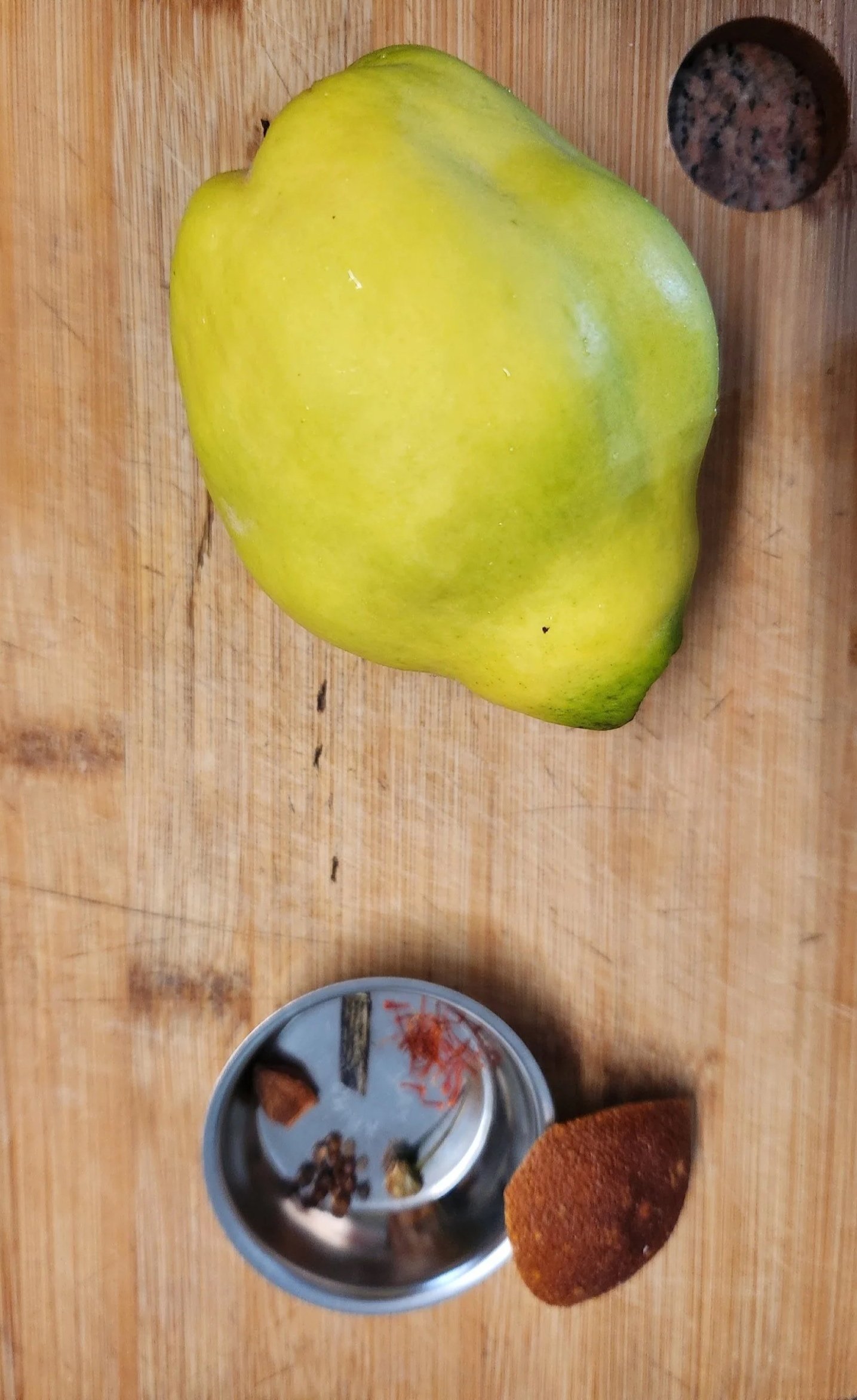
This is a quince. A quince with a side dish of grains of paradise (substitute is black pepper), saffron, star anise, vanilla, dried orange, and chile. You should spice your quince, or not, as you prefer. No hard and fast rules here.
Why, Allie?
Mainly because I like quince. I do not usually like to prepare quince, but eating it? All the yes to that! I wanted it to have some fun extra flavors, but not too over-the-top, so my spices are in small quantities to accommodate their strong flavors.
This “recipe” (lies: it’s another “method”) is pretty easy, once you have peeled and cut however many quince you’re preparing. It also is sort of a hybrid between membrillo and Pliny’s quinces in honey. Pliny really liked his quince boiled in honey. Also too did Apicius. And I think probably anyone who’s really tried it; quinces boiled in honey and wine is still popular in the Mediterranean region. Everyone likes it! Except, unsurprisingly, me. Because of the wine they also boil(ed) it in. I really do not like the flavor of wine in this context. If you do? Go straight Pliny and wine it up! You’ll use about equal parts of honey and wine if so.
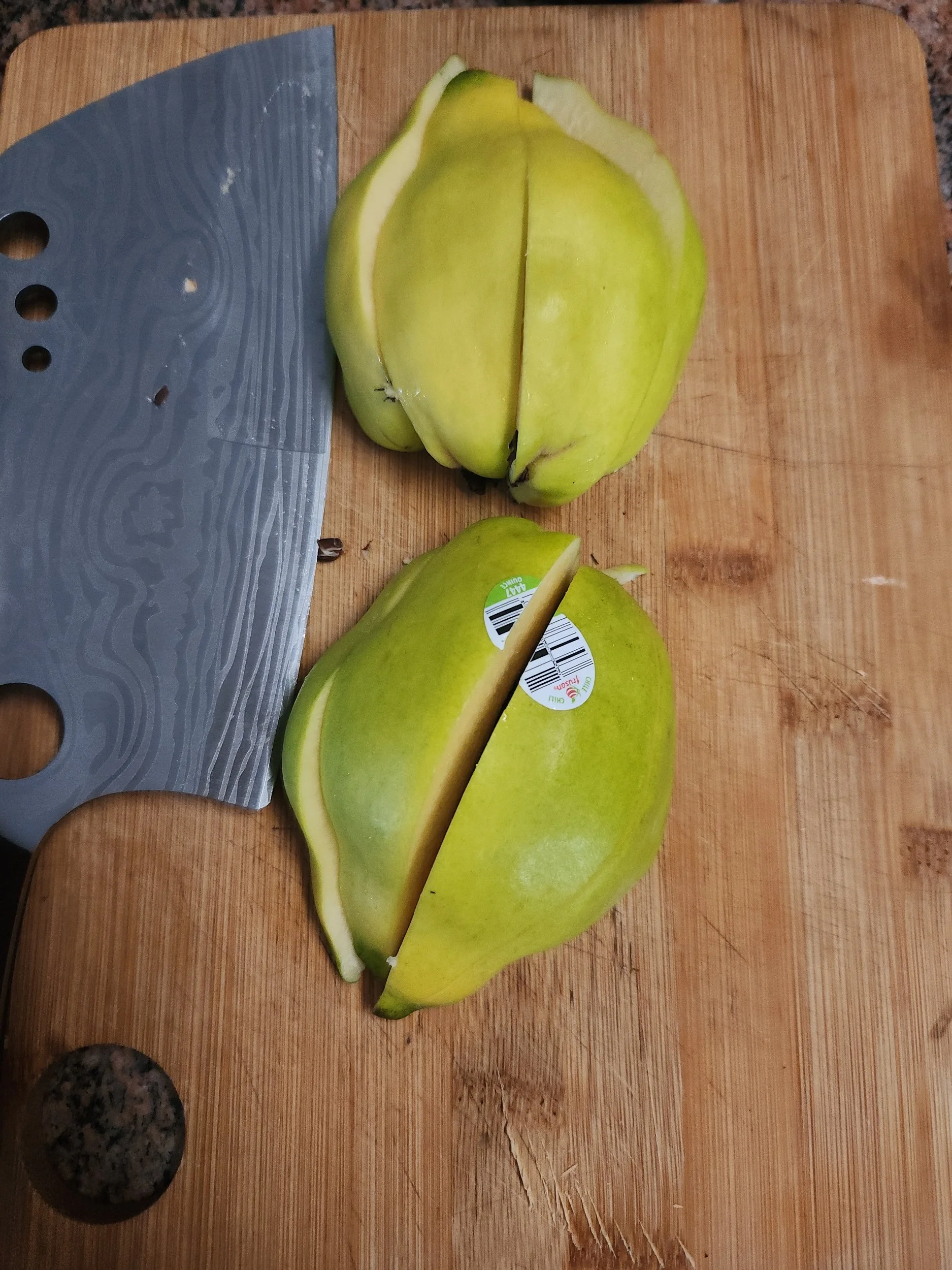
Cut in half, then into strips. Once they’re in strips, peel them and cut into pieces. Size is up to you. I personally do not peel quine before I’ve cut it anymore, because for some reason I always lose little bits of skin to the peeler, and I wanted to keep my skin this time. Use a stout knife because it’s a stout fruit.
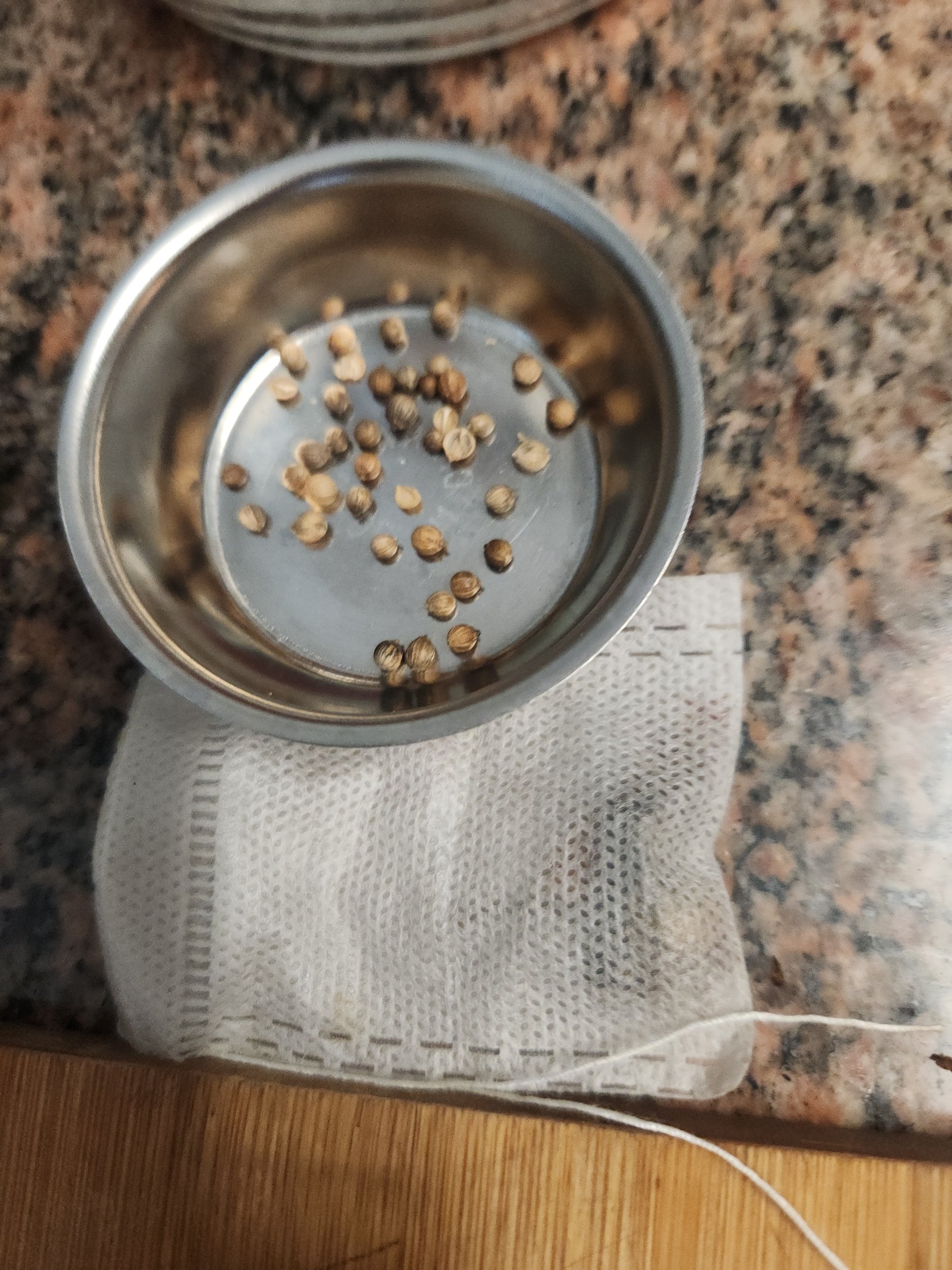
I put the spices shown up top in this little tea bag. Then I remembered my deep love of coriander and added some, per the above picture.
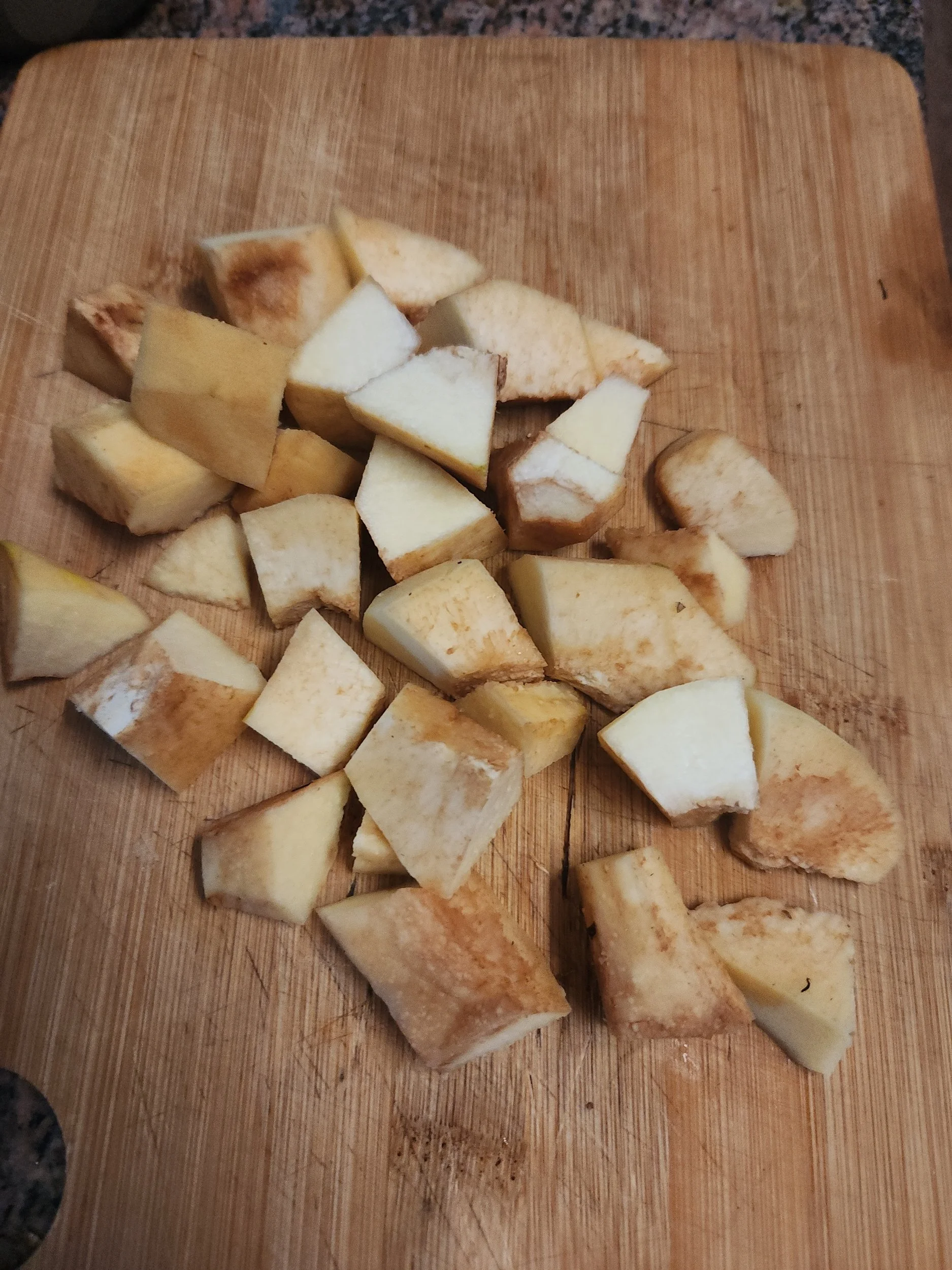
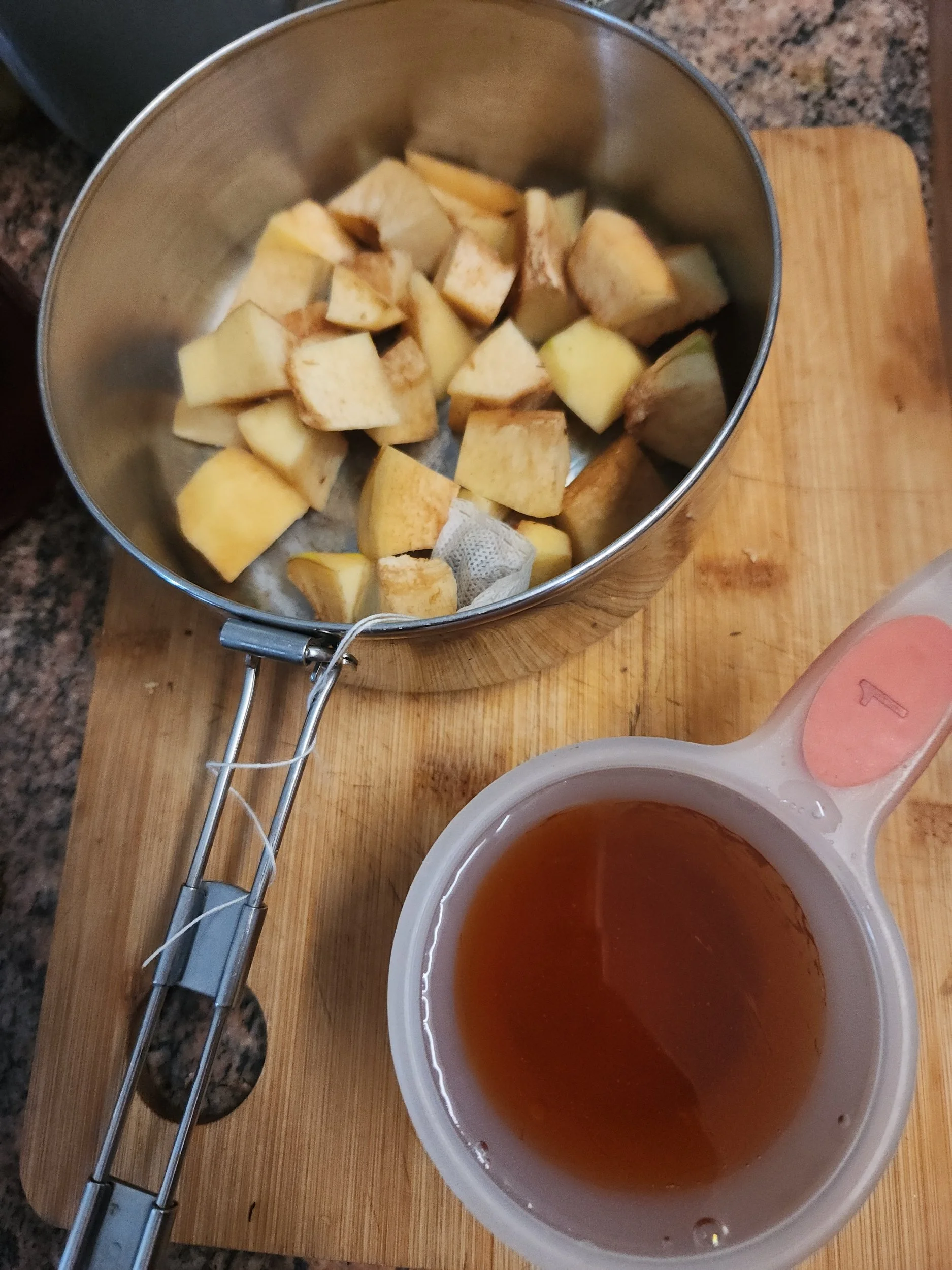
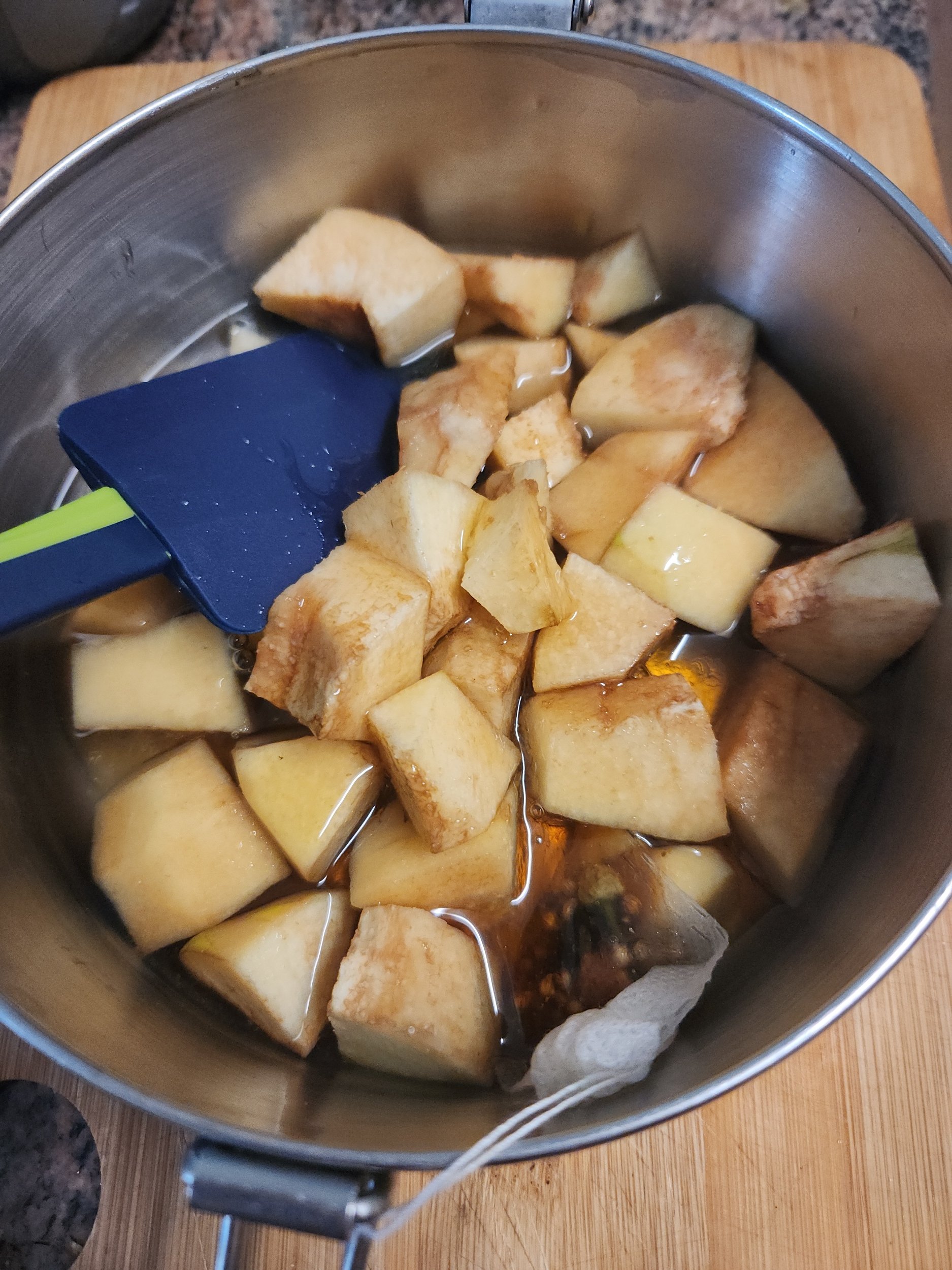
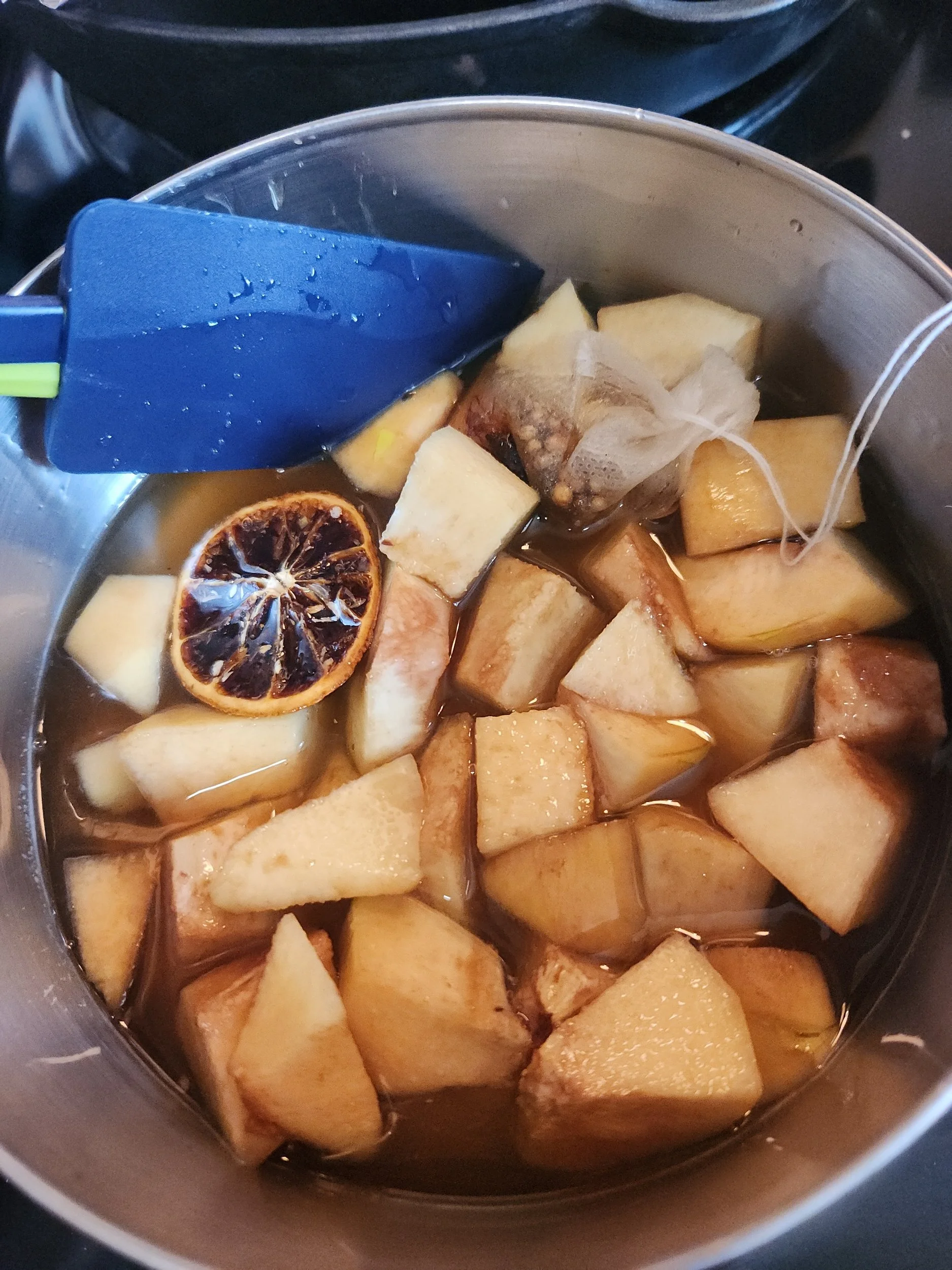
Yep. They sure do oxidize fast! No, legit this took me some time because apparently I am weaker than I think I am. Consequently, they did oxidize. If you are less weak and/or more efficient, yours are less likely to oxidize. That said, it matters not if they oxidize before you’re ready to cook them.
Fruit and spices into a pot. I put about ¾ cup of honey in the measuring cup and topped it off with water.
Give it a little stir before the stove is involved. If you want.
That orange slice is dehydrated, so don’t worry if you decide to use an orange slice and it doesn’t look like this.
We are now on the stove!
My favorite thing about quince is its color shifting magic. From white to pink! Pink will be here shortly.
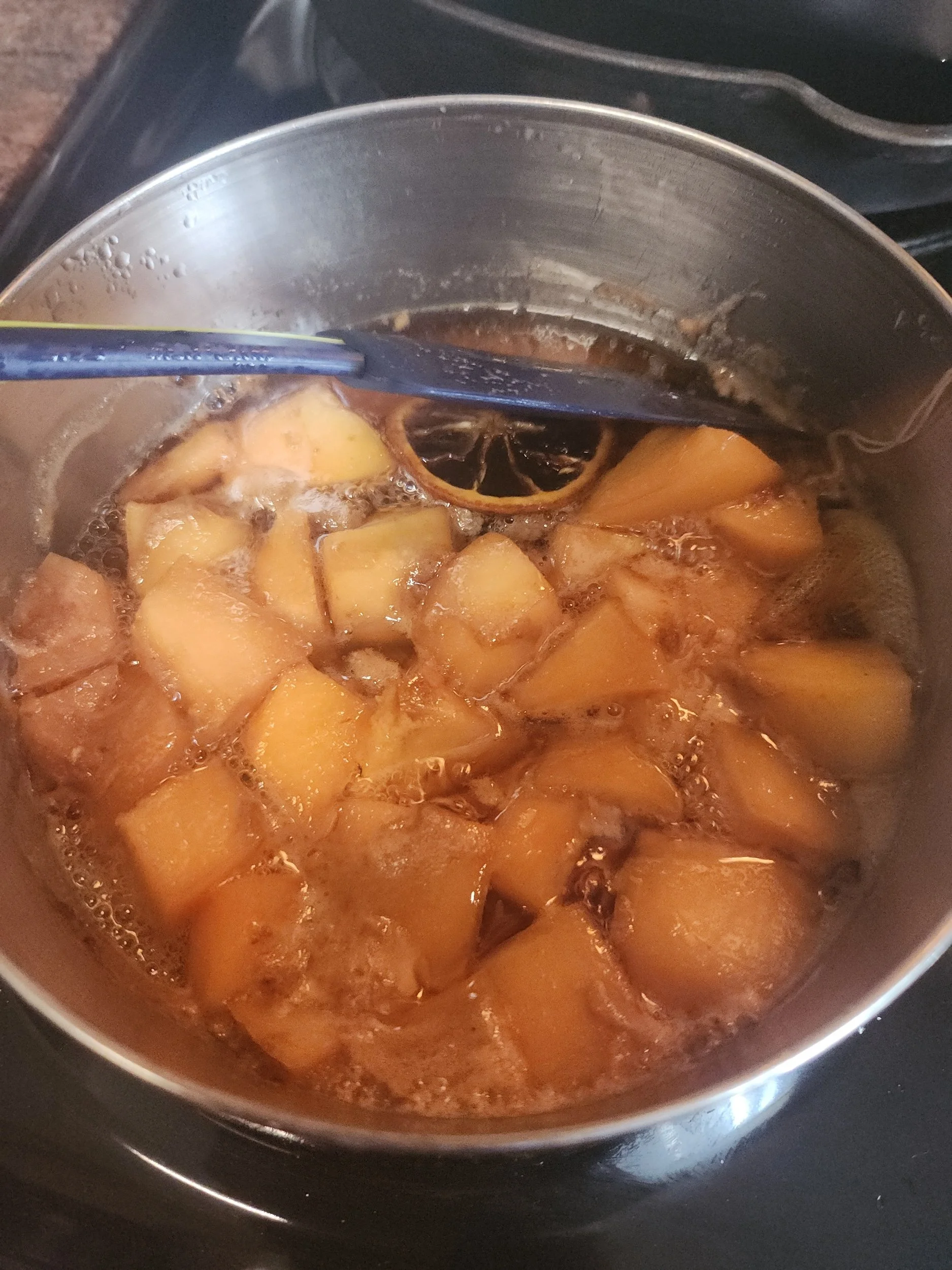
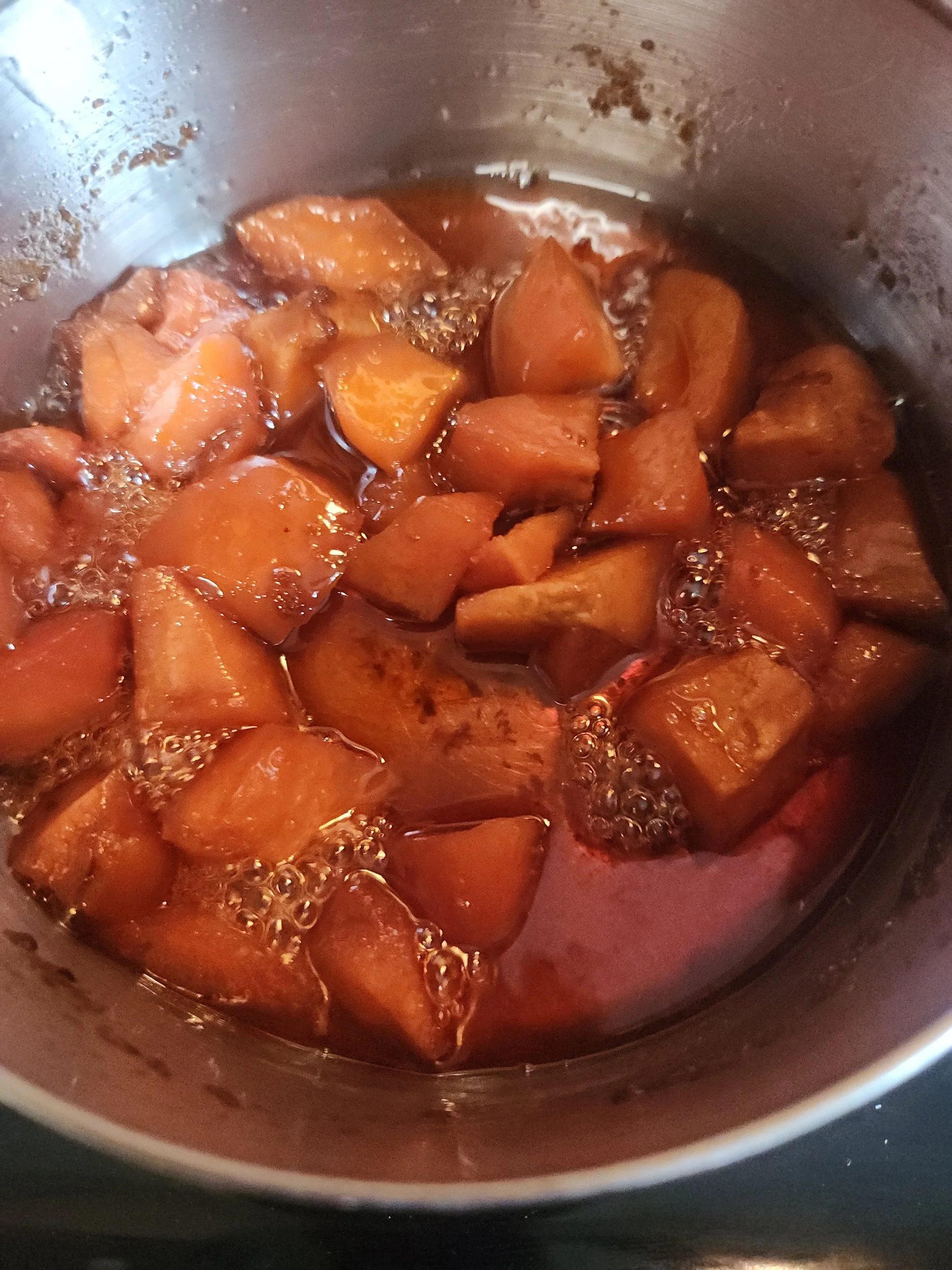
Oh ho! Getting some pink/red going on here! You can probably tell from the vigor of the boil that I probably should’ve called it here. Yet…
I did not!
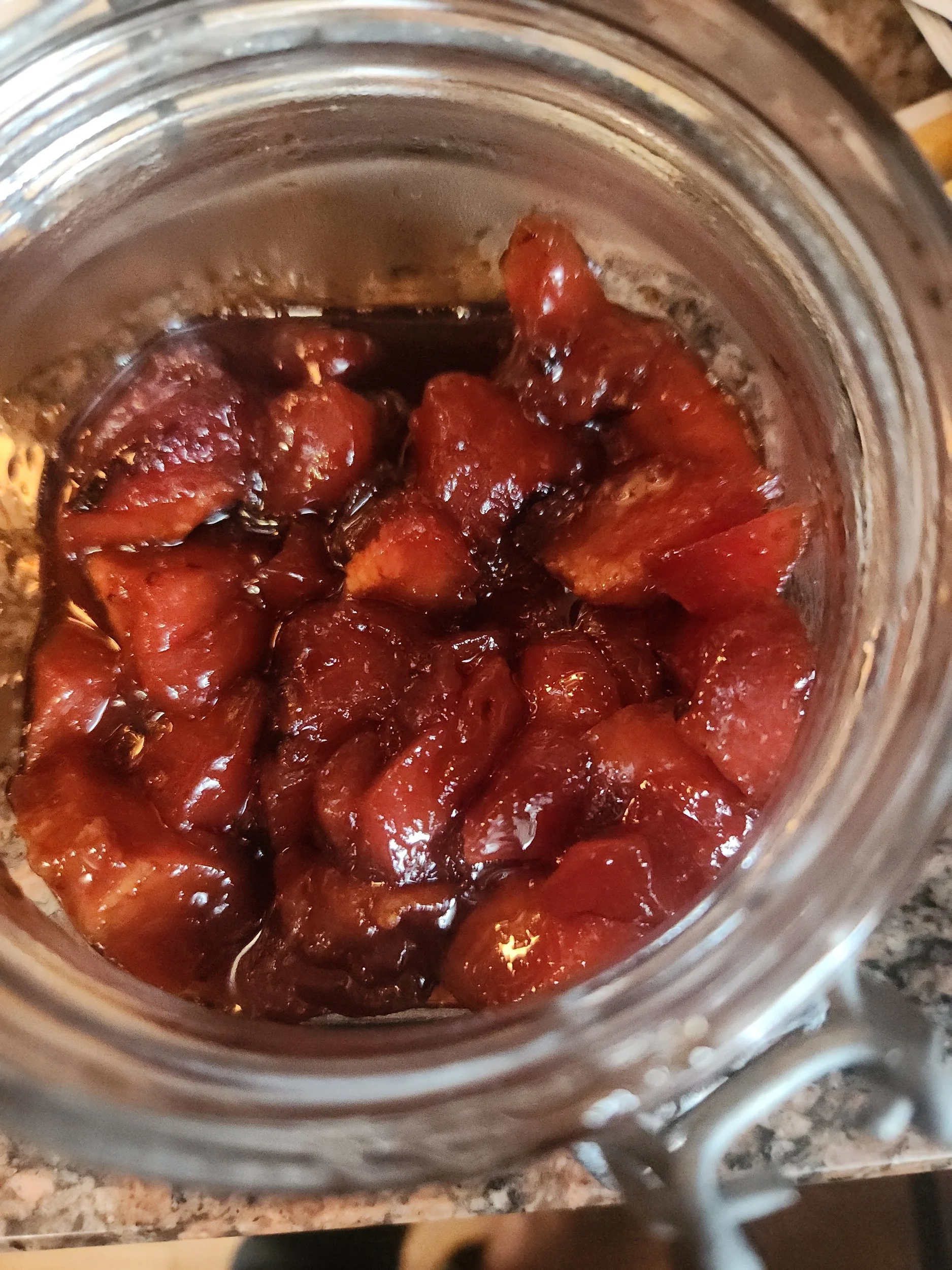
Why, you ask? It’s because I wanted a bit of char on some of the quince pieces. This is them, with some char, in the remnants of their cooked honey. I used a small Fido jar for these, but jar type doesn’t matter because the sugar content is high enough that it will be a hot minute before these guys even start trying to determine if they can mold with all the sugar they’ve absorbed from the honey.
What to do with these?
I’m gonna tell you they’re amazing on crusty bread, and that’s true. But I am largely a spoon-to-mouth kind of guy on this front, so while I always intend to eat them in some civilized or semi-civilized fashion, I do not. I instead turn into a toddler, eating large spoonfuls, honey getting all over me, and a belly that sighs with happiness. You also can put them into tarts, use for full sized pies, probably would be bomb in some jam cookies or even as a cupcake or muffin add-in. You could, if you like sweet with meat, service these with those. I’d personally go lamb, mutton, goat, pheasant, duck, goose, or venison. You absolutely can serve these with chicken or beef, but I personally prefer something with a bit of the wild in its flavor profile if I’m going to do anything other than spoon to mouth.
Is there an actual recipe, Allie?
Sort of! Yes. For a one-quince batch. Scale as needed:
Ingredients
1 quince
Spices you’ve chosen or what I did (grains of paradise/pepper, star anise/anise, coriander, saffron, bit of vanilla bean (I used 1” of old and dried bean), 1 dried orange slice, and 1 chiltepin)
¾-ish cup honey
1/4-ish cup of water
pinch of salt (not shown in any pictures, it seems)
Prepare your quince for cooking, then add it to a saucepan. Put your spices in a tea or spice bag, tied up cheesecloth, or whatever else might help you contain them enough to remove easily. Add the honey and water, then set the heat to medium-high and start stirring. If you are going to stop stirring at any point during this process, definitely turn that heat down to medium-low and do what you need to quickly. This really doesn’t take too long.
Cook, stirring most or all of the time, until the liquids are reduced and thicker, and your quince pieces are pink or red. Put into a jar or other container of some type. I store these in my pantry, but you can put them in the fridge if preferred. If you do fridge them, make sure you take them out earlier than you otherwise would from the pantry so the honey sauce can warm up and spread more easily.
Happy eating!
—Allie Faden

Amasi, also known as Amasai, is a traditional fermented milk drink with deep cultural roots and a beautifully simple process. Comparable to milk kefir in texture and versatility, Amasi cultures into a smooth, drinkable yogurt with a naturally mild tang and refreshing finish.
This culture produces a liquid yogurt-like consistency that is silky and lightly thickened, making it perfect for sipping, pouring over fruit, blending into smoothies, or using in savory dishes. The flavor is gently tart rather than sharp, with a clean cultured note that develops more character over time.
Amasi is widely appreciated for its probiotic richness and digestive support. As a living culture, it introduces beneficial bacteria that help create a gut-friendly, nourishing fermented milk beverage you can enjoy daily.
This is a mesophilic culture, meaning it ferments at room temperature without the need for specialized equipment. Simply stir into milk, allow it to culture, and enjoy fresh Amasi in hours.
With proper care, it can be re-cultured from batch to batch. Just reserve a portion from each finished batch to inoculate the next and maintain your culture long term.
Expect:
• Smooth, drinkable texture
• Mildly tangy, clean flavor
• Room-temperature culturing
• Probiotic-rich fermentation
• Reliable re-culturing with proper care
Traditional, nourishing, and beautifully uncomplicated, Amasi is a wonderful everyday cultured milk for those who appreciate gentle tang and time-honored fermentation.
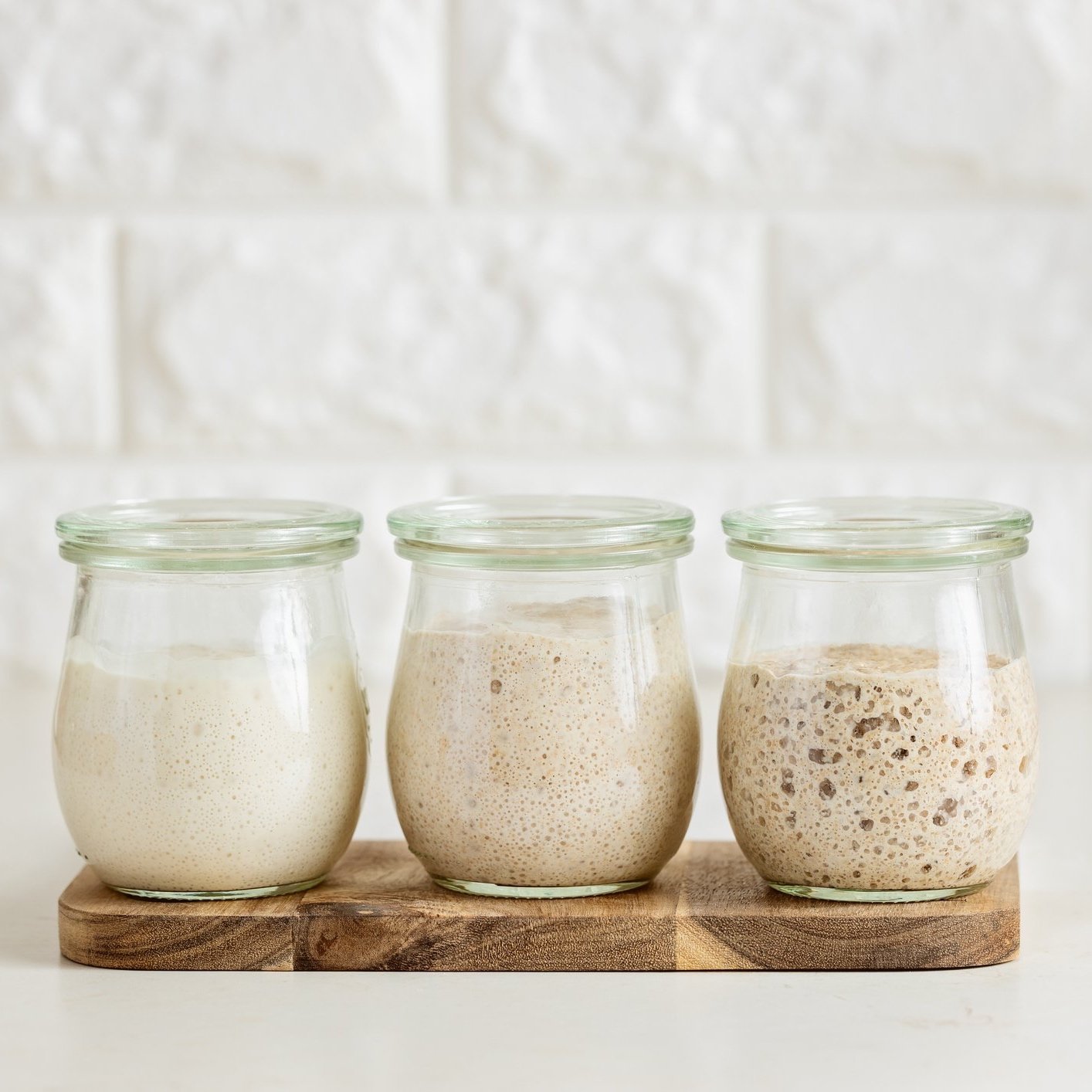
Meet our Alaskan Sourdough Starter, a culture inspired by the rugged beauty and clean wild air of the Last Frontier. This starter produces a beautifully balanced loaf with gently tangy notes and a warm nutty depth that makes every bake feel a little more special.
Long, slow fermentation brings out rich complexity in both flavor and aroma. The culture is reliable, lively, and easy to work with whether you are baking rustic hearth loaves, soft sandwich bread, or weekend pancakes. Expect a mild approachable sourness rather than a sharp tang, the kind of flavor that keeps everyone reaching for another slice.
Rooted in the spirit of Alaska’s pristine wilderness and crafted for everyday bakers, this starter delivers a wholesome and deeply satisfying sourdough experience from jar to oven.
Expect:
• Mild, approachable sourness
• Balanced flavor with gentle tang
• Warm, slightly nutty depth
• Reliable fermentation and strong rise
• Excellent for hearth loaves, sandwich bread, and pancakes
• A lively culture that performs well with long, slow fermentation
Warm, balanced, and wonderfully dependable, this starter brings the spirit of the Last Frontier straight into your kitchen.
A-Fil (our version) is a unique heirloom-style fil culture with added Lactobacillus acidophilus, giving it a brighter, more pronounced tang and a probiotic boost. It falls within the Scandinavian “fil” family and is similar to Filmjölk, but with a livelier acidity and a slightly more complex finish.
This is a mesophilic culture, which means it cultures beautifully at room temperature. No yogurt maker required. Simply stir into milk, let it sit, and by the next day you will have a smooth, drinkable yogurt with a clean tartness and a silky body.
Expect a texture that is gently thick yet pourable, perfect for sipping, spooning, or using in smoothies and overnight oats. The flavor is fresh, lightly tangy, and refreshing with a subtle cultured depth that develops more character with each batch.
With proper care, this culture can be re-cultured indefinitely. Just reserve a portion from each finished batch to inoculate the next. Over time it develops a rhythm in your kitchen and becomes a reliable everyday staple.
Expect:
• A brighter, more tart profile than traditional filmjölk
• Smooth, drinkable texture
• Room-temperature culturing
• Reliable re-culturing from batch to batch
• Added Lactobacillus acidophilus for extra probiotic diversity
Simple to maintain and deeply traditional in feel, our A-Fil culture is perfect for anyone who loves tangy, pourable yogurt with old-world roots and everyday ease.