How I Manage Vegetable Ferments
Jan 13 | Written By Allie Faden
I’m baaaackkkkk!

On a limited basis, since it turns out that burnout/writer’s block can last quite a bit longer than I anticipated! So one post per month, generally speaking, is what will be happening. As a head’s up, SquareSpace appears to be trolling me regarding font sizing (and a lot of other stuff), so all the sections headers are brown since they definitely aren’t all the same size. Hopefully, I can get this corrected by the time I’m onto the apples Origin Story I’ll be writing next.
Why Vegetable Ferments Again?
You may be wondering why I’m coming back with a new article on this topic, when there are plenty of searchable resources already in the blog, as well as on other websites. It’s because of grocery prices. Wow, the grocery prices these days! Since produce specifically began to soar and shows no real sign of slowing down, I decided to really up my game beyond what is normal for me on this front. I find it really helpful, because if I ferment produce while it’s in season and less costly, I have produce to eat and to feed my family without having to pay off-season or otherwise inflated prices on those foods. Plus, it ups the nutrient quotient with hardly any extra effort from me at all. I’m gonna cut that stuff up at some point anyway, so I may as well do so while it’s at the lowest cost available to me and add some salt to make it last. Real talk is that “upping my game” means I am making sure that most my jars are full, not that I’m doing anything special or particularly different from my normal habits. I am sometimes letting a few empty jars accumulate, as I tend to make a lot of whatever I’m making since it lasts so long.
DISCLAIMER: this requires some level of “active management” from you. In my house, that simply means making sure I’ve got enough, because the combination of an extremely generous gift from my brother-in-law of many cases of Weck jars, coupled with those I had before, means I don’t really need to do much management once my food is in those jars. This will not be the case for most people, and it’s those of you who fall into that category that I’m writing this for. As I’m typing, I see that I really missed this and missed y’all. We’re gonna get to the active management part after the upcoming barrage of pictures.

Brett Johnson/Getty
What do you need?
Mainly jars, salt, vegetables (or fruit!), and water. Not always water. You may also want spices or other flavorings, too, depending on what you’re making and how you want it to taste.
Jars
Legit, you can use any jars. Saved sauce jars, jam jars, fancy jars, scavenged jars, it doesn’t matter. You need jars. Ideally with a lid.
Oooo! Or crocks! You can also use crocks with weights. This includes ceramic casserole dishes. I used to have this beautiful blue casserole dish and I loved fermenting in it. Not entirely sure what happened to it, but I haven’t forgotten that I used to have it!
Also you may want/need weights. You can buy the fancy glass weights, or use a non-porous rock/gem, or use an edible leaf with a bag of saline on top, or just a bag of saline. World is your oyster here. Use what you have, or if you like buying new things, get some jars and/or weights that make you smile.
If you are busy, kind of lazy, and/or forgetful like me (I’m all of these), you will want some jars that are more accommodating to people who need to be more hands off in their process. Many people wander over to Home Goods or similar and get some Fido-style jars (see below). These are also fab, but you do have to do maintenance on them by checking and/or tightening baling wire and so forth periodically. If you aren’t into that sort of intermittent extra work, a weight on top is just ducky. Sometimes, these same stores have Weck jars. Home Goods is how I discovered my love of Wecks.
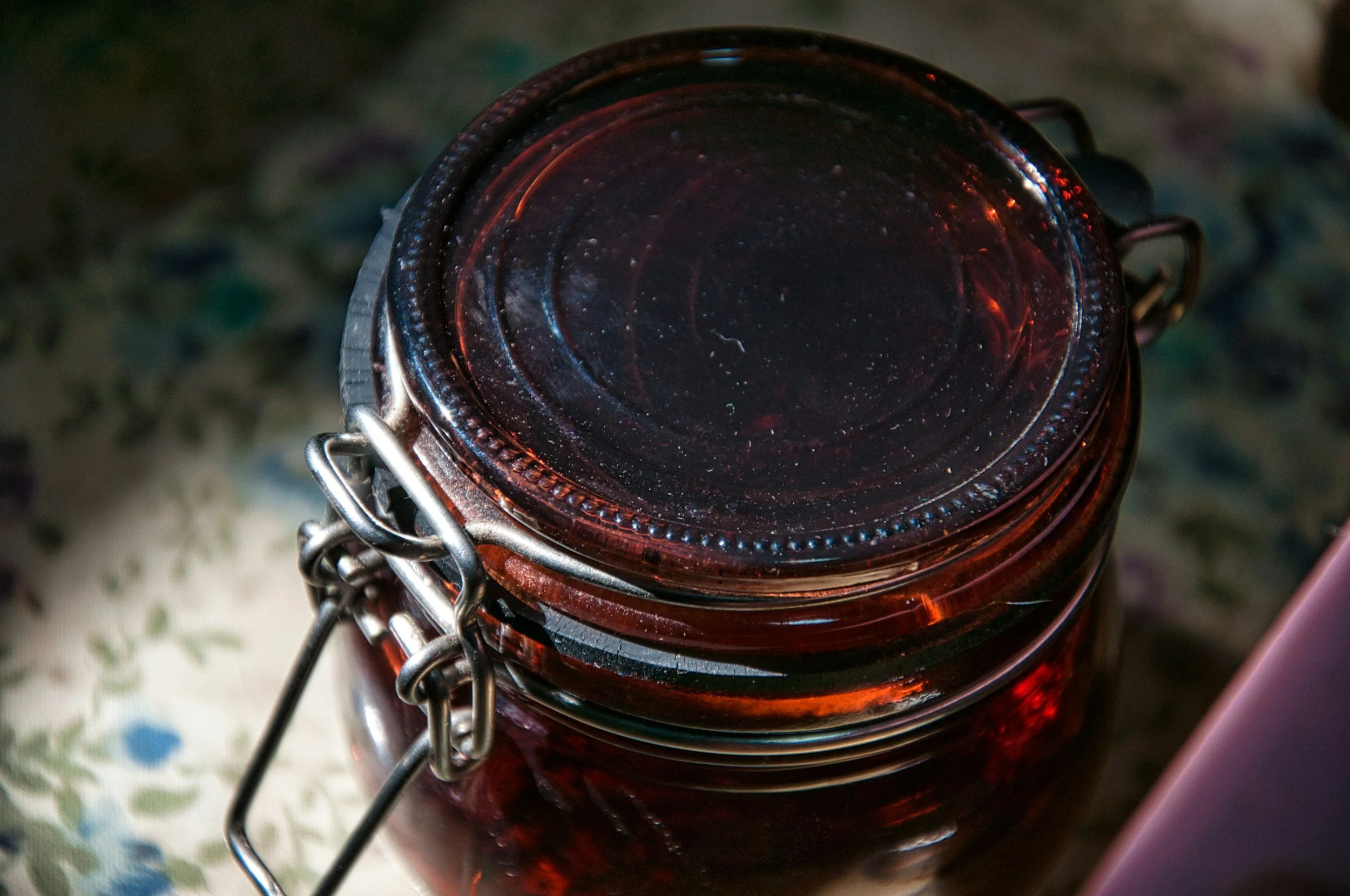
These are the Fido style jars. Credit: Xuancong Meng/Getty
If you don’t feel like sifting through the links on fermenting vegetables above, here is the link for the original post on how to make them. It’s got nice charts, lots of information, and near as I can tell, the only piece of information in there that’s changed is my favorite brand of jars. I still do all my muddling with my rolling pin, so…
Mainly what you need to keep in mind when you’re frustrated, confused, or otherwise over it, is that people have been fermenting for as long as … well, our earliest known ferment is beer made 13,000 years ago in what’s now called Israel. Second oldest known ferment is fish, from about 9,200 years ago in what’s now called Sweden. Ancient peoples were extremely skilled in preserving food, entirely without all the fun technologies and products we can employ, so we in modernity can also do this with or without more modern technologies.

Possibly y’all are concerned about what to do if you discover you’ve over-fermented some of your produce like that far right milk kefir? If so, this link may be helpful. You aren’t going to be able to “fix” it, per se, but the article gives you ways to use up whatever went wrong.
Enough Babble, Already: Whatcha Got, Allie?
Quick disclaimer: I am reasonably certain that I’ve forgotten some active ferments in my house, even when we set aside the possibility of posting the active sourdough starter, booze, random fruit vinegars, and cheese I keep in the house. Spoiler alert: it’s the amount of cheese that I don’t want to show, not the booze, vinegars, or SD. Wow I keep a lot of cheese on hand!
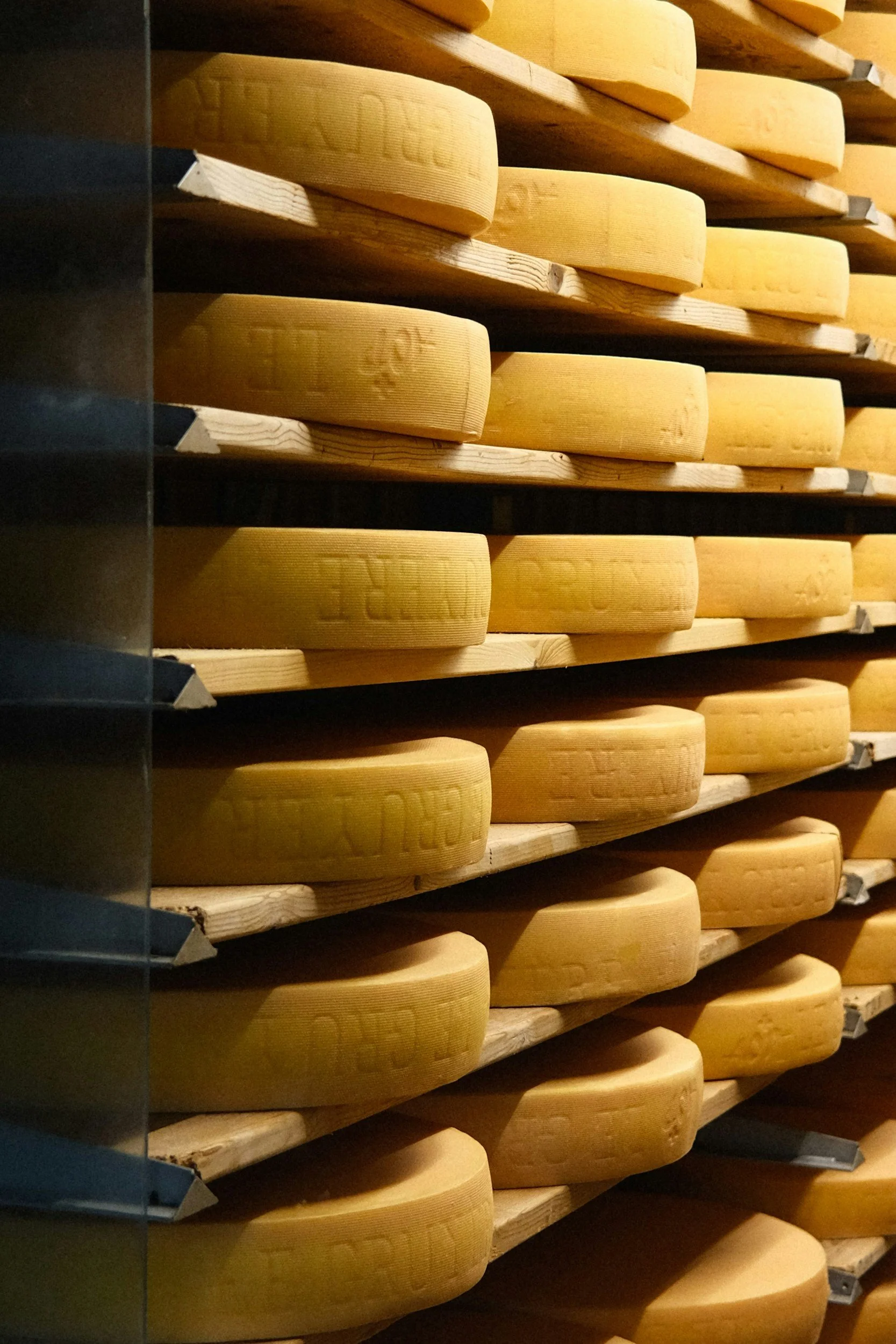
My love of cheese truly knows no bounds. Parm and Romano are probably my favs.
I’m gonna do this in sections, where I’m showing you the stuff I keep room temp first and then the stuff in the fridge. Seems easier for me that way, and probably for y’all too since indicates how you might want to store your whatevers. Strap in, y’all, because it’s really not a small amount, and some of these pics leave a bit to be desired. We just have to suck the poor photography up, because my arthritic hip is too sad to take the Wall of Ferments apart again an-dràsta. The fridge stuff will also have some other not fridge stuff in the pics, bc I just loaded the counter up really quickly so I could finish taking pictures.
I am showing it to you this way because it will make a little more sense how I manage and organize all this fermented food. As always, I generally employ a first in, first out system per food safety norms. Hot sauces are the only ferment that I don’t always consume sequentially. Sometimes I want a young and brash, rather than older and distinguished hot sauce. It is what it is.
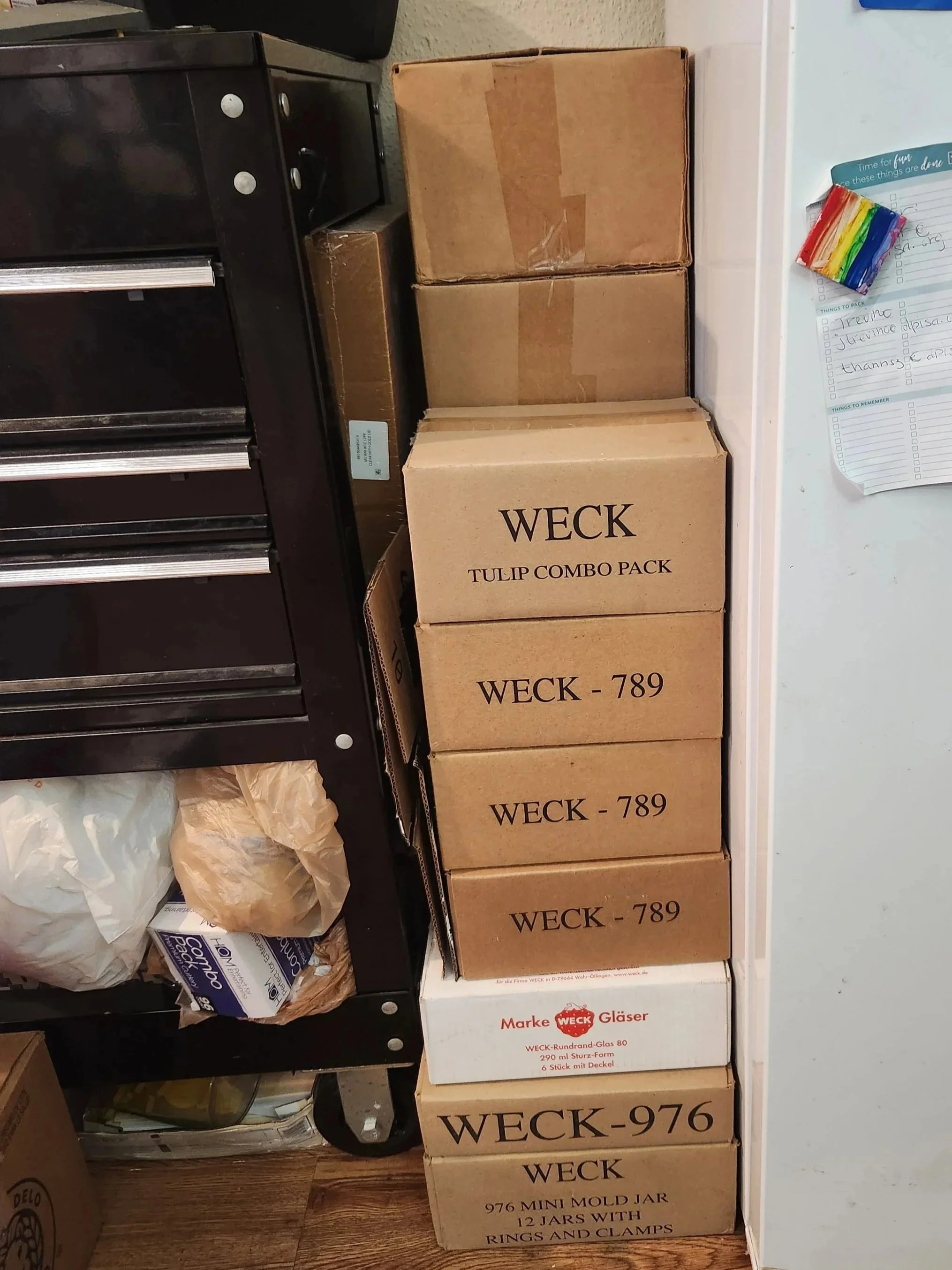
The Wall of Ferments. Please ignore all the surrounding mess. All of the following pictures of jars in boxes live in this wall, which will help you understand why I went bottom to top in my pictures so each box could be put back where it belongs as I’m done snapping.
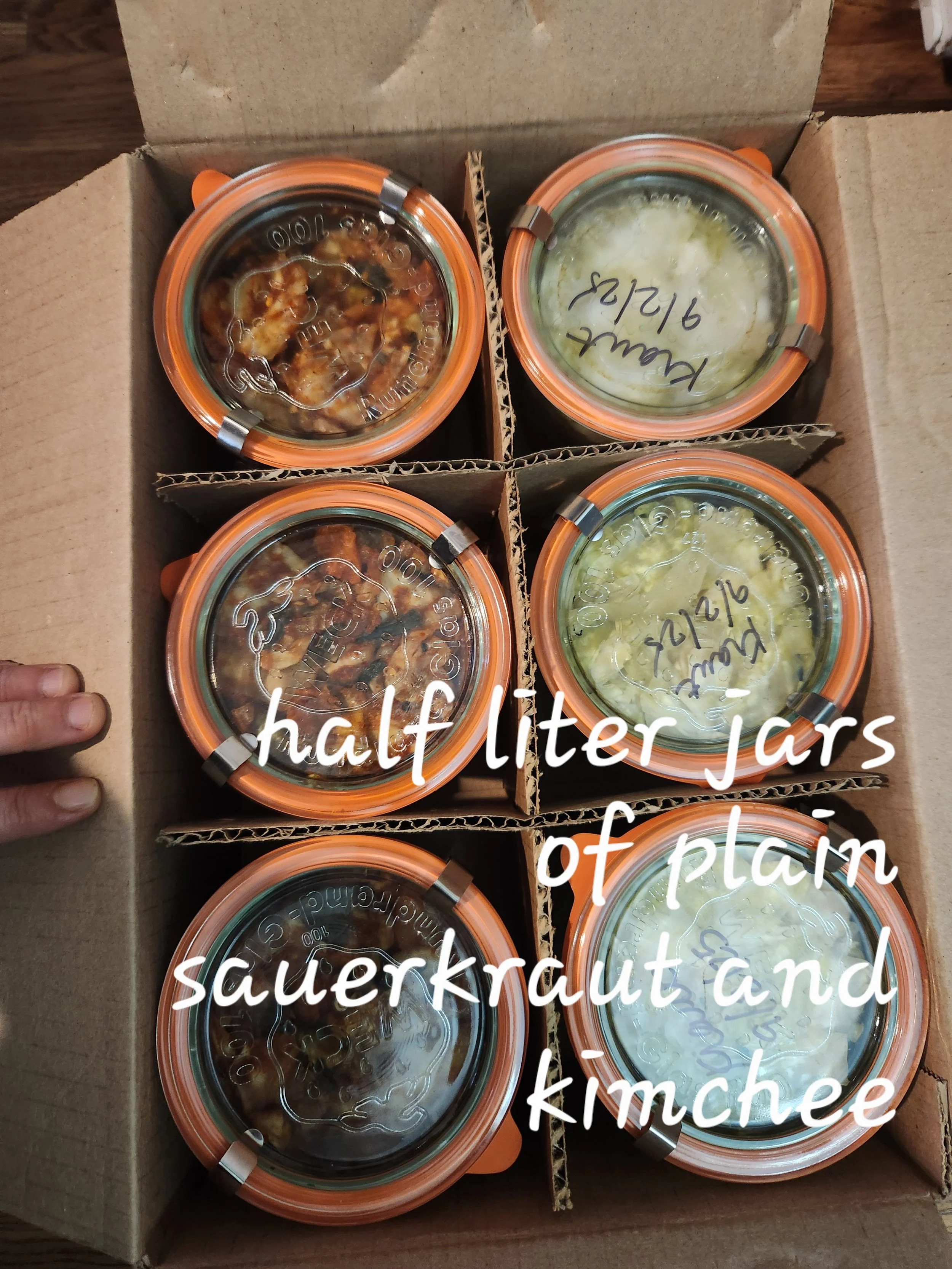
On the right are plain sauerkraut; nothing but salt and green cabbage.
On the left are kimchee, I believe the extra spicy kit we sell here. While it’s true that I own everything I could possibly need to not use the kits, I really like them from a flavor and easy of use standpoint, so it’s hard to see a reason to not use them. Thus, I use them: tasty and easy to do even when you have a lot going on in the kitchen. I have the link up for these, but as of this writing we are out of stock.
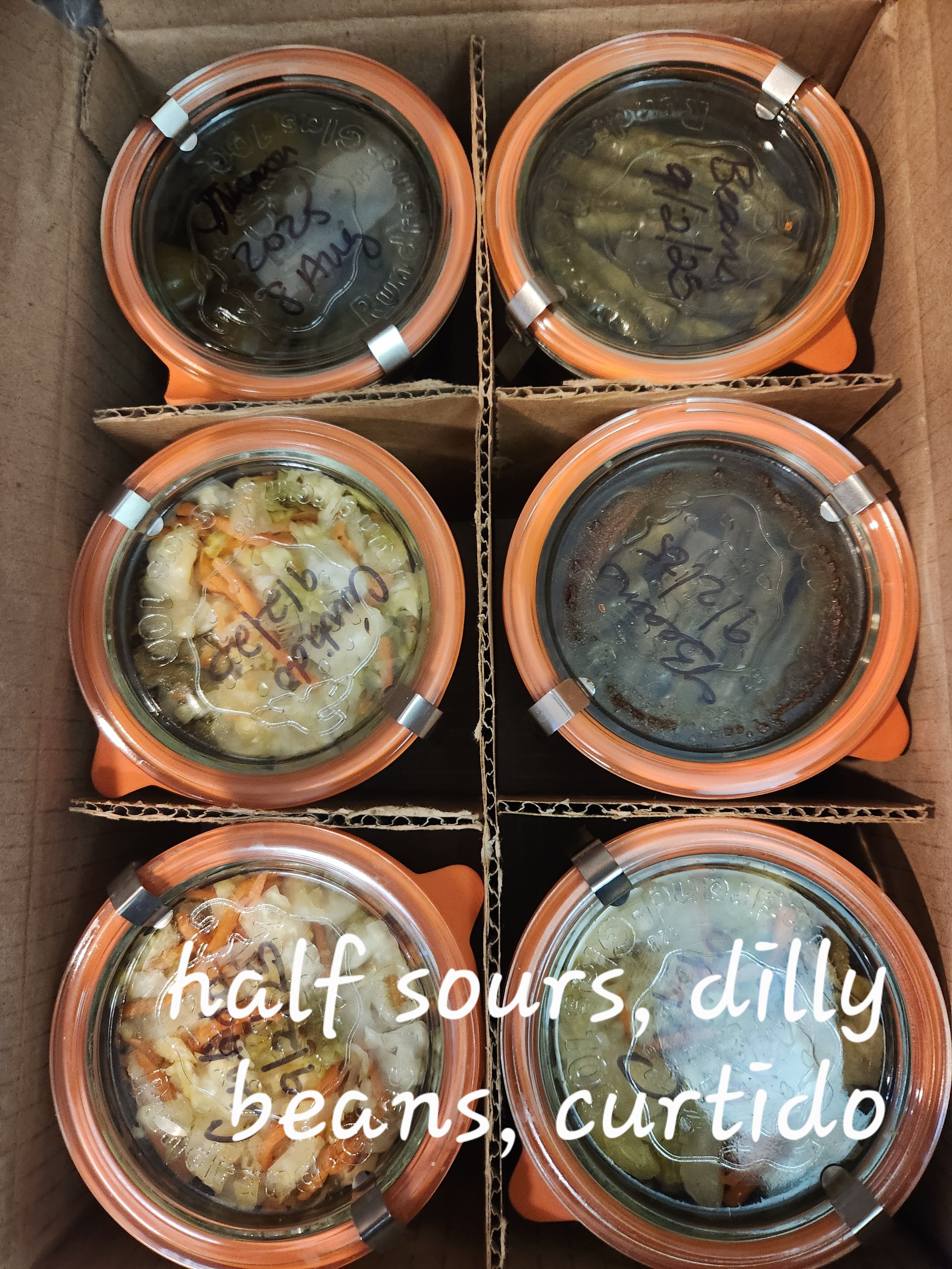
I find fermented dilly beans to be less work to make, so I don’t pickle them. It’s the jar on the top left that has half sours. These are cut into snack sized chunks, which is why they aren’t in the giant jar you’ll see shortly.
Curtido is, for those of you unfamiliar, a post-Columbian sauerkraut native to El Salvador, and it has other inclusions such as carrots and onions and whatnot. In pre-Columbian times, this was fermented and didn’t have any Old World ingredients in it. In modernity, this is typically pickled rather than fermented, but y’all know I prefer to ferment and it does legitimately taste roughly the same as the more modern-traditional pickled style. Your fermented curtido will need to be somewhere in the 3-6 month range before it’s texturally like the pickled curtido unless you shred your cabbage mega fine. I checked this routinely with a neighbor, and she determined that she doesn’t feel like it’s quite right until about 6 months of fermentation. In all likelihood, if I cut my cabbage more finely and less hurriedly, that timeline would have changed.
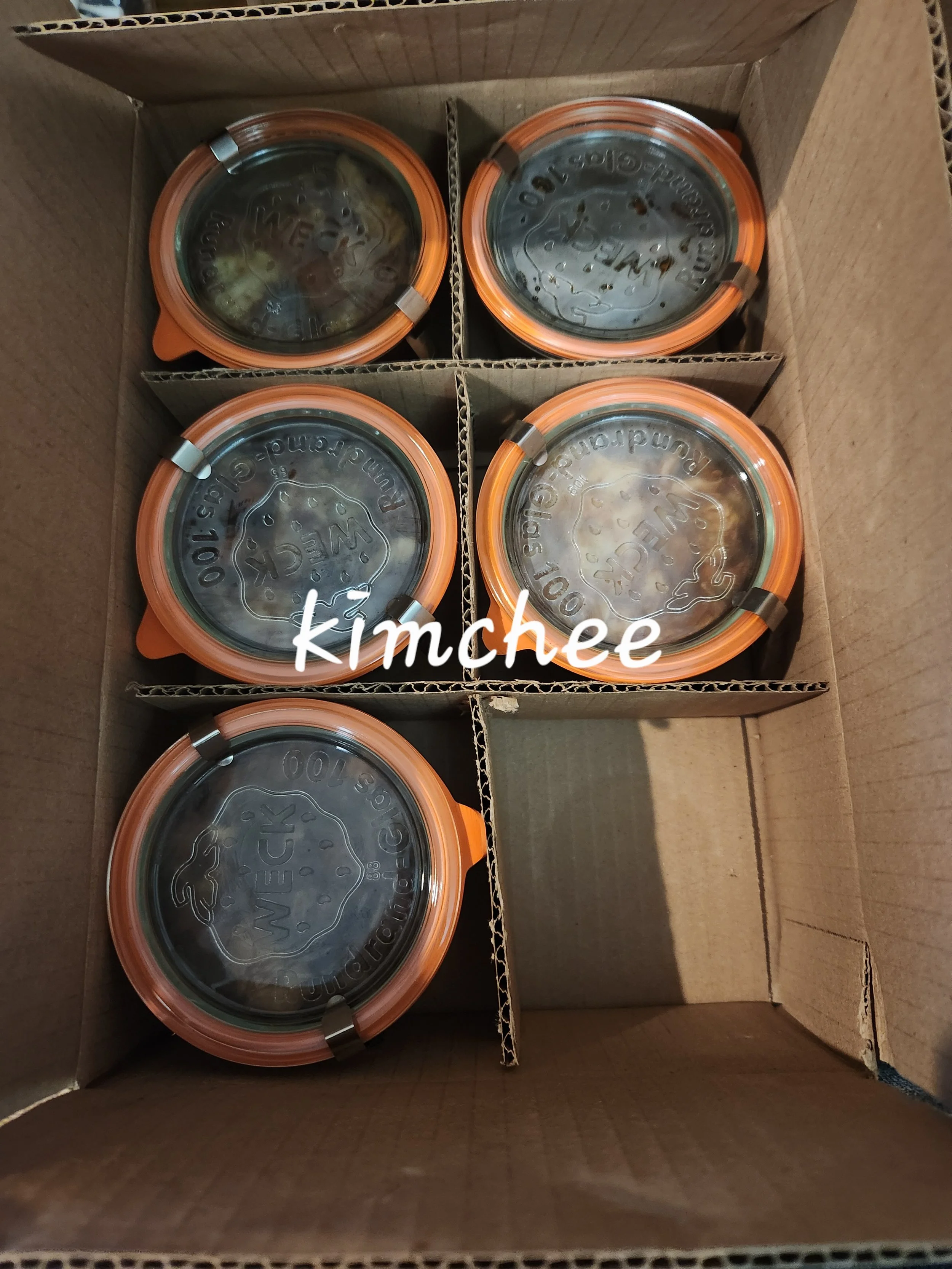
Pretty straight forward here. We eat a ridiculous amount of kimchee in this house, so I keep a lot on hand.
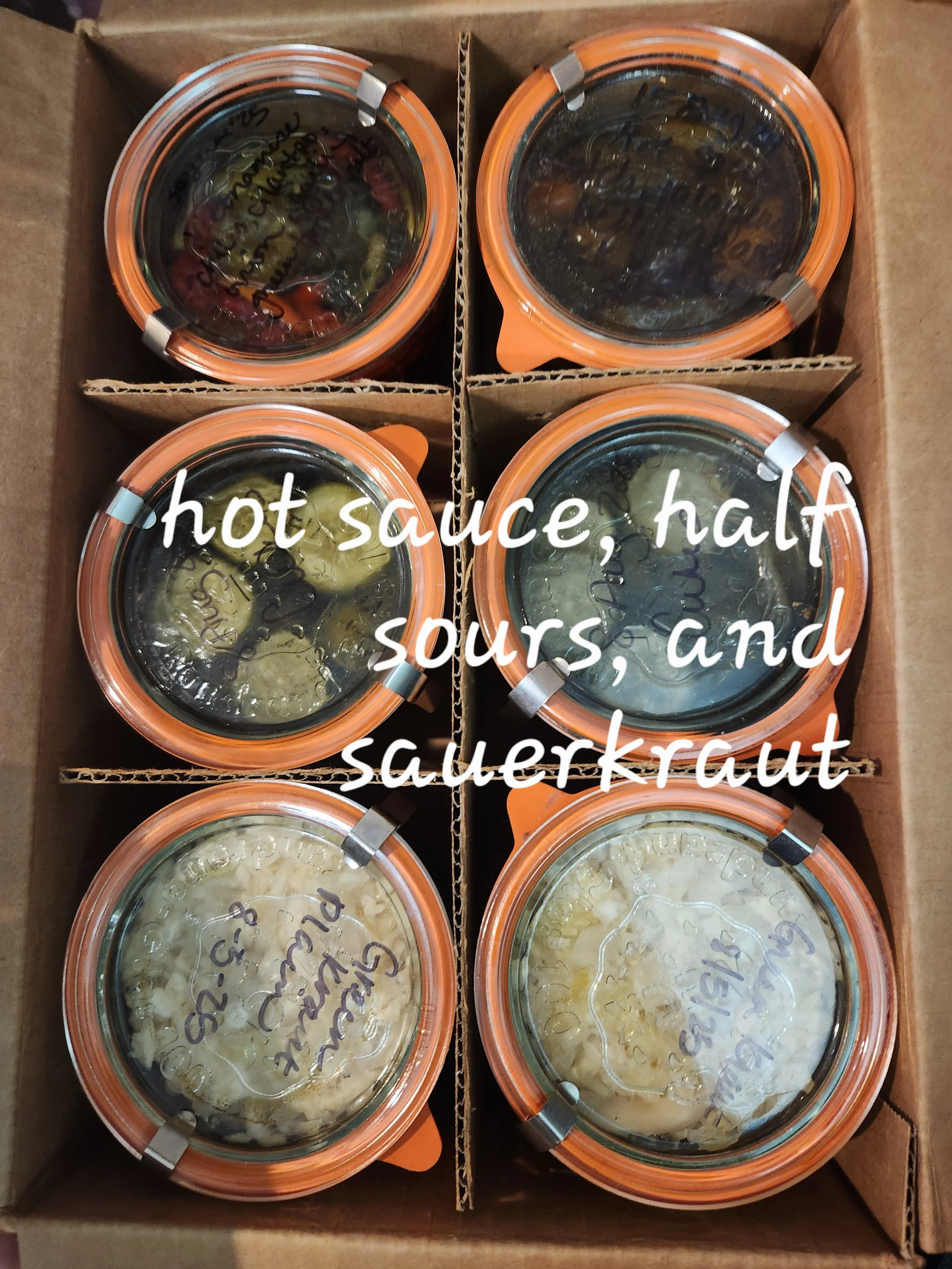
Here, we get some clarity about why there’re half sours in the boxes! Yes, they are the snack sized chunks. Mystery solved! Those are the middle jars, in case you aren’t sure.
The top two jars are… no, they will at some point become hot sauces. Right now, they are chiles and other such in brine, waiting to be blended into hot sauces. The one on the left was put up sometime in 2025, and the one on the right in 2024. I have some still fermenting since 2022 or 2023, and shortly we’ll see (if we can read my scrawl) how many of those are ageing long term. Real talk, I largely throw together hot sauces when I have more fresh chiles than I can consume during their fresh food lifespan. At some point, I remember them and determine if I think they’re ready yet. Whether or not they are is, in truth, largely determined by just how many hot sauces are already in the fridge. I am absolutely nuts about chiles, so there are dozens of hot sauces in my house. The number that live in the fridge floats a fair bit.
Bottoms are more green sauerkraut. I cannot over state the amount of fermented cabbage that is consumed in my home. It’s… not small.
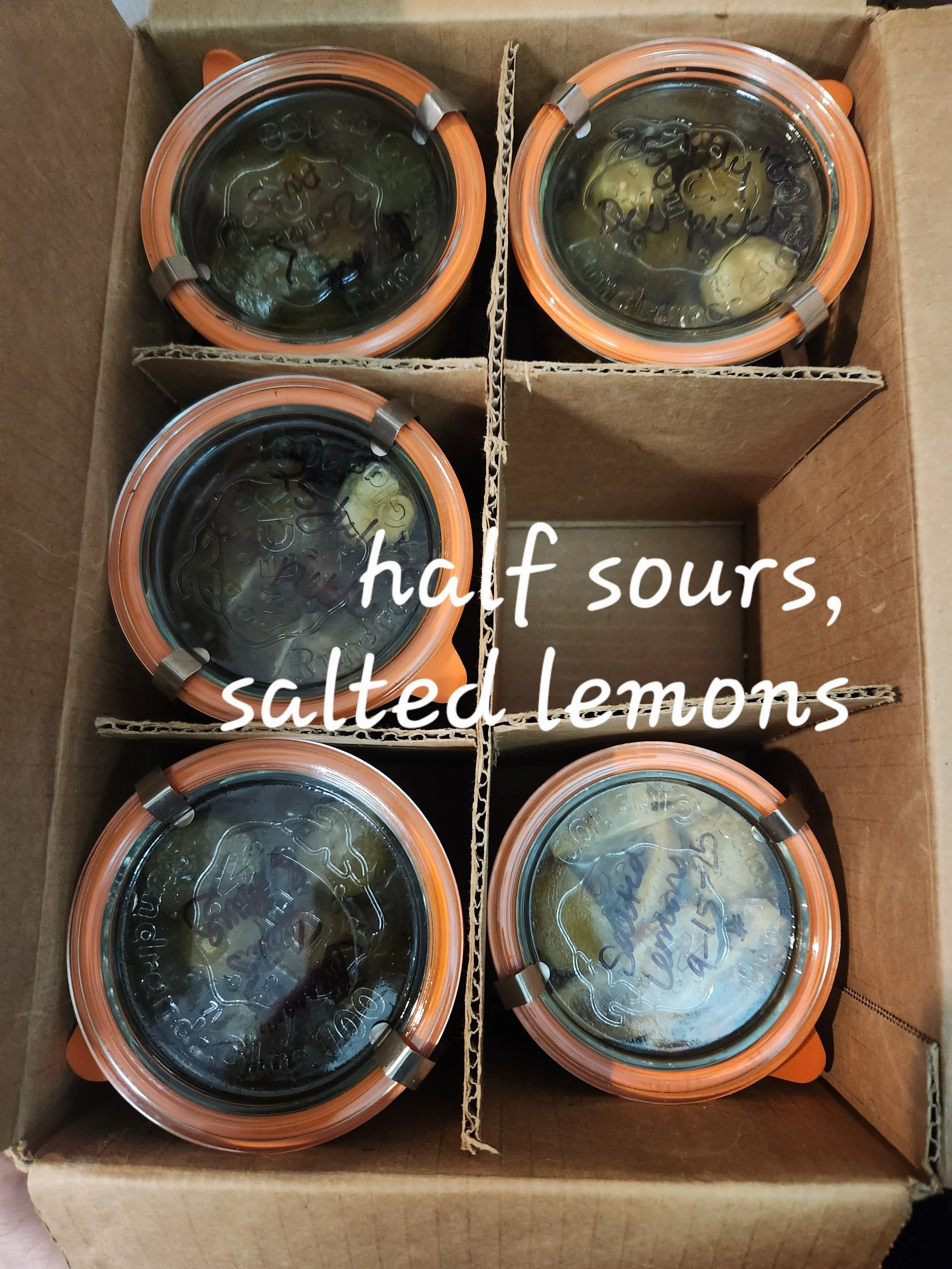
Bottom right is salted/preserved lemons. Rest are more pickle chunks.
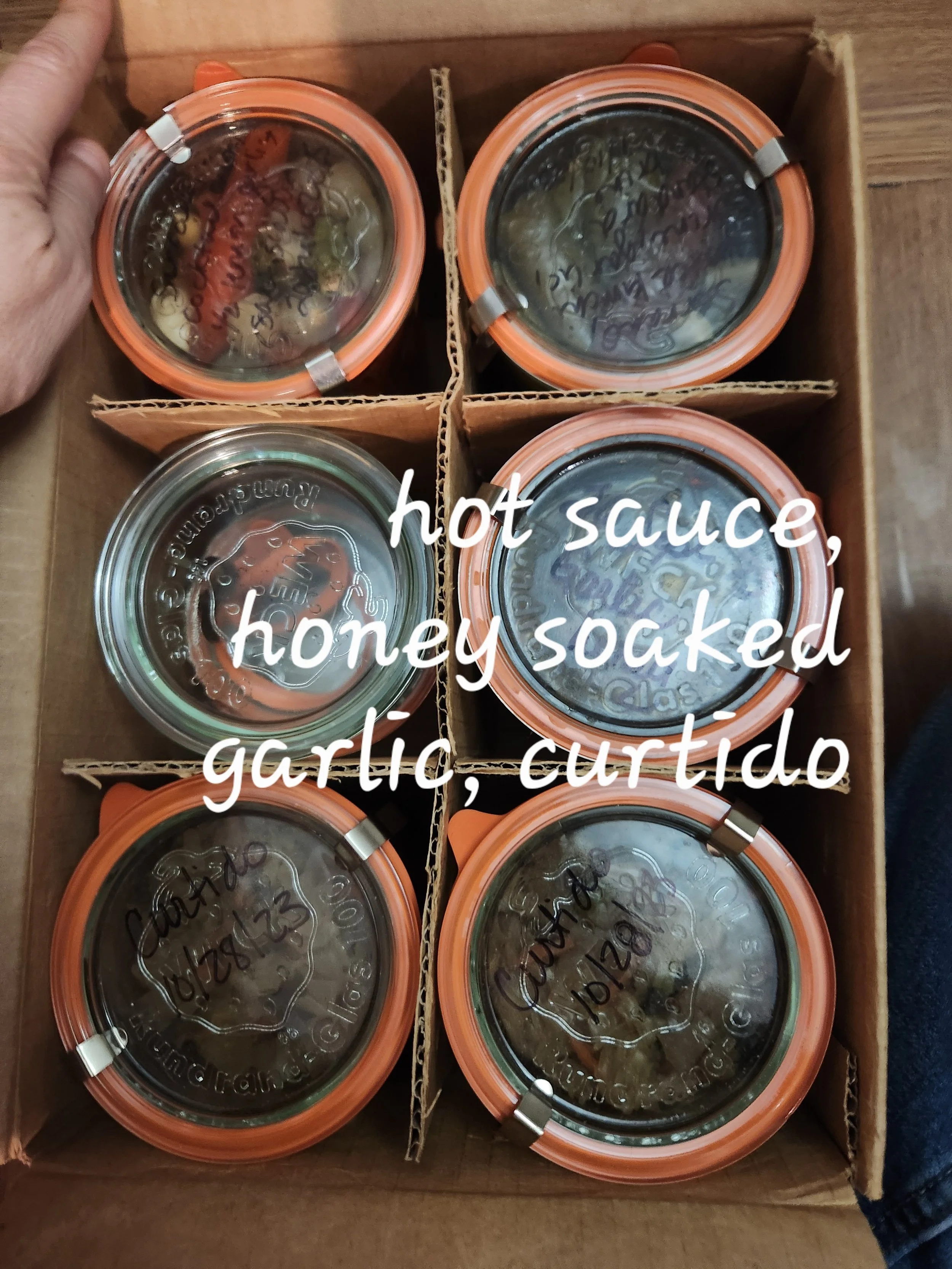
Top: hot sauces. Yes, I legitimately do eat enough hot sauce that I always have a lot of jars ageing. I generally, when I need to blend a jar, snag the oldest one available because I love the complex flavor profiles.
Middle: an empty jar (!!!) and some honey fermented/soaked garlic. I cook with the garlic honey, too, so it doesn’t go to waste.
Bottom: more curtido!!
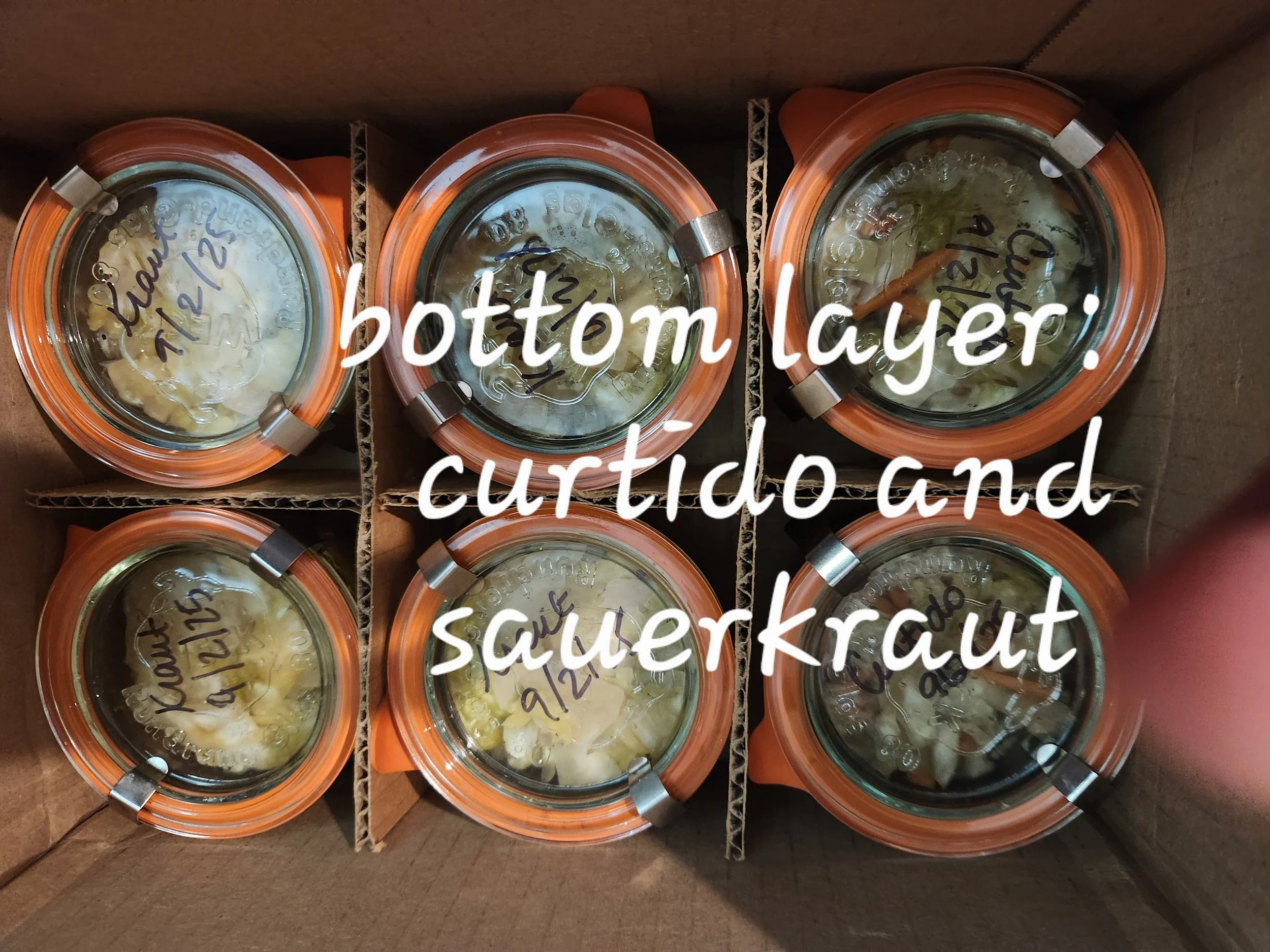
You can see here that the jars are getting smaller as we go along. This is because I started with the largest jars since they go in the bottom of the Wall of Ferments. More cabbages, two ways.
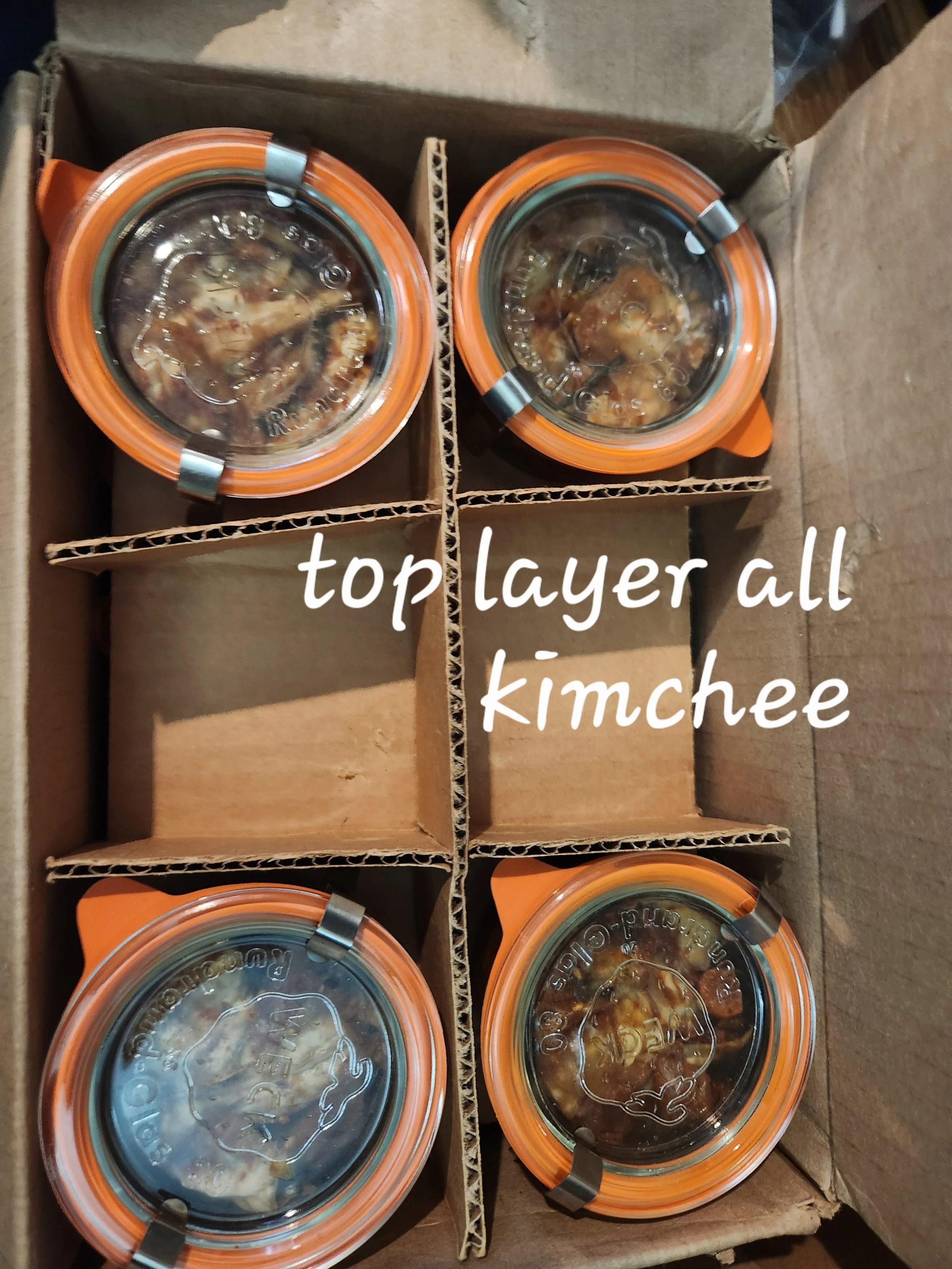
More kimchee!!!
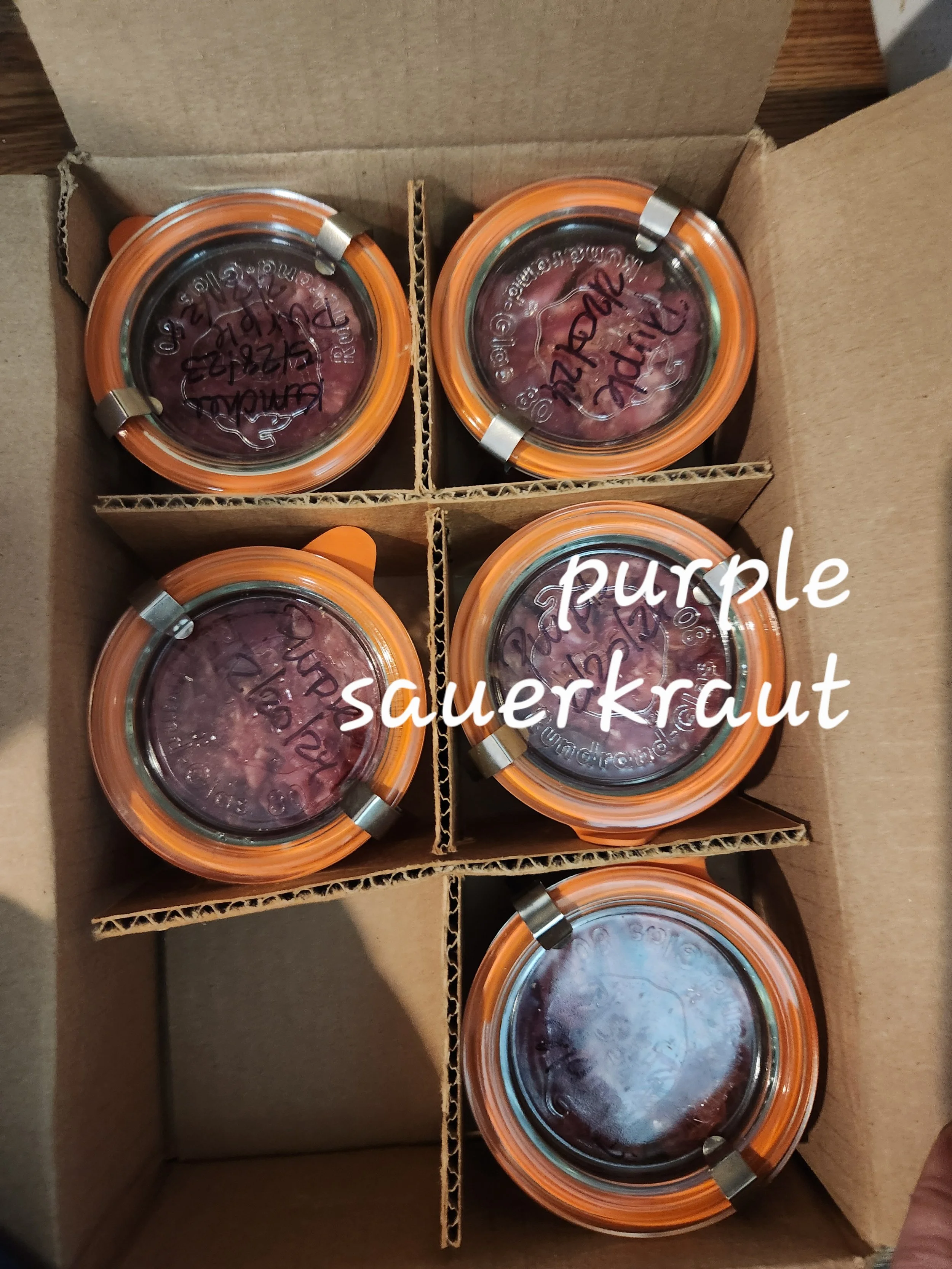
All purple/red sauerkraut. This is Child Tester’s favorite kind, though she eats all of them.
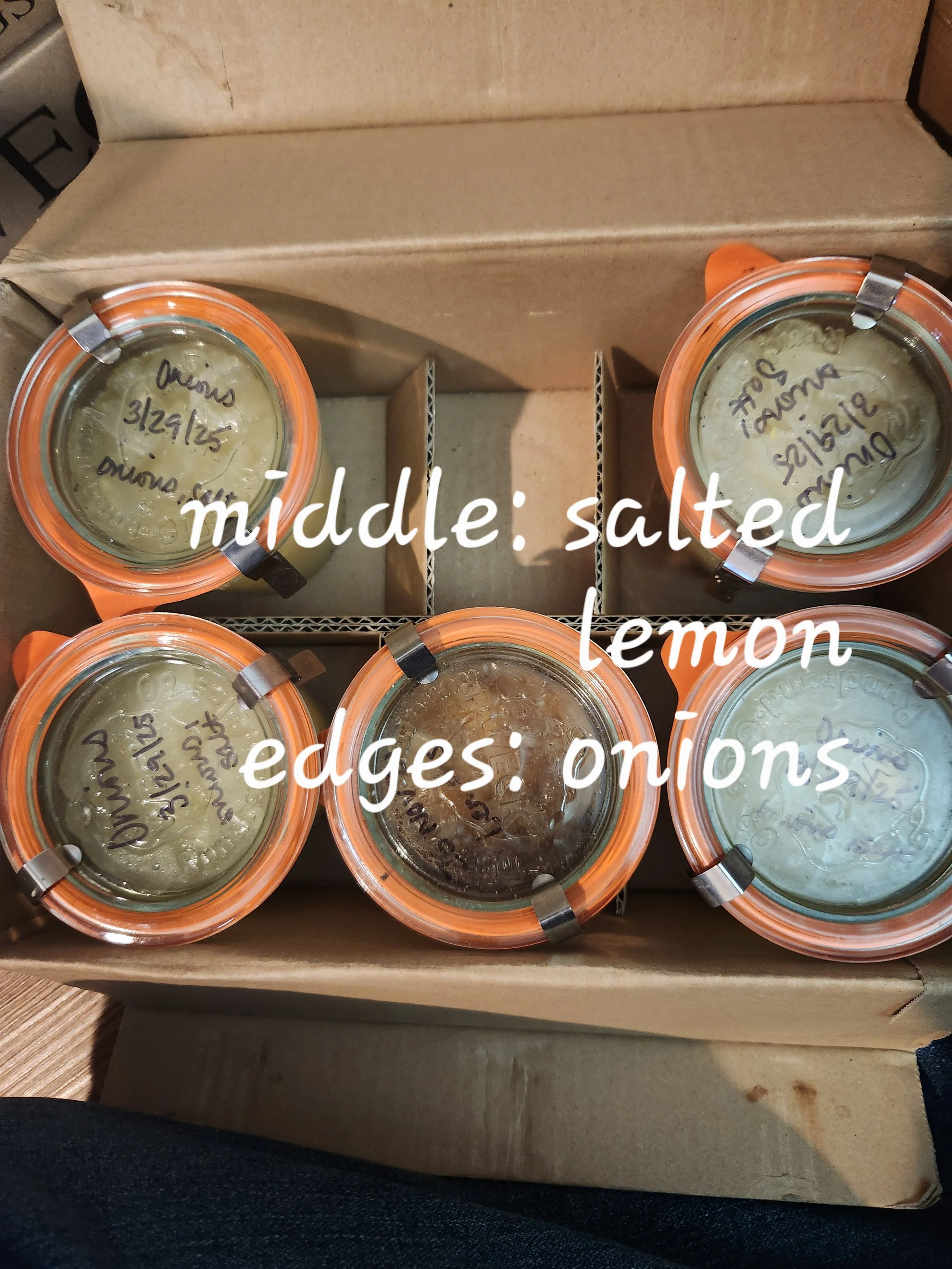
Honestly, I didn’t remember there were some more lemons in the boxes.
The fermented onions are one of Ross’ favorites, and these get used on hotdogs, with other sausages, in salads, soups, stir fries… you name it!
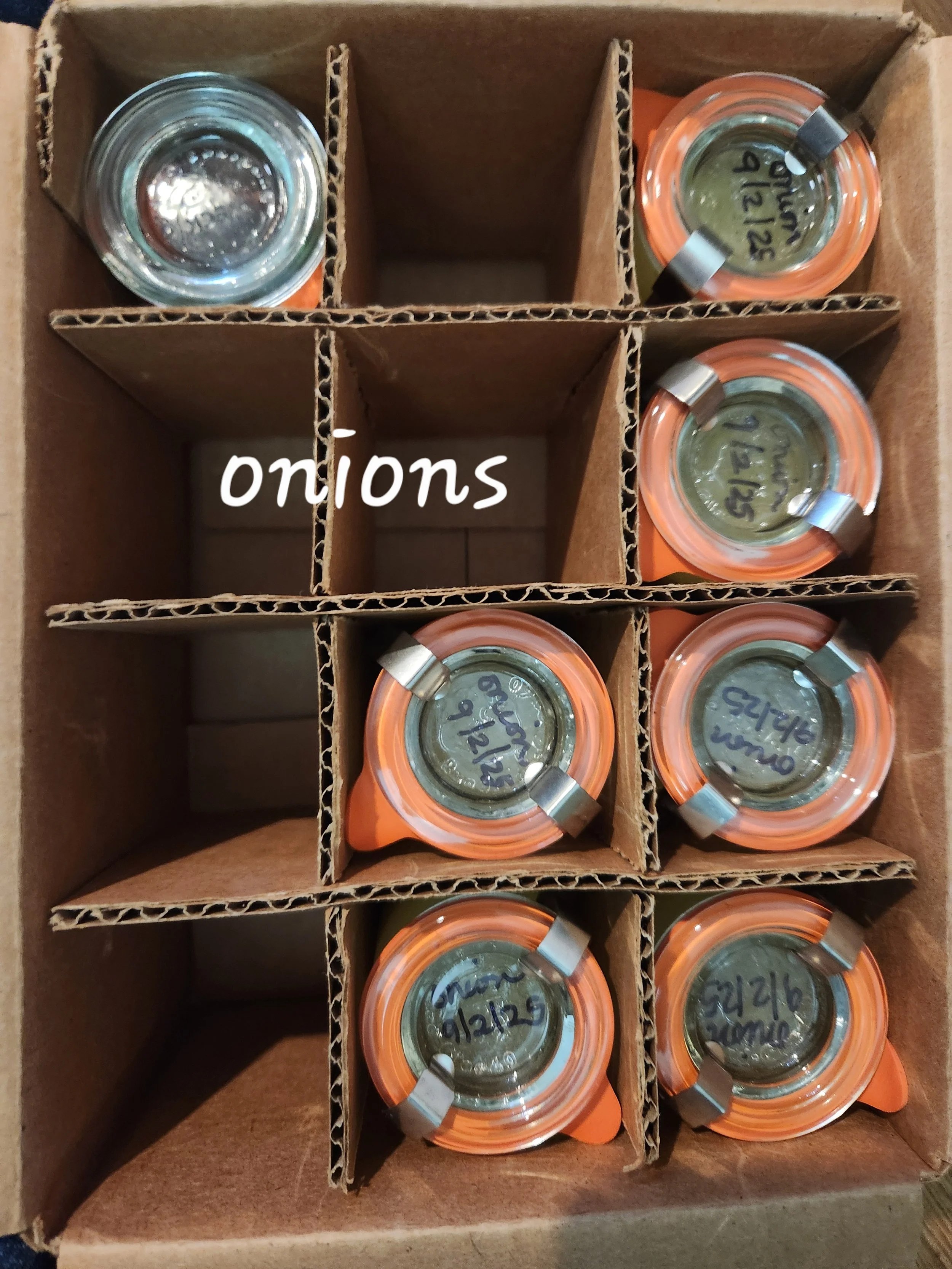
And more onions. You may be noticing a trend by now, where I make a LOT of each of the ferments we are into and tend to focus most of my jar space toward that end. These are all staple foods/ingredients in my house, so this is not a whole lot different for me than when someone buys some extra flour or a few packets of frozen vegetables for times they’re wanted or needed.
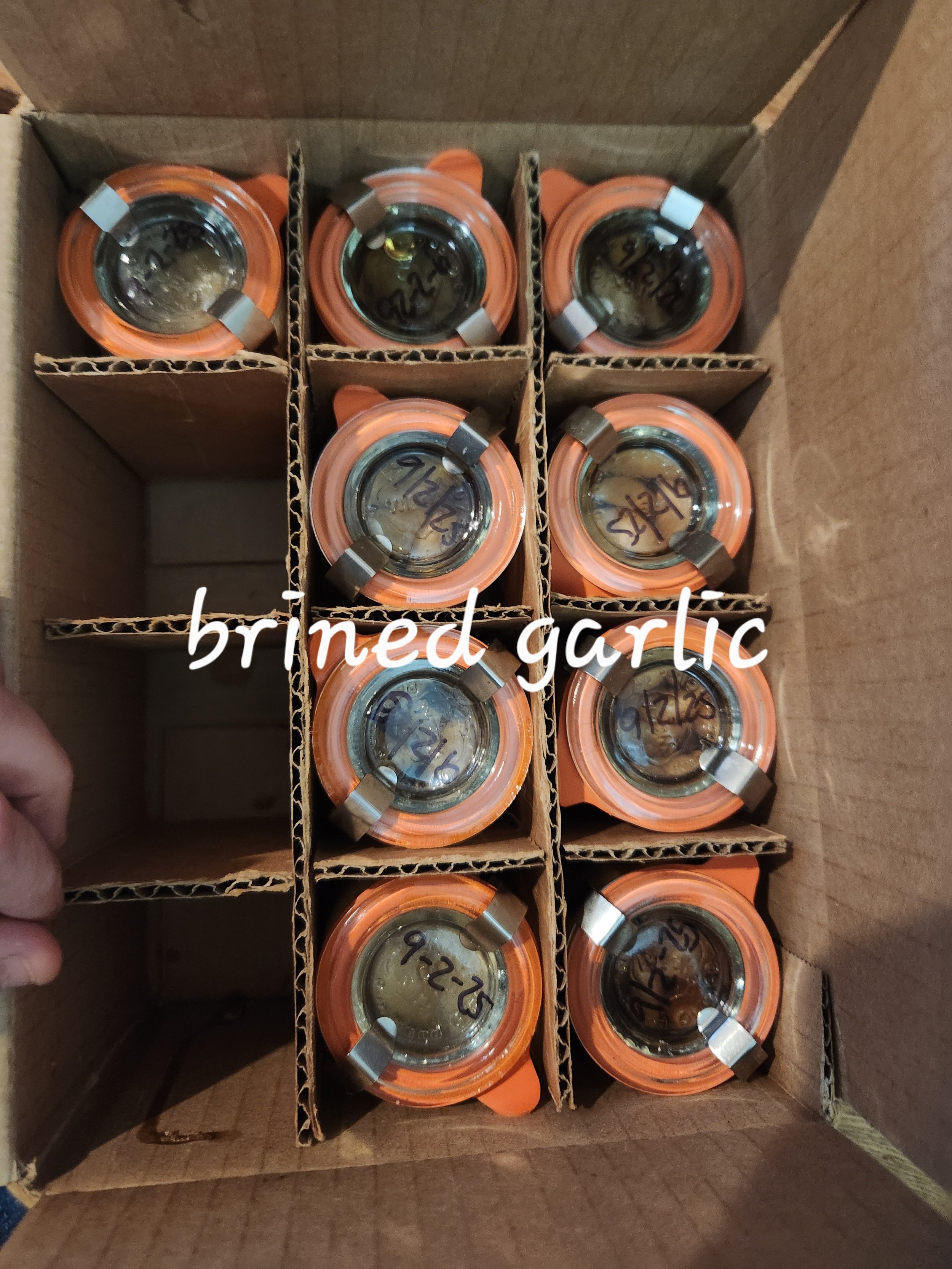
This is plain brined garlic. Sometimes the garlic will turn green or blue. Don’t sweat it if that happens; it’s totally normal.
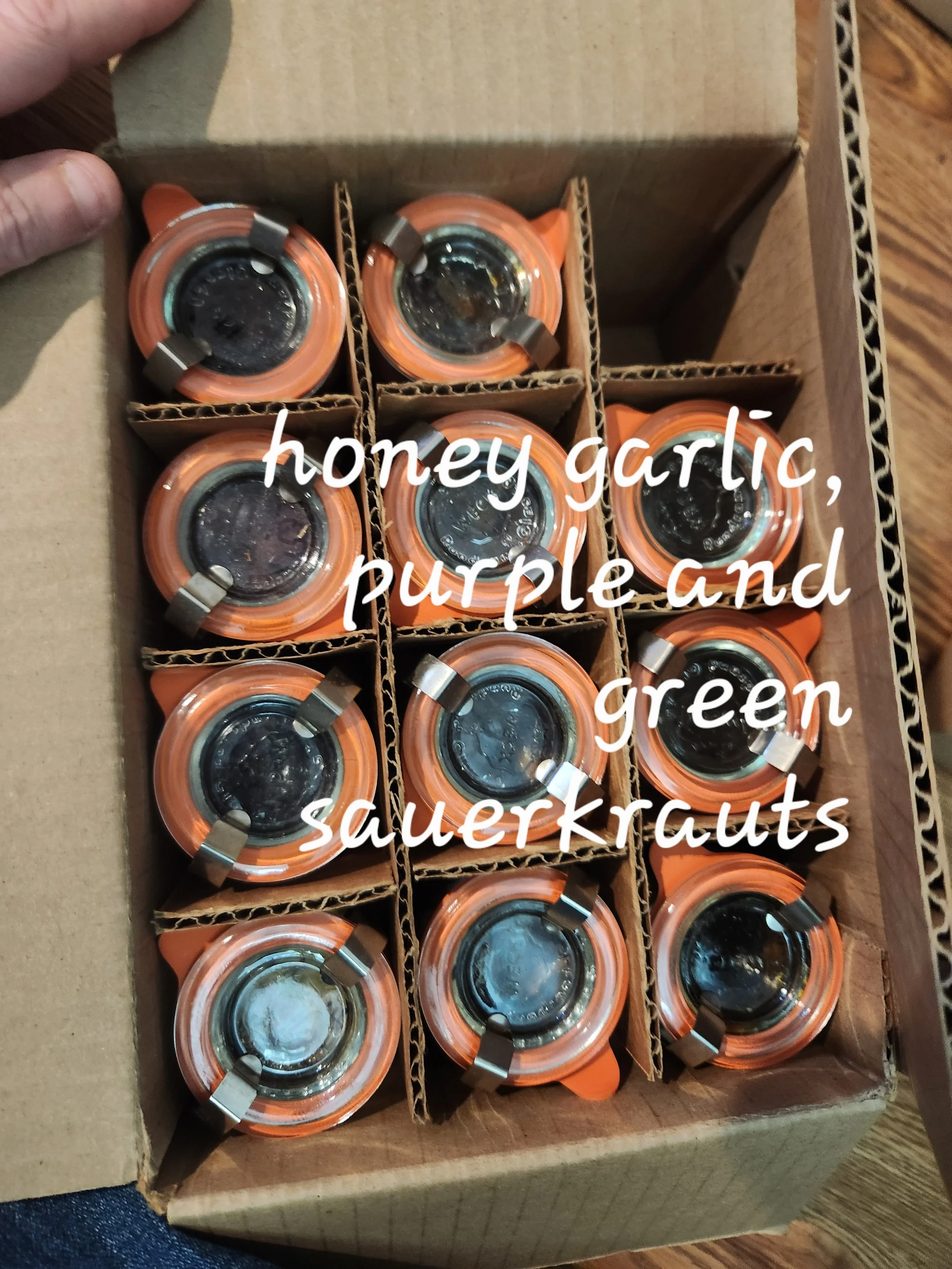
All wee jars, so I can’t tell exactly from the picture what’s what. I view these tiny jars as personal servings, in many instances. The sauerkrauts, once out of the tiny jars and uncompressed, are each a ¾ to 1 cup serving.
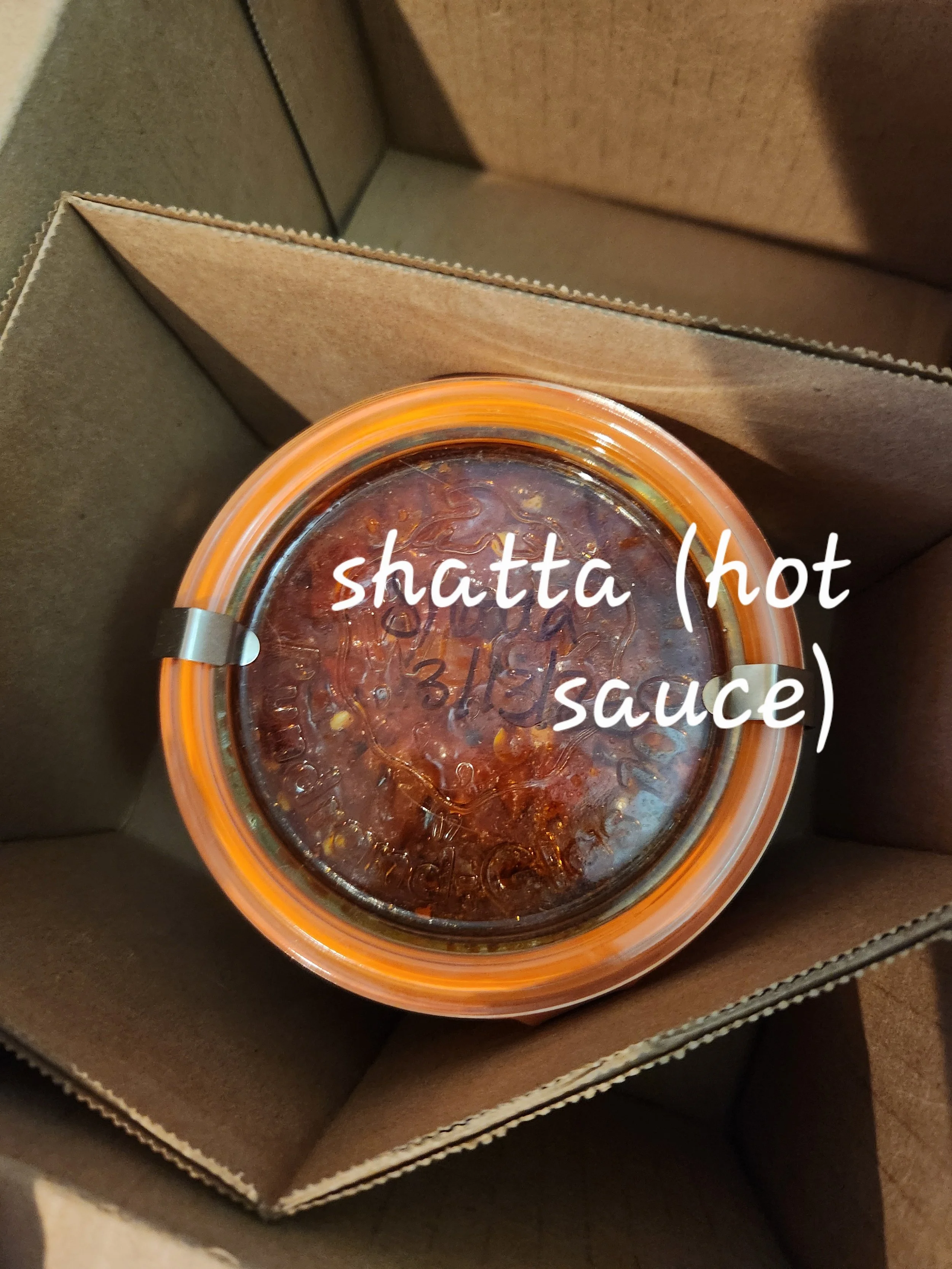
I have more shatta (hot sauce) in the fridge, both like this and with solids and liquids separated.
That’s it for the Wall of Ferments! Next are the rest, some of which stay room temp and some in the fridge. For the most part, if it’s in the fridge, it’s currently in use.
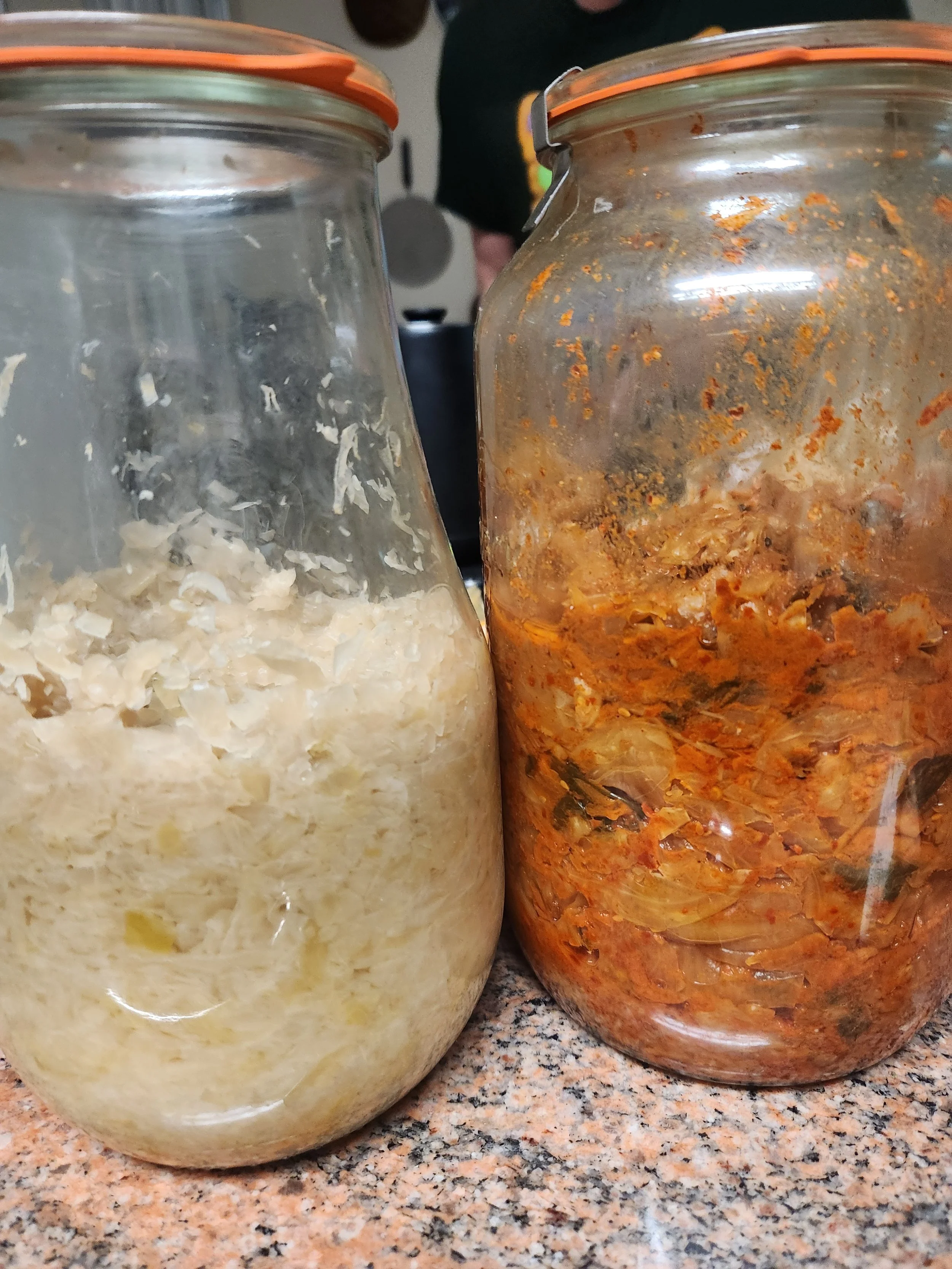
Plain green sauerkraut and kimchee. These live in the fridge because we are eating them currently. The jar on the left holds 2.5L, and the jar on the right holds 3L. These started out full, of course, so probably held about 3 gallons total of uncut veg originally.
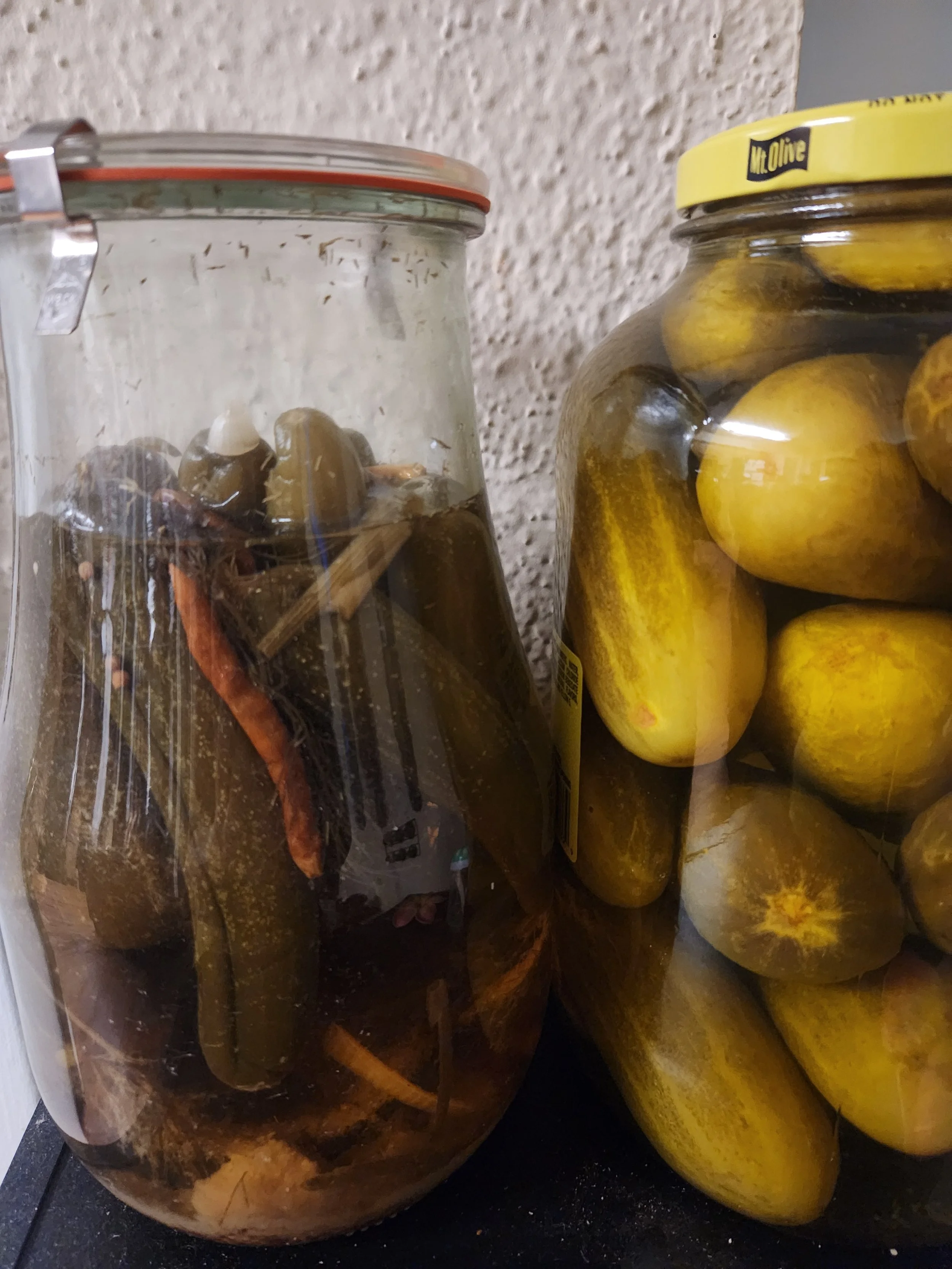
On the right are store pickles of the vinegar kind, and as you can see is a new jar. Or maybe it isn’t and we just mostly use the fermented ones?! On the left are half sours. I have been reusing and topping off the brine for this jar for a couple of years now. I find it easier to reuse the brine at this point, because we all know I’m lazy/efficient, and also we get better depth of flavor profile than with fresh brine.
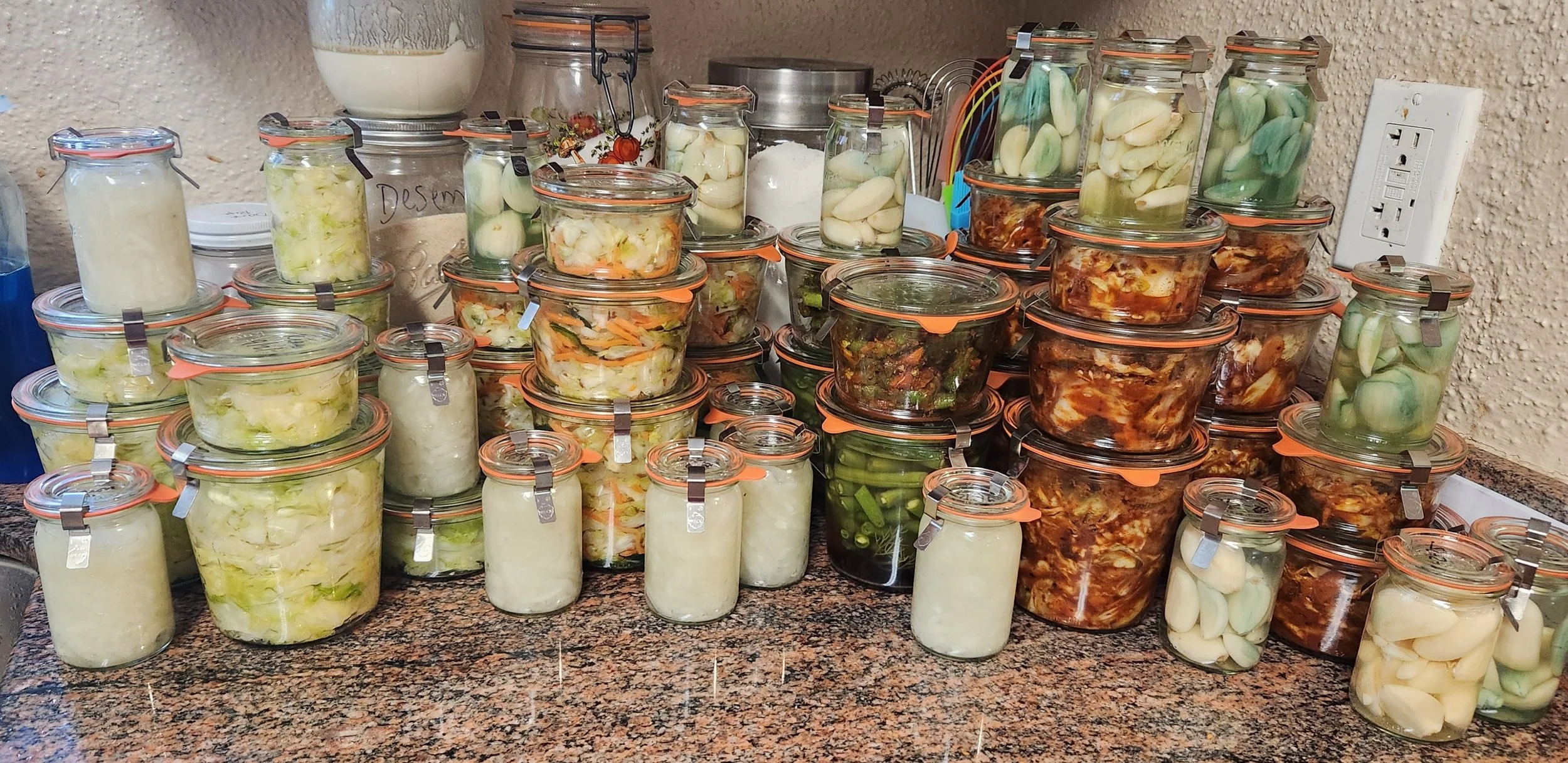
This was a long but fun and rewarding fermenting day for me. You can see that a lot of this is still in the boxes above as I finish the older stuff. The super white contents jars are onions (white, as that’s what Ross prefers for most applications), green sauerkraut (personal and family sized options), curtido (ditto), dilly beans, green beans kimchee (this is better than it has a right to be, and I use leftover paste after I’ve finished packing the regular kimchee jars to make it), kimchee, and of course both blue and white brined garlic.
Those of you who have made the kimchee kits know exactly how big those batches are, so this is a good visual of how well they compress if you’re motivated enough. I use my rolling pin as a muddler to really pack it all in.
Oh ho! I see Constantine II, my sourdough starter is photobombing!! Although I have a large percentage of our SD starters, the Scottish Wheat is my favorite and so is also mainly the only one I use. I’m glad he managed to be in the pic so you know for sure I really do have an active starter.
Okay! That’s all the stuff in the dry storage category. Let’s see what gets to live in the fridge, shall we?
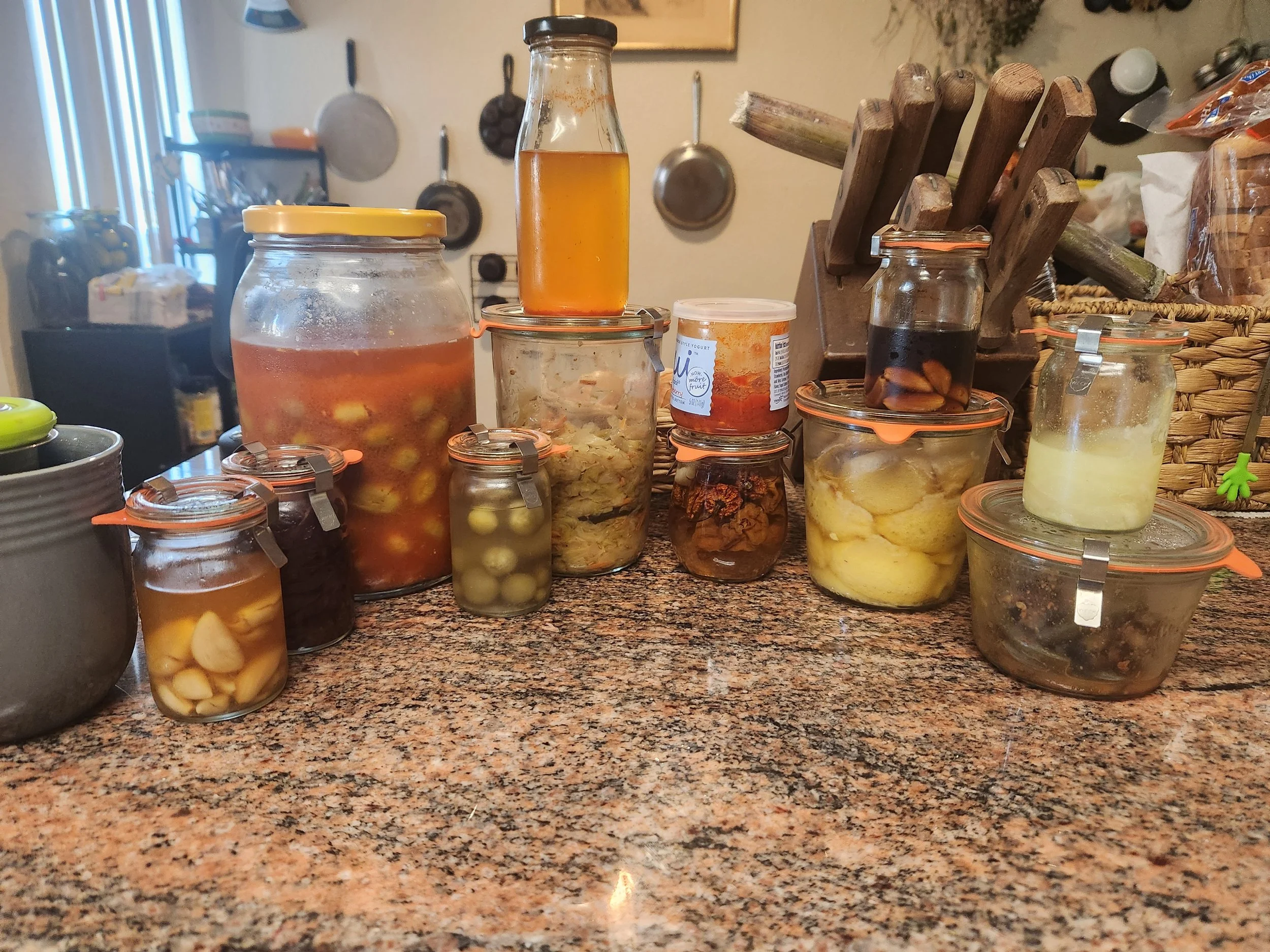
Left to Right: my steeping tea, which is technically a ferment; TBD if this is honey garlic or older brined garlic (going w/ honey); purple/red sauerkraut; spicy Nablusi olives (store bought; not home fermented); green tomatoes (tiny jar); curdido and shatta hot sauce liquid; hot sauces (shatta on top, newly put together Trinidad scorpion with bay leaf and lemongrass on bottom); lemons and honey garlic on top of them; kimchee green beans with onions on top of them.
A few of the next pics will have some duplicates, because I forgot some stuff and all around was distracted by the sound of the cat that lives in my house screaming constantly. She does it because because she can, and also supposedly black cats scream a lot. She is aware that there’s nothing I can do about this, and I’m sad that she contentedly exploits my absolute lack of power. Such is life with cat, eh?
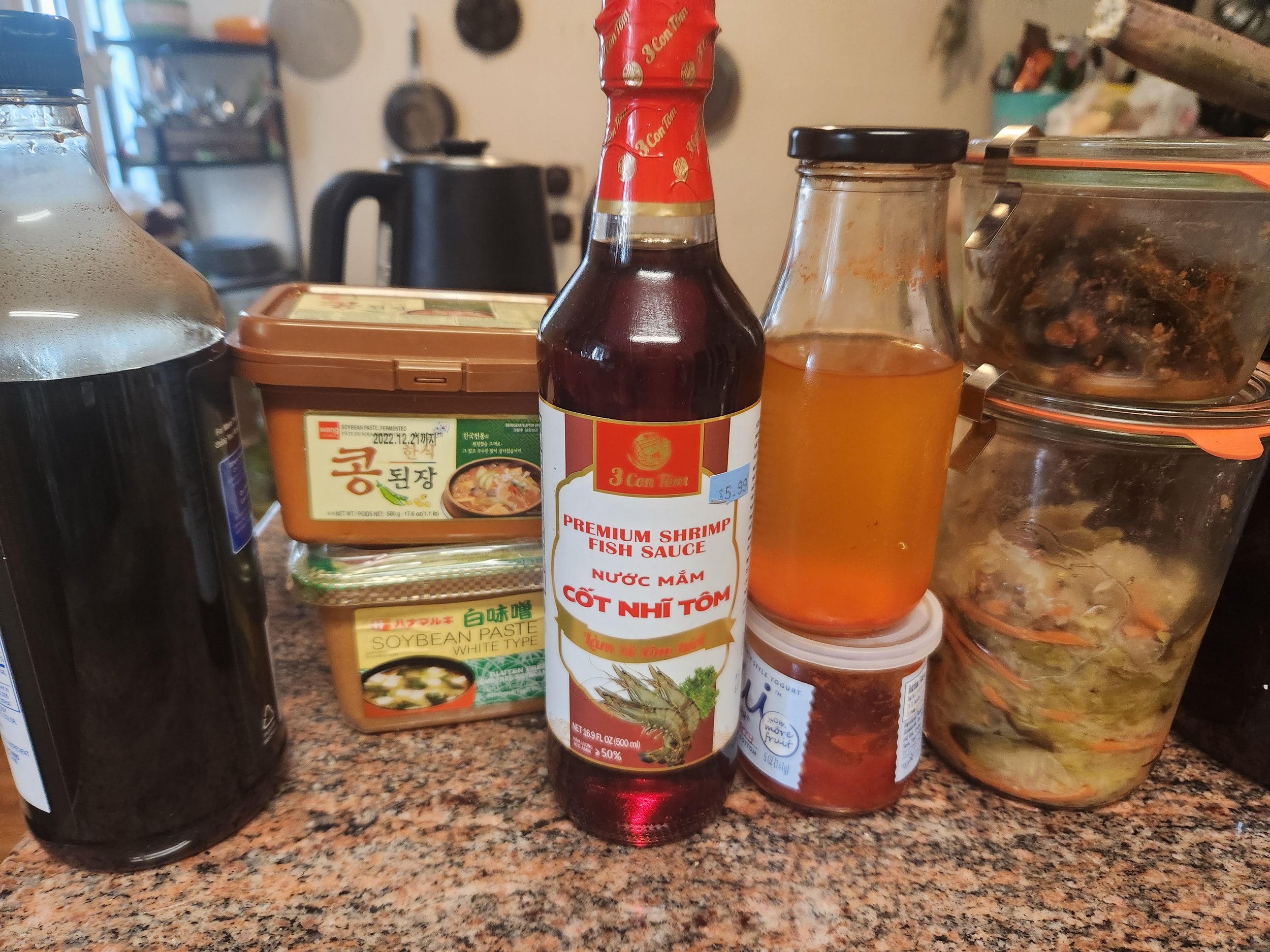
Dark bottle on the left is soy sauce. Also fermented! Ditto miso pastes next, and fish sauce next to that. The soy and fish sauce live in the pantry; miso in the fridge. I tried to make soy sauce recently, which those of you in the FB group know already, and it was a colossal failure that involved maggots. The maggots convinced me to continue buying my soy sauce, as you might expect. Legitimately one of the most disgusting things I’ve ever smelled and I’m still not over it. So! Kudos to you that can actually make it without disaster!
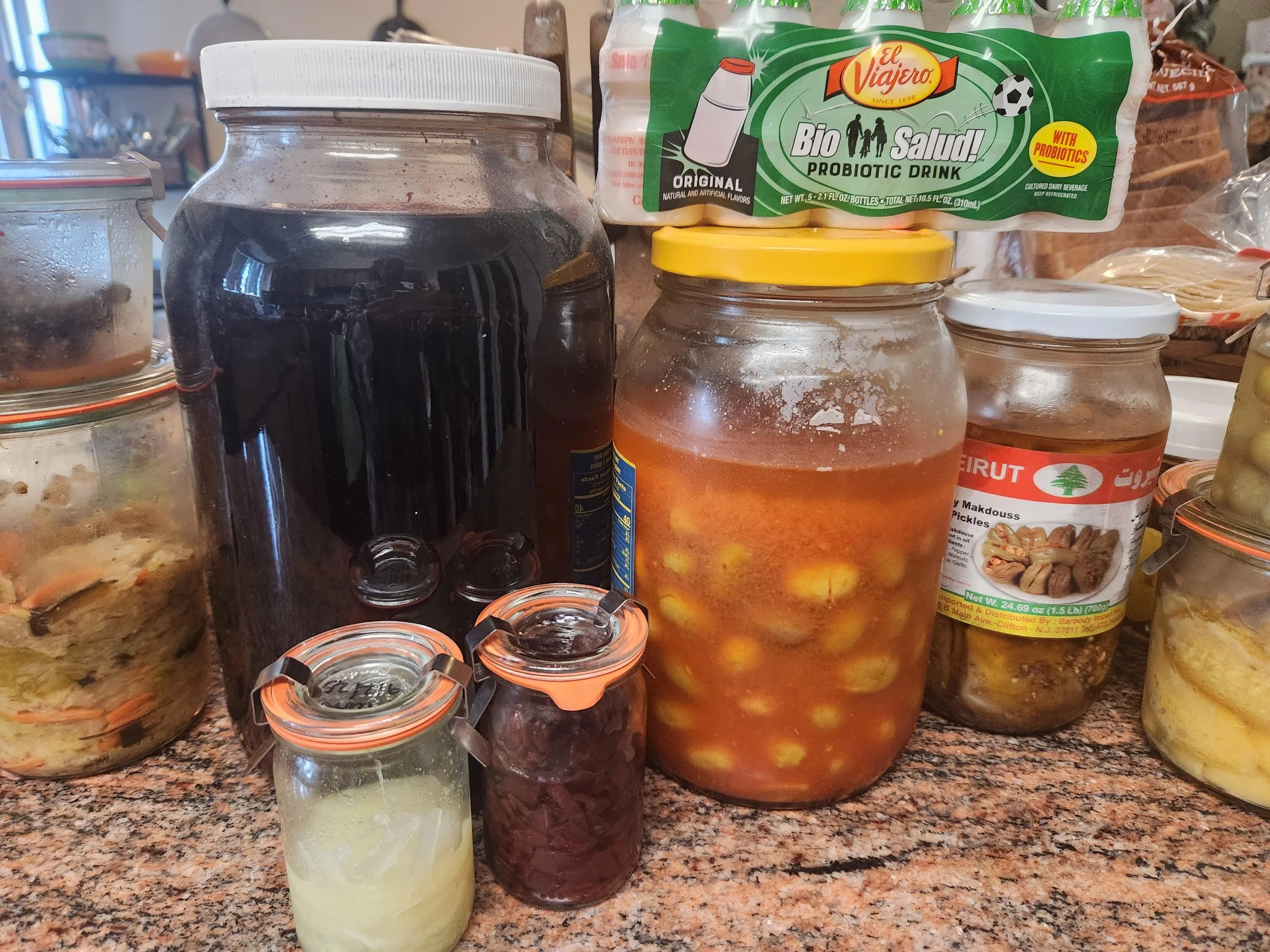
On the right, in between the olives and the lemons/tomatoes is makdous. These are oil fermented eggplants stuffed with walnuts and chiles. Hands down one of my favorite snacks, and happily I am the only one in the house that eats them. On top of the olives is a different brand than Yakult but tastes the same. My family are super into these, presumably because nicely sweetened and sometimes come in strawberry flavor. The big gallon jar is malbec vinegar. Whenever it gets to about 1/3 or so of the way empty, I add a new bottle of wine.
Okay!! This is basically what I keep on hand all the time, and how I store the various options.
Let’s check out this chart, because charts are awesome!
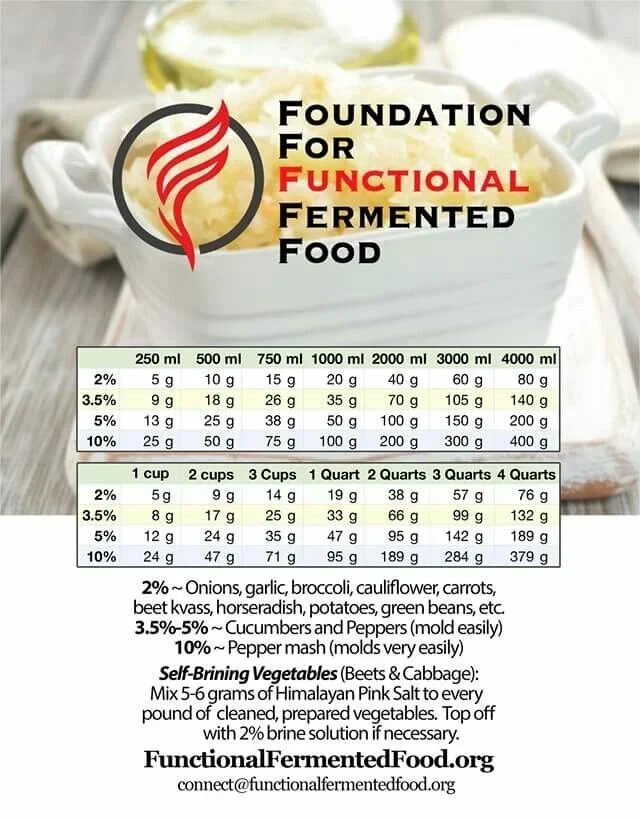
This is the best chart I know of, and is in the more extensive veg ferments post as well. Mostly this post is about management techniques (I swear we’re getting to that) and showing off my beautiful jars (am done with that now!).
Management
Sometimes, I really dislike managing things. But not these!
Contamination Avoidance
I want to reiterate that weights are your friend. Just about every experienced fermenter, me included, has had multiple experiences using Mason jars and similar that took on mold or otherwise felt catastrophic in the nature of the destruction. Contamination avoidance/protection is part of active management, so has to be said. Again. Keep repeating it in your mind, if needed.
Whatever kind of weight to use is irrelevant (I genuinely love bags of saline if I’m using a not-Weck jar), so long as you do it. Make sure you dew it!
Do the Dew got stuck in my head, so I’m spreading that pain per usual. I think Mountain Dew is gross, so those of you who love it can drink one on my behalf.
The second most important thing is keeping an inventory. You’re already familiar with that if you’ve worked retail, food service, or other such jobs. But in case anyone has never needed to, most people do well with a chart. You can do a paper chart, a white board, sticky notes with whatever codes you’ve chosen, accounting ledger, record yourself giving the inventory, spreadsheet, whatever. It doesn’t matter, so long as you will actually keep track of your inventory.
I am kind of weird and have a running list in my head; if you’re that way too, go for it! I give myself a 3% grace on accuracy, which normally I do not need. Those of you who’re writing it all down may also want to give yourself a small grace for times you forgot to update the inventory.
This is legitimately important, because otherwise you are likely to have too much of stuff you don’t use as much as well as running out of things you thought you had more of. I personally find this to be unfun, but if you are a chaos monkey then go nuts on the no inventory!
All of this, which is easy to do once you’ve got your initial system set up, ensures that you only make what you will use, that you will be able to adjust the amount of a given product that you stock based on frequency of use, that you won’t run out of anything you intend to continue keeping in stock, and that you won’t be overrun by foods you don’t enjoy or don’t enjoy as much as you thought you might. Toward that end, if something is new to you/your family, make just a small amount to start. You can scale up if you like/love it, can more easily discontinue it if you don’t, and so forth.

Joao Vitor Marcilio; @jvmarcilio/Getty
The last big part of the management is to set realistic expectations.
Weird that SquareSpace is letting me use a not giant font here but not above. So it goes.
Yep. Realistic expectations. Not a fan, myself, but does save me a lot of angst to do so anyway.
Here’s an angsty song for us to all enjoy before we discuss it further.
Know Thyself
Realistic expectations can help keep you from wasting food, from having kind of a bad time engaging in this process, and from being saddled with a bunch of a product that you/your family don’t really like.
When you are trying out a new recipe/method/creation/whatever, just make one jar. That doesn’t always give you a fun dopamine hit, but it does stop you from eating a lot of something gross, giving to a friend who likes that sort of food, or tossing it. And if you liked or loved the food? You get to make it again a lot sooner than you otherwise would have needed to! That’s fun for me, personally. Your mileage may vary (YMMV), of course.
You need to also be realistic about your expectations from a ferment. If you don’t like long-aged ferments (which I classify as older than 3 months, but you get to decide for yourself how old qualifies), you definitely do not want to make more than you can eat during the “tastes good to me” window. It is, by and large, more difficult to unload a longer aged ferment than a young one onto one of your friends or family members.
If you do prefer a more complex flavor profile and/or more sourness, then yeah you can make a lot more at a time**. I will and do eat sauerkrauts, for example, that are as many as 4 years old. Since they don’t really experience any textural degradation after around the 2-3 month mark (in Weck jars; please tell me your experiences with other brands of jars/crocks/other containers, as I was making much smaller batches back then), the flavor becomes more mellow and complex, If this is you, then you want to make your next batches well before you run out of the last batches you made, as well as making larger batches so you do have enough to hold you over.
If you like your ferments young, you can/should make smaller batches than the rest of us because they don’t take so long to ferment. Moreover, you should make them smaller, such that you’re not saddled with a bunch of food that you won’t eat or won’t enjoy eating. Eating should be fun.
*Some ferments become more sour after the first 3-6 months, but in the majority of cases, they lose more of their sourness once they’re older.
** People who suffer from alcoholism may wish to keep your ferments young, as they can be a little boozy tasting as they progress. Eating ferments should never get a chance to tank your recovery and all of the hard work you’ve put into improving your life!
Time and Temperature
Keeping track of the temperature at which the ferments are held in your home also matters. If there are cooler spaces in your home than others, that’s where you want to keep them if possible and reasonable for your situation. Cooler temps lead to slower fermentation/overfermentation, and this is going to matter for the vast majority of you. If you feel like something is fermenting faster than you’re cool with, it needs a cooler space. If not fast enough? Warmer space. And so forth.
The time you ferment a food is really all about personal preference. I have friends who start eating their fermented cabbages at day 1, and others who’ll wait a month before they even consider touching it. Everyone’s preference and situation is different, so my real advice is to be responsive to various preferences, including your own, that coexist in the home and to store in accordance with that.
Competing Tastes
This last management technique is about knowing who all lives in your home, as well as what their preferences are. Let’s say, for example, that someone in your house thinks that anything fermented is gross. You’re gonna want to account for that and make less than you would have if they liked what you like. I am not convinced that anyone who shares food with others in the house can escape this problem. Opportunity? Whichever applies to your situation, I suppose. Maybe you have a Ross in your house who basically likes (or at least will eat without complaint?) everything. Count that person in when you’re making a new batch of whatever it is you like. Perhaps someone in your house thinks a food you like a lot is nasty nasty nasty. Make less so you aren’t having to eat more to “cover” for their dislike.
One day, I’m gonna find a way to quiet the associative thinking. No idea when that day will be, but I bet a lot of people will be thrilled if I manage it!
Wrapping Up
Although it’s true we can get really bogged down in the details of how each of these can/should/shouldn’t/[insert], I think this gives enough information for those of you who’re unaccustomed to the management to see some solid methods for doing so.
What I’d like to know now is how y’all handle your ferments management, and/or general kitchen management techniques! I’ll be excited to learn some new things, and others (especially new learners) may really enjoy having alternative options to what I’ve suggested.
Since weirdly, I actually know this already, my next post will be less practical, as we will be going with an Origin Story for apples!
—Allie
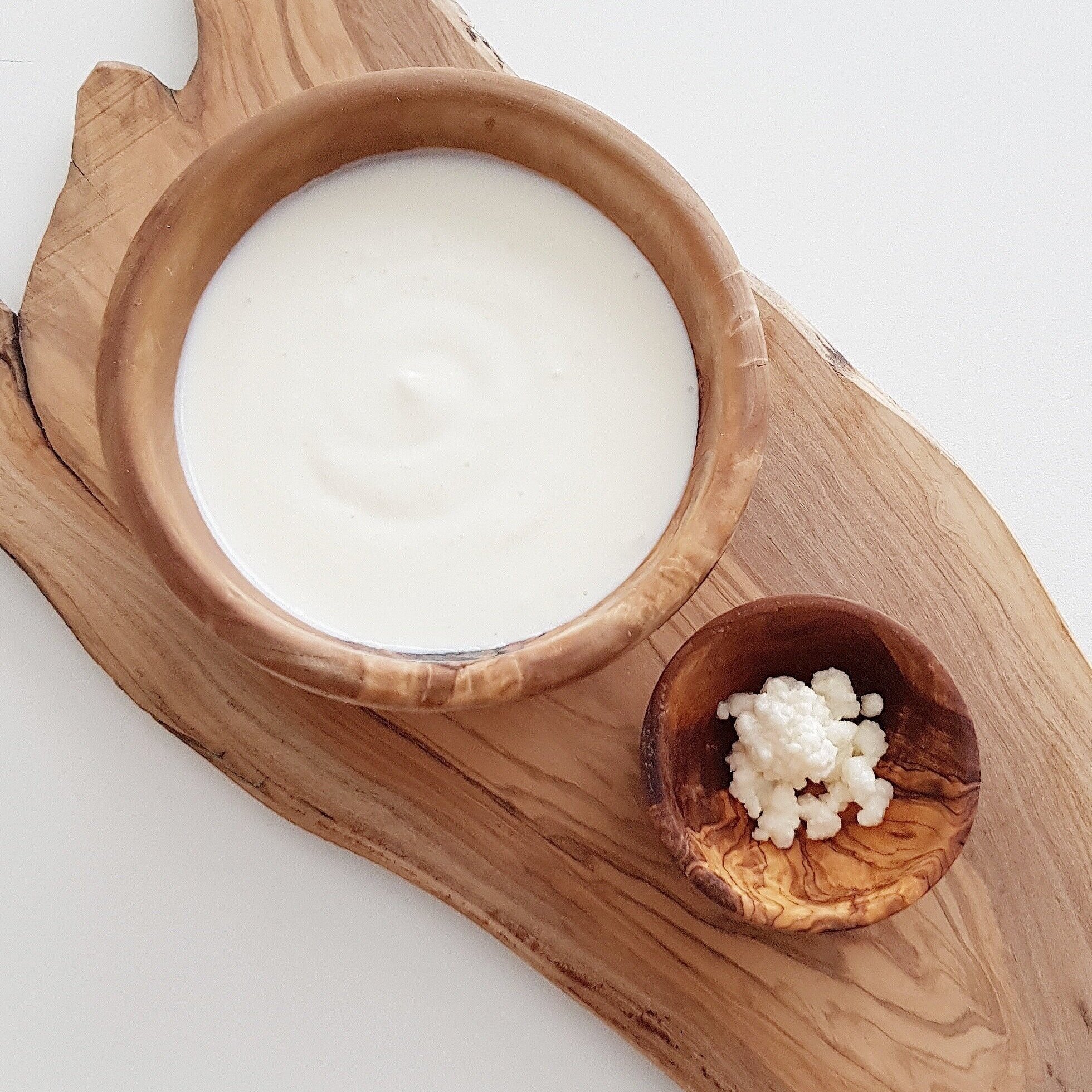
Our Milk Kefir Grains have been carefully sourced from cultures all around the world and blended together to create one of the most diverse and resilient kefir cultures available. The result is a lively, dependable culture that produces rich, tangy kefir full of character.
Milk kefir grains are living colonies of beneficial bacteria and yeasts that work together to ferment milk into a probiotic-rich drink known as kefir. Despite their name, they are not actual grains like wheat or rice. Instead, they resemble soft, jelly-like curds or small cauliflower florets. Milk kefir originates back centuries to the Caucasus Mountains, where kefir has long been cherished as a nourishing fermented milk drink. Traditionally passed down from generation to generation, kefir grains were often considered a treasured household culture.
As the grains ferment the milk, they feed on its natural sugars and transform it into a creamy, lightly tangy beverage with a gentle natural effervescence. The finished kefir is refreshing, complex, and wonderfully nourishing.
With regular care, milk kefir grains can be used indefinitely and will naturally grow and multiply over time, allowing you to continually produce fresh kefir at home. This makes them a favorite among both new fermenters and experienced cultured food enthusiasts.
Simple, traditional, and incredibly rewarding, milk kefir grains make it easy to enjoy fresh homemade kefir while supporting a healthy, balanced gut.
Expect:
• Tangy, creamy probiotic kefir
• Naturally complex flavor with gentle effervescence
• Living grains that grow and multiply over time
• Highly resilient and adaptable culture
• Continuous kefir production with proper care
• Perfect for drinking, smoothies, and cultured recipes
Lively, nourishing, and endlessly reusable, these milk kefir grains produce authentic homemade kefir that quickly becomes a staple in any fermentation kitchen.
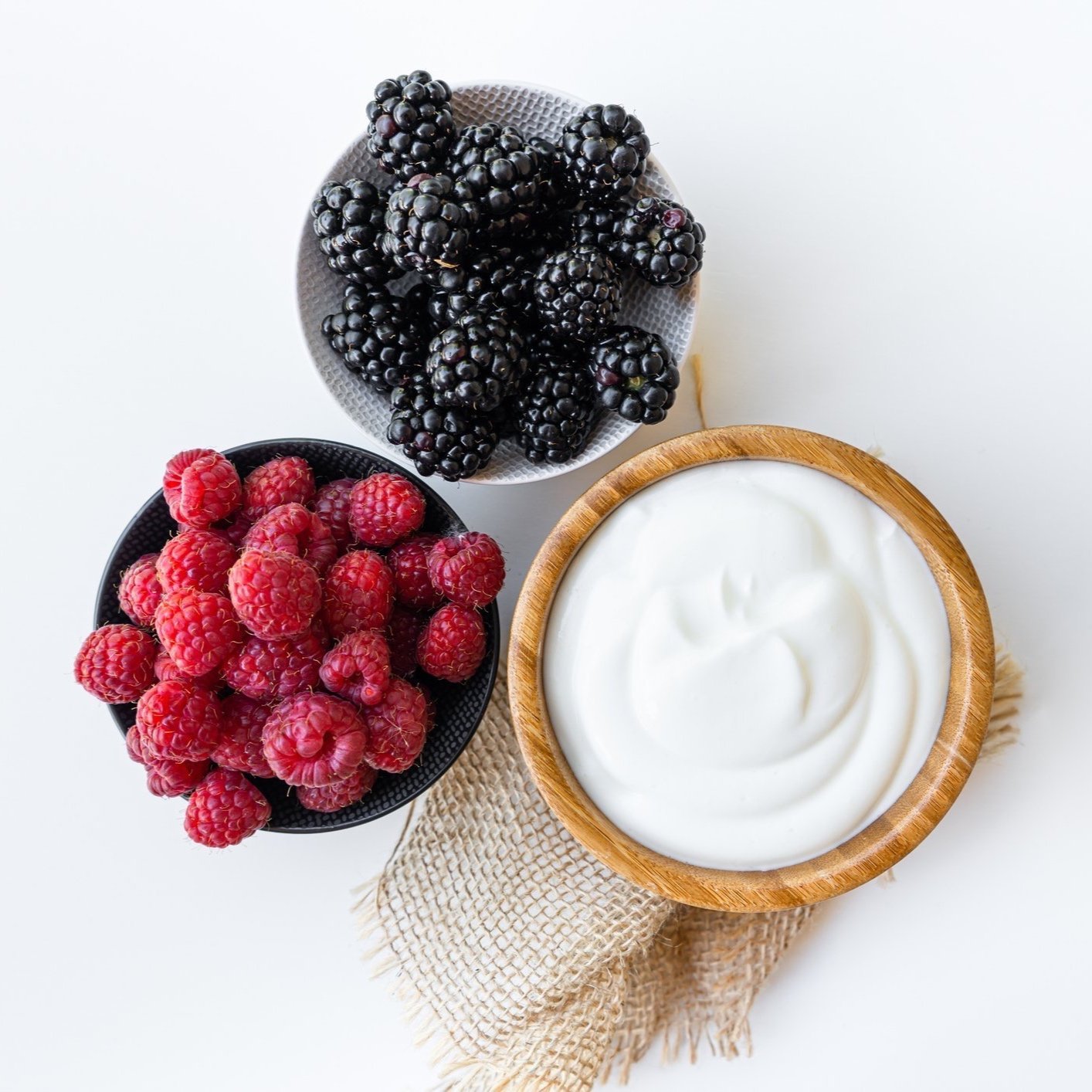
Our Mild Greek Thermophilic Yogurt Culture allows you to create the rich, creamy yogurt beloved throughout Greek cuisine. Thick, smooth, and wonderfully mellow, this culture produces a Greek-style yogurt with a softer, less tart flavor than traditional Greek yogurt.
This thermophilic culture ferments with gentle heat, allowing the milk to develop a balanced flavor and creamy body. After culturing, the yogurt can be strained to remove much of the whey, creating the thick, luxurious consistency that Greek yogurt is known for. The more whey you drain, the thicker the finished yogurt becomes.
Unlike more traditional Greek cultures that produce a sharper tang, this mild version creates a rich, mellow yogurt while still maintaining the classic yogurt character. The result is smooth, creamy, and pleasantly balanced.
Greek-style yogurt is traditionally made by straining cultured milk, which concentrates the texture while preserving yogurt’s distinctive flavor. In some traditional preparations, the milk may also be enriched by gently reducing its water content or by increasing the butterfat to produce an even creamier result.
The finished yogurt is thick, creamy, and mild with a smooth body that makes it perfect for breakfast bowls, smoothies, cooking, or enjoying on its own.
Simple, authentic, and wonderfully versatile, this culture makes it easy to create classic Greek-style yogurt in your own kitchen.
Expect:
• Thick, strained Greek-style yogurt
• Mild, mellow flavor with gentle tang
• Smooth, rich, and creamy texture
• Thermophilic culturing with gentle heat
• Perfect for breakfast, cooking, and desserts
Creamy, balanced, and beautifully mellow, this culture produces authentic homemade Greek-style yogurt with the rich texture and classic character that make it a kitchen favorite.
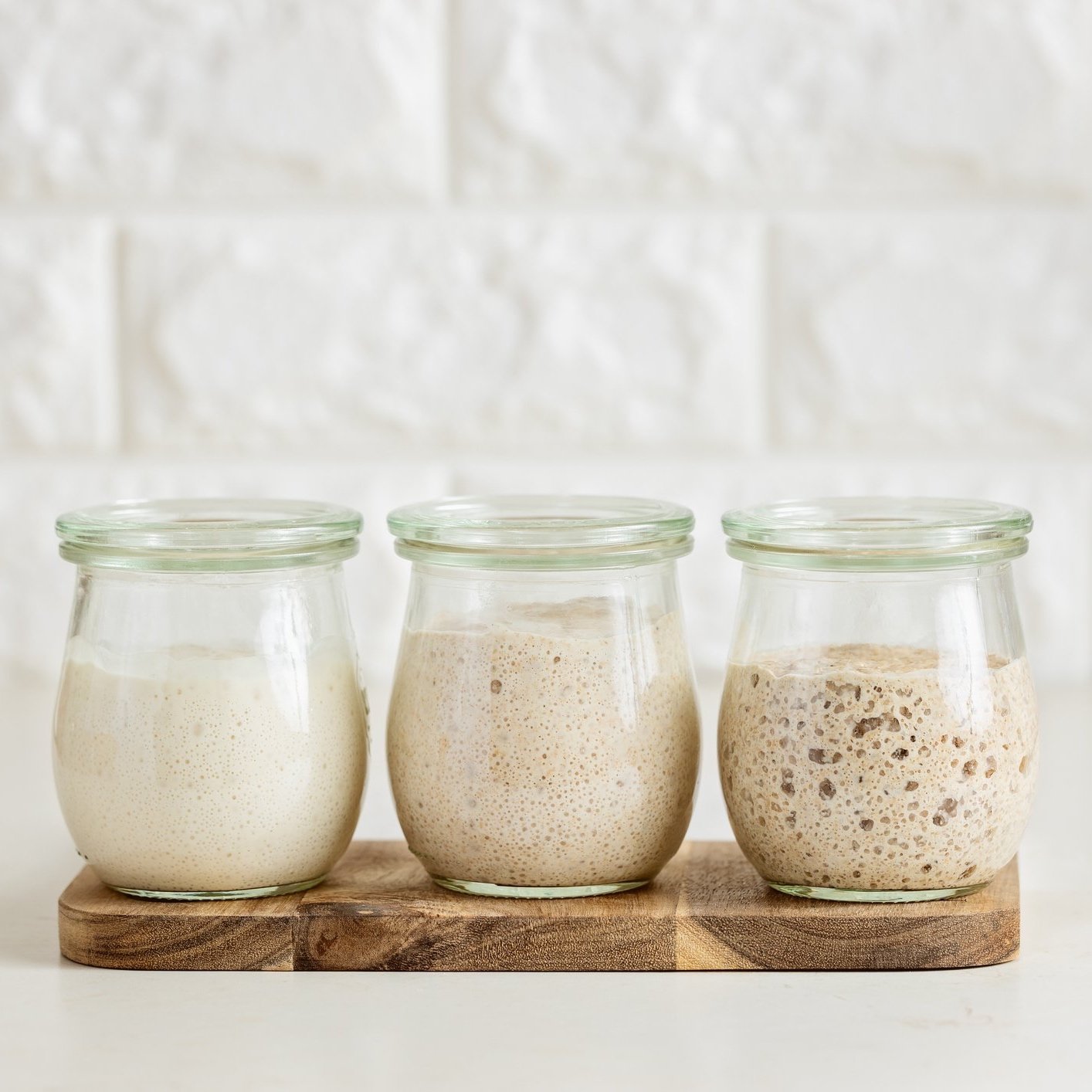
Our Wild Dark Rye Sourdough Starter brings bold flavor and energetic fermentation to traditional rye baking. This culture is known for its lively nature, producing a vigorous starter that bakers love for its strength and character.
Rye starters are naturally aromatic and active, and this one is especially spirited. When it’s ready to be fed or used in dough, the surface will be bubbling with life and activity, so much so that it can seem like it’s ready to spill right out of the jar if ignored for too long.
As it ferments, the starter develops the rich, earthy character that dark rye is known for, creating breads with deep flavor and a pleasantly tangy aroma. Its strong fermentation power makes it excellent for producing hearty loaves with beautiful rise and structure.
The finished breads are bold and rustic with a moist crumb and the distinctive depth that dark rye flour brings. It performs beautifully in traditional rye loaves as well as rustic breads blended with wheat flour.
Simple, lively, and full of personality, this starter makes it easy to bring the bold tradition of dark rye sourdough baking into your kitchen.
Expect:
• Extremely lively and active starter
• Bold, earthy dark rye flavor
• Aromatic, complex sourdough character
• Perfect for traditional rye loaves and rustic breads
Energetic, flavorful, and wonderfully rustic, this Wild Dark Rye Starter produces hearty sourdough breads with bold character and lively fermentation.